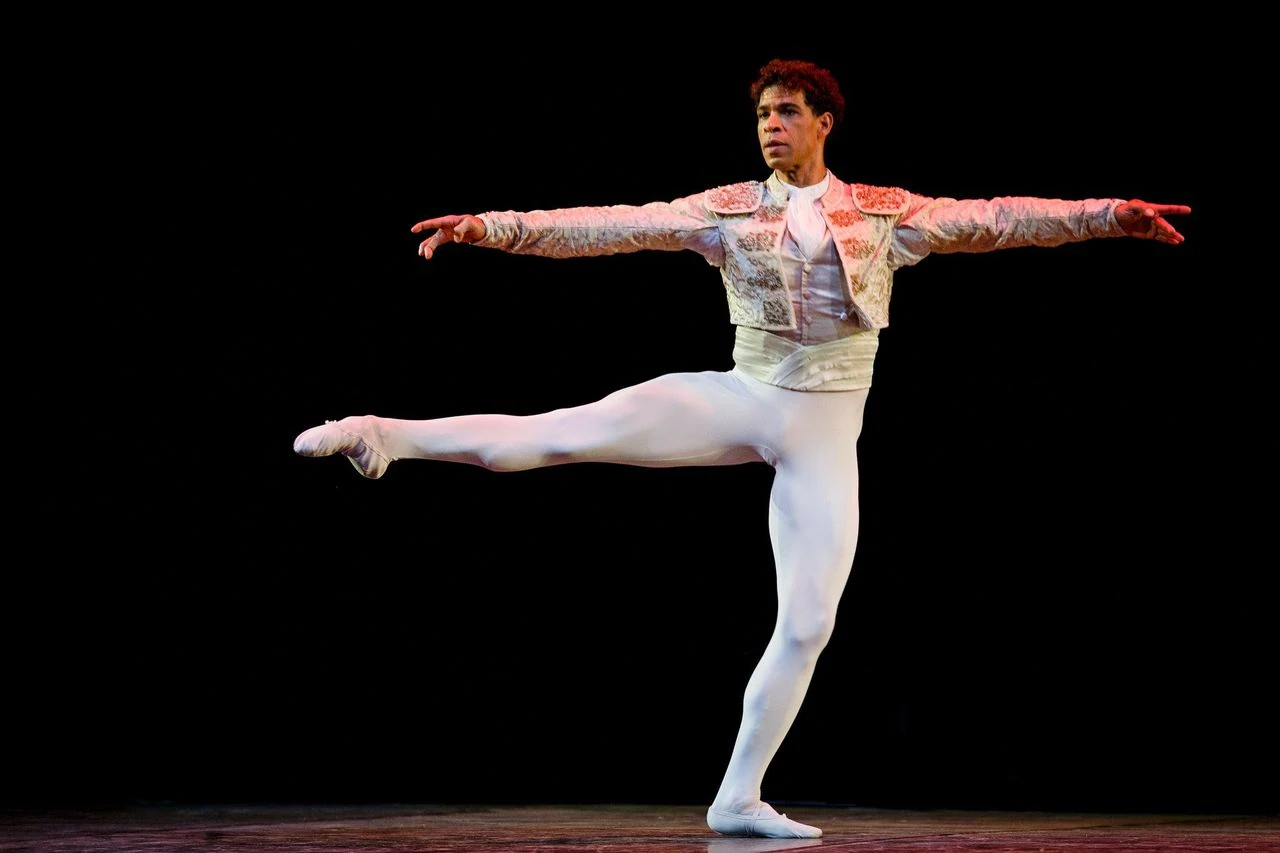
Carlos Acosta’s career has carried him from ballet school in Havana to the Royal Ballet in London and, later, to the directorship of Birmingham Royal Ballet. A dancer of striking athleticism, he performed with companies in Cuba, Europe and the United States before becoming a permanent member of the Royal Ballet in 1998. His work as a performer and choreographer made him a prominent figure in British ballet; his later leadership brought that experience to a major company beyond London.
Training in Havana and an international start
Acosta was born in Havana on 2 June 1973. He studied at the Cuban National Ballet School, where he trained under teachers including Ramona de Sáa. In June 1991 he graduated with maximum qualifications and a gold medal. His early career was already international: from 1989 to 1991 he performed with companies including Turin’s Compagnia Teatro Nuovo and the Teatro Teresa Carreño in Venezuela.
In 1990, Acosta won the gold medal at the Prix de Lausanne, one of several prizes he received at the beginning of his career. The award helped establish his reputation while he was still a teenager. He also won the Grand Prix at the Concours International de Danse de Paris that year. Such recognition led to opportunities with established companies, and in the 1991–92 season he joined English National Ballet in London at the invitation of its artistic director, Ivan Nagy.
At English National Ballet, Acosta made his debut in the Polovtsian Dances from Prince Igor. His roles also included performances in Cinderella, Le Spectre de la Rose and Les Sylphides, as well as the Prince in Ben Stevenson’s The Nutcracker. He returned to Cuba in 1992 and became a member of the National Ballet of Cuba, rising to principal dancer in 1994. He danced roles including Albrecht in Giselle, Basilio in Don Quixote and Siegfried in Swan Lake.
Houston and the Royal Ballet
In November 1993, Houston Ballet’s artistic director, Ben Stevenson, invited Acosta to join the company as a principal dancer. His American stage debut came as the Prince in The Nutcracker. His repertory there included Solor in La Bayadère, Basilio in Don Quixote and the Chosen One in The Rite of Spring. He created the role of Frederick in Stevenson’s Dracula in 1997 and appeared in the premiere of The Snow Maiden the following year.
Acosta joined the Royal Ballet in London in 1998 as a permanent company member. His first appearance with the company was in William Forsythe’s In the Middle, Somewhat Elevated. He went on to dance a wide range of roles, among them Colas in Frederick Ashton’s La Fille mal gardée, Albrecht in Giselle, Siegfried in Swan Lake and the title role in George Balanchine’s Apollo. In 2001–02, he made his debut as Basilio in Rudolf Nureyev’s production of Don Quixote.
In 2003, Acosta became a principal guest artist, a change that reduced his commitment to the company and gave him more room for international appearances. His guest work included performances with American Ballet Theatre and the Paris Opera Ballet. At the Royal Ballet he was also acclaimed for roles such as Romeo in Romeo and Juliet. He danced his final performance with the company in November 2015, in Carmen, which he both choreographed and starred in, after 17 years associated with the company.
Choreography, film and a Cuban story
Acosta’s choreography brought his own background into conversation with classical ballet. In 2006, he created Tocororo: A Cuban Tale, a work loosely based on his life. It follows a young Cuban boy who leaves his family and countryside home to seek a new life in the city. The score, by Miguel Nuñez, combines popular and symphonic Cuban styles and is performed live by Cuban musicians. Acosta selected dancers from several Cuban companies for the production, which toured internationally.
His stage career also reached television and film. He appeared in BBC broadcasts from the Royal Opera House and was featured in the BBC’s Imagine series in 2003. His life became the subject of the 2018 film Yuli: The Carlos Acosta Story, in which he played his adult self. The film brought his route from Havana to the international stage to a wider audience.
In 2017, Acosta founded Acosta Danza in Cuba, a company combining classical ballet with contemporary styles. The venture extended his work beyond performing and choreography, creating a setting for dancers to draw on different traditions. His achievements were recognised in Britain in 2014, when he was appointed Commander of the Order of the British Empire for services to ballet.
Leading Birmingham Royal Ballet
In January 2020, Acosta was appointed director of Birmingham Royal Ballet, succeeding David Bintley. The role marked a new stage in his career: after decades as a dancer and choreographer, he became responsible for the direction of a major British ballet company. For his inaugural season, he announced a programme that included a “Curated by Carlos” festival and performances with dancer Alessandra Ferri.
The plans also included the premiere of Chacona, a duet for Acosta and Ferri by Goyo Montero of Acosta Danza. Birmingham Royal Ballet was due to perform Acosta’s Don Quixote at Birmingham International Dance Festival in June 2020, but the performance was postponed because of the COVID-19 pandemic. In February 2021, Acosta and the company premiered their first digital commission, Empty Stage, a film accompanied by the Royal Ballet Sinfonia.
Acosta’s leadership connects his experience of several dance traditions and companies with a British institution based outside the capital. The change from principal dancer to director also widened the scope of his contribution: alongside the repertory and performance work associated with his own dancing, he now shaped programmes and projects for a company and its audiences.
Why Carlos Acosta deserves a place in British Legacy
Acosta’s place in British Legacy rests on a sustained and specific contribution to British ballet. As a permanent member of the Royal Ballet from 1998, he brought experience gained in Cuba, Houston and other international settings into one of the country’s foremost dance companies. He performed major classical roles, created work for the stage and, as principal guest artist from 2003, continued to represent the company while taking on a wider schedule of international performances. His career illustrates how a British cultural institution can be strengthened by the arrival of an artist trained and formed elsewhere.
His contribution did not end with his farewell performance in 2015. Acosta’s choreography, including Carmen and Tocororo: A Cuban Tale, placed his own artistic ideas on stage; the latter drew on Cuban music and dance as well as ballet. As director of Birmingham Royal Ballet, he brought an extensive performer’s perspective to the leadership of a major company, and his inaugural plans included new work and a festival programme. His CBE recognises his services to ballet, while his career gives that honour concrete context: performance, choreography and company leadership. Acosta’s British legacy is therefore not simply a story of acclaim at the Royal Ballet, but of international experience contributing to the continuing life of ballet in Britain.
Sources
Carlos Acosta — revision 1379512487
Adapted in part from Carlos Acosta by Wikipedia contributors, under CC BY-SA 4.0. Text has been edited and combined with the existing article; this adapted text is shared under the same licence. Contributor history.