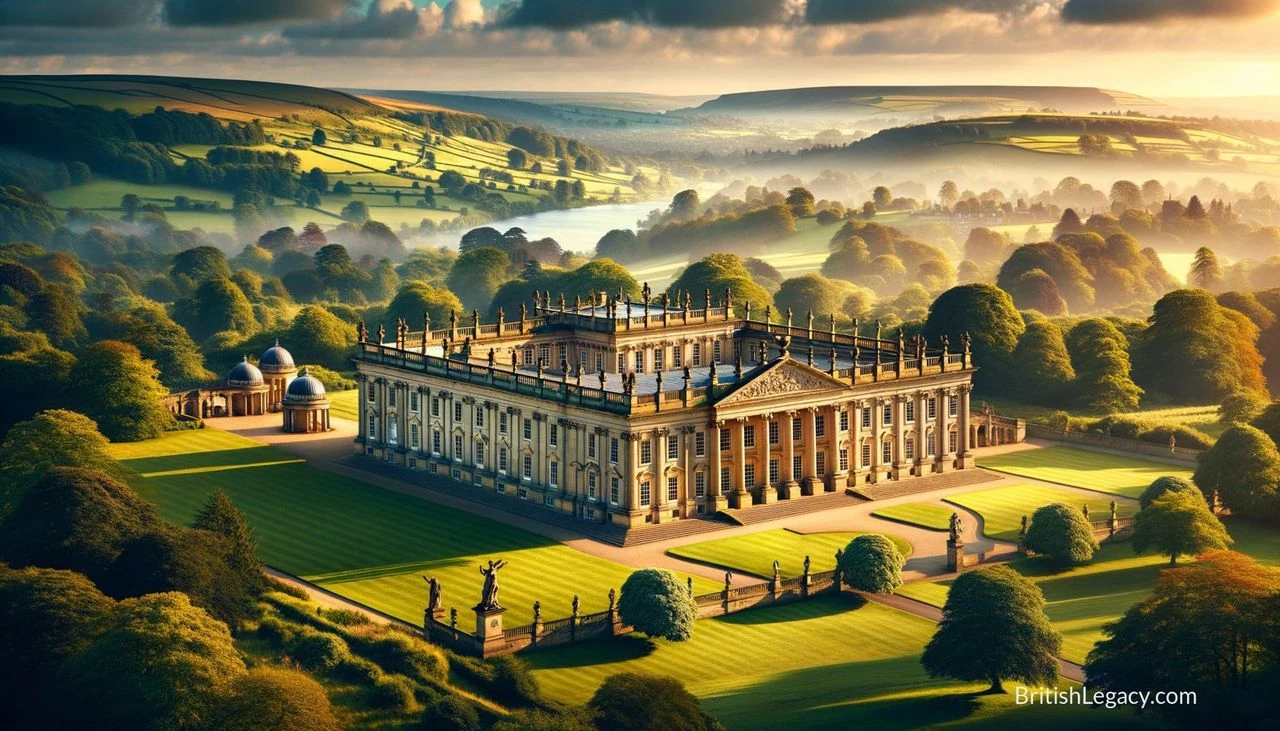
Chatsworth House stands in the Derbyshire countryside, where its history is visible both in the architecture and in the changing character of its gardens. Begun as an Elizabethan mansion in the mid-sixteenth century, it was later reshaped in the Baroque style. Today the house is known for the Devonshire Collection, its state rooms and grounds, and its appearances on screen. Its significance lies not in a single period or feature, but in the layers of design and collecting brought together at one estate.
A house transformed over time
Chatsworth was commissioned by Bess of Hardwick and her second husband, Sir William Cavendish, in the mid-sixteenth century. The original Elizabethan house did not remain unchanged. The first Duke of Devonshire undertook a major transformation, employing architect William Talman, and the building acquired the Baroque appearance associated with its late-seventeenth-century remodelling.
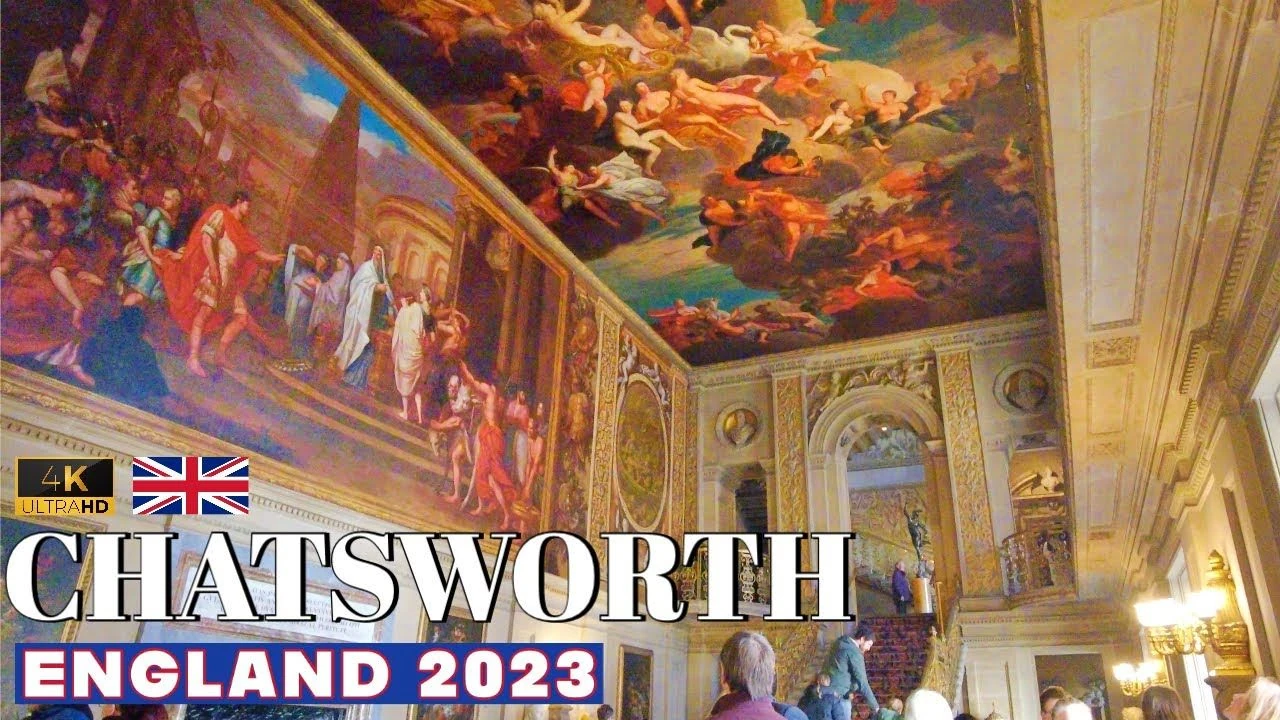
Inside, the Painted Hall is among the rooms that give the house its distinctive character. Its ceiling features classical scenes painted by Louis Laguerre. The State Rooms, with their accumulated decoration and furnishings, reflect successive tastes rather than a single, unified design scheme. Together, these spaces make Chatsworth a record of architectural and decorative change as well as a historic residence.
The Devonshire Collection and the gardens
Art is another defining part of the estate. The Devonshire Collection includes portraits by Sir Joshua Reynolds, sculpture by Antonio Canova and drawings by Leonardo da Vinci. The collection also includes the Devonshire Parure, a set of sapphire jewellery associated with Georgiana, Duchess of Devonshire. The Sculpture Gallery brings classical works, ancient and modern, into a shared setting, adding a further dimension to the house’s long history of collecting.
The gardens extend the experience beyond the rooms. Covering 105 acres, they have been shaped by landscape designers including Capability Brown and Sir Joseph Paxton, whose other work included the Crystal Palace. Their features range from the Cascade to the Emperor Fountain, described in the original account as designed to send water 300 feet into the air. A maze and Rose Garden add different forms and moods to the grounds. The result is not one unchanging plan, but a landscape in which designed views, water and planted spaces sit alongside one another.
Chatsworth in public view
Chatsworth has also reached audiences through film and television. Among the productions filmed there is an adaptation of Jane Austen’s Pride and Prejudice. Screen appearances have helped make the house familiar beyond Derbyshire, while visitors encounter it directly through its rooms and grounds. The estate’s appeal therefore rests on more than its architectural history: it is also a collection of artworks, a designed landscape and a location whose image circulates in popular culture.
The house’s history is best understood through those connected parts. Its Elizabethan beginnings and Baroque remodelling show how a residence can change in response to new ambitions. The collection gives the interiors a cultural dimension, while the gardens show successive approaches to shaping the landscape. These features make Chatsworth both a historic home and a place where architecture, art and horticulture can be considered together.
Why Chatsworth House deserves a place in British Legacy
Chatsworth merits a place in British Legacy because its history makes architectural change tangible. The Elizabethan house commissioned by Bess of Hardwick and Sir William Cavendish was later transformed under the first Duke of Devonshire, with William Talman employed in the remodelling. The Painted Hall and its Laguerre ceiling, alongside the State Rooms, show how successive periods left their mark on the same residence. Rather than presenting one style as the whole story, Chatsworth offers a setting in which those changes can be seen together.
Its contribution extends beyond the building. The Devonshire Collection brings works associated with Reynolds, Canova and Leonardo da Vinci into the story of the house; the 105-acre gardens connect landscape design with features such as the Cascade, Emperor Fountain, maze and Rose Garden. Its use as a filming location, including for an adaptation of Pride and Prejudice, links this historic Derbyshire estate with wider public culture. These specific strands—architecture, collecting, designed grounds and screen presence—explain the house’s enduring place in Britain’s heritage without reducing it to a single claim of grandeur.