A hovercraft seems to belong to more than one kind of transport. It can move over water and land, yet it is carried not by a conventional hull or wheels but by a cushion of air. The engineer behind the modern hovercraft was Sir Christopher Sydney Cockerell, whose crucial insight was to make that cushion practical: a narrow jet of air around the craft could help keep pressure beneath it while limiting the air lost at the edges. The result was not just an arresting design, but a new way of crossing surfaces that impede ordinary vehicles.
Cockerell’s path to the invention ran through mechanical engineering, radio and wartime research. Its development then depended on more than an ingenious experiment. He had to secure a patent, interest institutions in a proposal that fitted neither the aircraft nor shipbuilding industries comfortably, and see a full-scale craft built. The SR.N1, made by Saunders-Roe after the National Research Development Corporation placed an order, publicly demonstrated the principle in 1959 and crossed the English Channel that July. The story is one of engineering insight, but also of the practical steps needed to carry an idea from a model to a machine.
Cambridge beginnings and engineering work
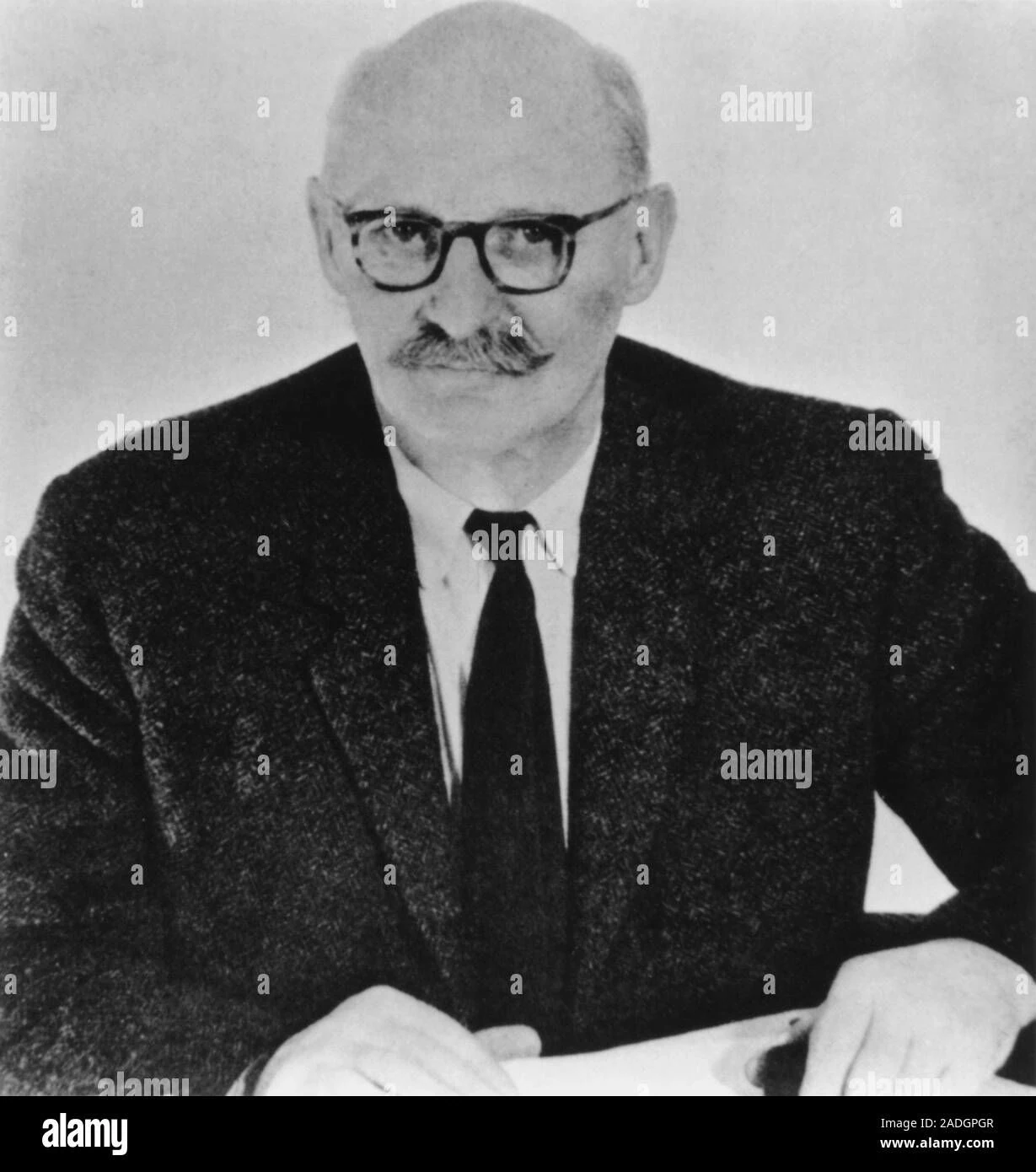
Cockerell was born in Cambridge on 4 June 1910. His father, Sir Sydney Cockerell, was curator of the Fitzwilliam Museum and had previously been secretary to William Morris. His mother, Florence Kingsford Cockerell, was an illustrator and designer. Christopher attended St Faith’s preparatory school and Gresham’s School in Holt, Norfolk, before going to Peterhouse, Cambridge, to read mechanical engineering. He later returned to Cambridge to study radio and electronics.
His professional life began with W. H. Allen, Sons & Co. in Bedford, where he worked as a postgraduate pupil from 1931 to 1933. After his return to Cambridge, he joined the Radio Research Company and then, in 1935, the Marconi Company. He married Margaret Elinor Belsham that year. From 1940 to 1951 they lived at Gay Bowers Cottage in Danbury, Essex.
At Marconi, Cockerell worked on a range of systems, including radar, and led a research team at the company’s hut in Writtle. After the war, his work included radio-location technology and equipment used by the BBC at Alexandra Palace. These roles placed him in a world of applied engineering: designing and developing systems that had to function beyond the drawing board. His later hovercraft work would demand a different set of calculations, but the broad pattern remained familiar—identify a technical difficulty, test a proposed solution, and work towards equipment that could operate in practice.
From a boat-hire business to an air cushion
After leaving Marconi, Cockerell bought Ripplecraft Ltd., a small Norfolk business hiring out boats and caravans. The company made little money, and he began thinking about how a boat might travel faster. His starting point was a familiar constraint: a hull moving through water encounters drag. Earlier work by the Thornycroft company had explored partly raising a small vessel out of the water, but Cockerell considered whether a whole craft could be lifted clear of the surface.
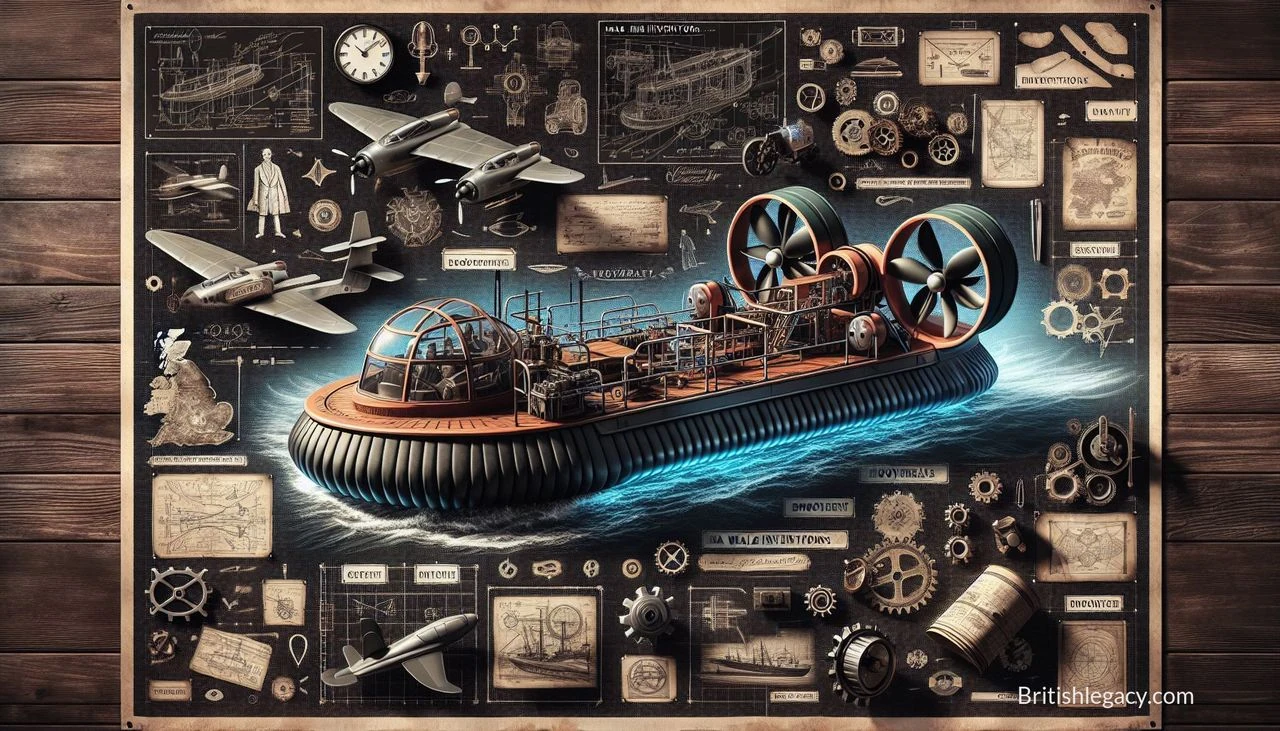
The central difficulty was not simply producing lift. Air pumped underneath a vehicle would escape, so maintaining a cushion would require a great deal of power. Cockerell proposed directing air into a narrow jet around the craft’s perimeter. The moving jet, which he called a momentum curtain, would help contain higher-pressure air beneath the vehicle. In principle, that meant the cushion could be maintained with a smaller engine than would otherwise be needed. The idea offered a way to lift a craft completely clear of the water and reduce the drag that had prompted his investigation.
He tested his theory using a vacuum cleaner and two tin cans. The modest apparatus helped demonstrate that the principle had potential, but it did not by itself make a transport vehicle. Cockerell tested designs across the village green opposite his house in Somerleyton, Suffolk, and developed a working model from balsa wood. The distinction matters: an experiment could suggest a physical effect, while a usable craft required further design, finance and support.
That support was not readily available. Cockerell struggled to interest private companies because the proposal seemed to sit between their established fields: aircraft manufacturers saw a marine vehicle, while shipbuilders faced something closer to aviation. He had to finance research himself, at one point selling personal possessions. The work was therefore not a straight line from inspiration to success. It involved a period in which the engineering possibility was clearer to its inventor than its commercial or institutional route.
Patent, secrecy and the SR.N1
By 1955, Cockerell had built a working model and filed his first hovercraft patent, GB 854211. He approached the British Government about possible defence applications, but the idea was placed on the government’s secret list. That prevented him from making the design public. The decision added an unusual obstacle to the familiar challenge of finding backing: he could not freely publicise the proposal that he was trying to advance.
The design remained classified until 1958. Following news of similar developments on the continent, it was declassified, and Cockerell was introduced to the National Research Development Corporation. In autumn 1958, the corporation placed an order with Saunders-Roe for the first full-scale craft. This was a decisive change of scale. Cockerell’s model and patent had set out the principle; the order enabled a manufacturer to build a vehicle large enough to test it in public.
The craft was designated SR.N1, short for Saunders-Roe Nautical One, and was manufactured under licence from the corporation. On 11 June 1959, it was first shown to the public. The Wikipedia account records that it could carry four people at a speed of 28 miles per hour. Several weeks later it was shipped to France and, on 25 July, crossed the English Channel between Calais and Dover. The date fell 50 years after Louis Blériot’s celebrated aeroplane crossing. The milestones should not be confused: the craft’s public appearance was in June; the Channel crossing followed in July.
The crossing gave a striking demonstration of the technology, but the achievement rested on a longer chain of work. Cockerell’s physical principle had to be explored in models, protected by a patent, brought to the attention of public institutions and translated into a full-scale design by Saunders-Roe. In January 1959, the National Research Development Corporation had also formed Hovercraft Development Ltd. Cockerell became its technical director, and the company controlled the patents that it licensed to private firms manufacturing craft under the registered trademark Hovercraft.
Beyond the first craft
The SR.N1 established that the air-cushion idea could be embodied in a functioning vehicle. It did not mean that every engineering problem had been solved, or that Cockerell’s work ended with the first crossing. In later life he developed further improvements to the hovercraft and considered other applications of the air-cushion principle, including a hovertrain. He also attended hovercraft-related events, among them the unveiling of hoverports around the United Kingdom.
His later work extended to wave power. The Cockerell Raft was a hydraulic device designed to use waves, with possible implications for future electricity generation. This project belonged to the same broad habit of mind as the hovercraft: take a physical force or obstacle, ask whether its effects can be directed in a useful way, and build a device around the answer. The supplied evidence does not establish how far the raft progressed towards practical electricity generation, so its significance is best described as an area of invention rather than a realised power system.
Cockerell’s career also included disappointments as well as recognition. The difficulty of attracting private-sector interest and the period when the design was classified show how a promising invention could encounter institutional barriers before it reached production. In later life, the British Government awarded him £5,000, described in the supplied Wikipedia account as the only practical official recognition of the value of his work. The same account records his knighthood. Recognition did not erase the challenges involved in getting the invention developed.
Honours and remembrance
Cockerell’s honours included the Howard N. Potts Medal in 1965 and appointment as a Commander of the Order of the British Empire in 1966. He was elected a Fellow of the Royal Society in 1967, received the Elmer A. Sperry Award in 1968 for his hovercraft development, and was knighted in 1969 for services to engineering. He also received an honorary doctorate from Heriot-Watt University in 1971.
He died at Hythe, Hampshire, on 1 June 1999, three days before his 89th birthday. The SR.N4 hovercraft GH2008, named Sir Christopher, operated across the Channel for Hoverlloyd, later Hoverspeed, from 1972 to 1991. A plaque in Cockerell Rise, East Cowes, marks the location of White Cottage, where he lived and worked; the cottage has been demolished, though its garage remains. His workshop, including his left-handed lathe, was given to Lowestoft Maritime Museum after his death and reassembled for public display.
Why Christopher Cockerell deserves a place in British Legacy
Christopher Cockerell deserves a place in British Legacy because he turned a difficult engineering question into a transport principle that could be tested and built. His work addressed the loss of air that made earlier attempts to lift craft impractical. By proposing a perimeter jet and momentum curtain, he found a way to help retain the pressure beneath a vehicle. That technical insight was only the beginning: he made models, filed a patent, pursued support despite initial reluctance, and saw the National Research Development Corporation commission Saunders-Roe to build the SR.N1. Its 1959 public demonstration and Channel crossing marked the passage from experiment to working craft.
The British connection is concrete. Cockerell was educated at Gresham’s and Cambridge, worked for British engineering companies, developed his experiments in Suffolk, and brought the hovercraft to full scale through a public corporation and Saunders-Roe. The craft’s subsequent licensing to manufacturers helped carry the idea beyond one prototype. His work on hovercraft improvements, hovertrain concepts and the Cockerell Raft shows an inventor still applying engineering thought to movement and energy. His story also gives British Legacy a useful account of invention as a process, not a sudden flash: a sound idea can still depend on persistence, institutions and manufacture before it serves a wider purpose. Cockerell’s achievement belongs in the national record not through generic claims of ingenuity, but because a specific British engineer helped create a distinct form of transport and left a demonstrable mark on engineering history.
Sources
Christopher Cockerell — Wikipedia revision 1371981701
Adapted in part from Christopher Cockerell by Wikipedia contributors, under CC BY-SA 4.0. Text has been edited and combined with the existing article; this adapted text is shared under the same licence. Contributor history.