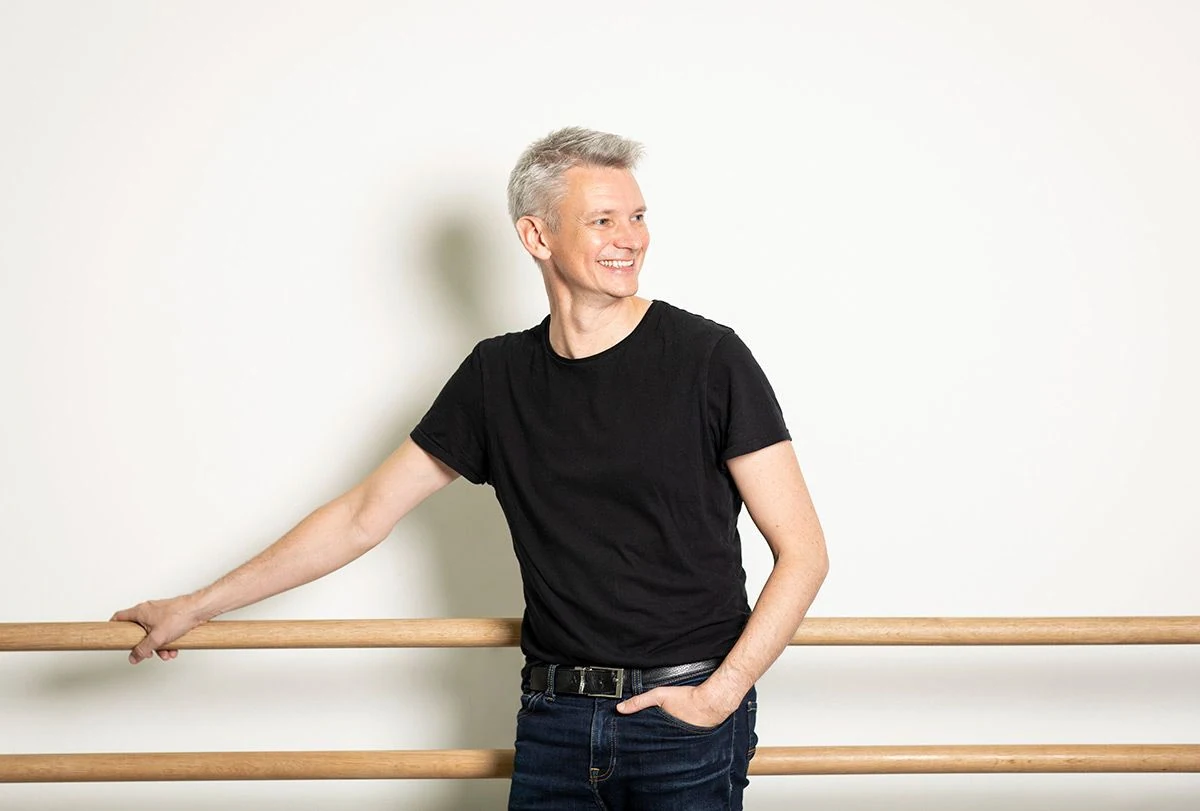
Christopher Hampson’s career has moved from the studio to the leadership of one of Scotland’s principal ballet companies. Trained at the Royal Ballet School, he danced with English National Ballet before turning to choreography and direction. In August 2012 he succeeded Ashley Page as artistic director of Scottish Ballet; in 2015 he became its chief executive as well as artistic director. His work as a choreographer has also reached companies beyond Britain, while his leadership has placed him at the centre of ballet-making in Scotland.
Training and the move from dancing to choreography
Hampson was born in Middleton, Lancashire, on 31 March 1973. He began professional training at the Royal Ballet School at the age of 11 and graduated from the school. He then danced professionally with English National Ballet, where he rose to the rank of soloist. His early career therefore included both the discipline of company performance and sustained training in classical ballet.
He later retired from dancing to concentrate on choreography and direction. That change brought him from performing repertory to shaping it: a choreographer determines how movement carries the structure and meaning of a work, while a director’s responsibilities can extend across a company’s artistic programme. Hampson’s subsequent work has included ballets for English National Ballet and the Royal New Zealand Ballet, as well as productions for Prague National Ballet and Atlanta Ballet.
His choreographic debut, according to the existing account of his career, was Double Concerto for English National Ballet in 1999. The same account describes the work as receiving acclaim, although the available biographical record does not give further detail about its reception. Rather than treating that early response as a measure of his whole career, it is more useful to place the work in the transition from dancer to choreographer that shaped his later responsibilities.
Leading Scottish Ballet
Hampson took over as artistic director of Scottish Ballet in August 2012, succeeding Ashley Page. In 2015, the position became CEO and artistic director, combining the company’s executive leadership with responsibility for its artistic direction. The appointment made his work larger than the creation of individual ballets: it placed him in a role overseeing a company and its repertory.
The original account characterises his approach as bringing classical works together with new contemporary pieces and describes his leadership as widening ballet’s appeal. Those broad claims are not accompanied by examples or audience figures, so they should not be mistaken for independently established measures of impact. The confirmed outline of his career is more concrete: he has directed Scottish Ballet since 2012, held its combined chief executive and artistic director role since 2015, and continued to make work for other companies. Together, those responsibilities connect artistic practice with the ongoing life of a national dance company.
Hampson has also made works for vocational dance schools in the United Kingdom, including the Royal Ballet School, Elmhurst School for Dance and London Studio Centre. The work places choreography within a training environment as well as the professional repertory. He has served as a ballet master for City Ballet of London, another role involving the preparation and coaching of dancers. These engagements show a career that has encompassed company leadership, original choreography and the teaching context in which dancers develop.
Hansel & Gretel and a varied repertory
One work highlighted in accounts of Hampson’s choreography is Scottish Ballet’s Hansel & Gretel, first performed in 2013. The ballet draws on the Brothers Grimm tale, with music by Engelbert Humperdinck. The existing account presents Hampson’s version as giving attention to the story’s darker emotional elements, rather than simply reproducing its familiar plot. This is a useful example of the way a well-known narrative can become material for a choreographer’s interpretation.
The account also praises the production’s staging and choreography and says that Humperdinck’s score was orchestrated and modified for the ballet. Those evaluative descriptions are not independently confirmed in the available biographical record, so the work is best considered here as one part of Hampson’s Scottish Ballet repertory rather than as proof of a wider critical consensus. Its reported first performance in 2013 came soon after his appointment to lead the company, placing it in the early period of his directorship.
Beyond Scottish Ballet, the range of companies for which Hampson has produced works includes the Royal New Zealand Ballet, English National Ballet, Prague National Ballet and Atlanta Ballet. He has also created work for British vocational dance schools. This range indicates that his career has not been confined to a single company or to one type of setting. It connects the making of professional repertory with the training of dancers and the work of companies in several countries.
Recognition and professional standing
Hampson was named one of Dance Magazine’s “25 to Watch” in 2003. He has received a Barclays Theatre Award for Outstanding Achievement in Dance and the Critics’ Circle National Dance Award for Best Classical Choreography. His work was nominated for Best New Dance Production at the 2005 Laurence Olivier Awards. These distinctions mark recognition at different points in his career, from early attention as a choreographer to later awards for dance and classical choreography.
In the 2023 Birthday Honours, Hampson was appointed Commander of the Order of the British Empire for services to dance. The honour recognises a career that has included choreography, work with dancers and leadership of Scottish Ballet. It complements rather than replaces the more specific account of his contribution: training at the Royal Ballet School, performance with English National Ballet, creative work across several companies and long-term responsibility for a Scottish national company.
Why Christopher Hampson deserves a place in British Legacy
Christopher Hampson’s British legacy is grounded in the institutions and working practices of dance. His training began at the Royal Ballet School, and his professional performing career took place with English National Ballet, where he became a soloist. He then moved into choreography and direction, roles that require the creation and shaping of repertory rather than performance alone. His later work for British vocational dance schools and his service as a ballet master connect that professional experience with the preparation of dancers.
His leadership of Scottish Ballet gives that contribution a sustained institutional dimension. Appointed artistic director in 2012 and made CEO as well as artistic director in 2015, he has held responsibility for the company’s artistic direction and executive leadership. His choreographic work has also travelled beyond Scotland, including productions for companies in New Zealand, Prague and Atlanta. The 2013 Scottish Ballet production of Hansel & Gretel offers a specific example of his work with a familiar story in a ballet context. Alongside his awards and 2023 CBE, these achievements make a case for remembering Hampson not through general claims of influence, but through the clear record of his training, creation, teaching and leadership in British ballet.
Sources
Adapted in part from Christopher Hampson by Wikipedia contributors, under CC BY-SA 4.0. Text has been edited and combined with the existing article; this adapted text is shared under the same licence. Contributor history.