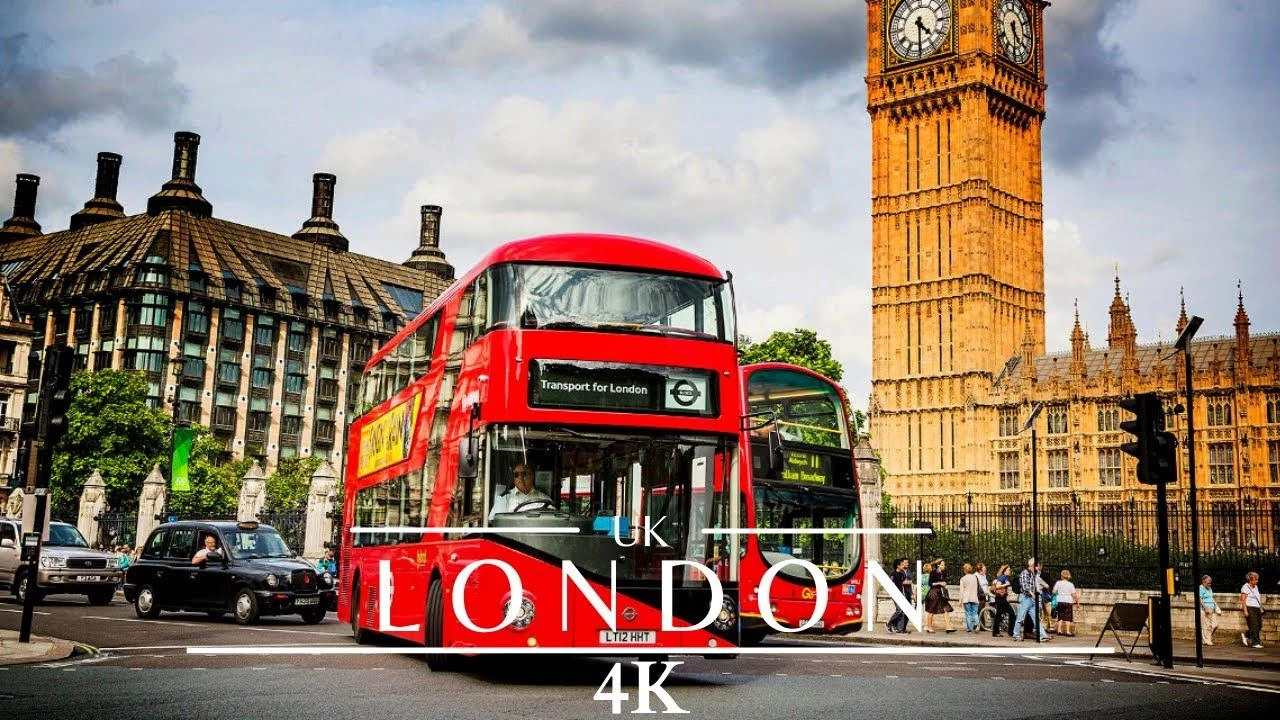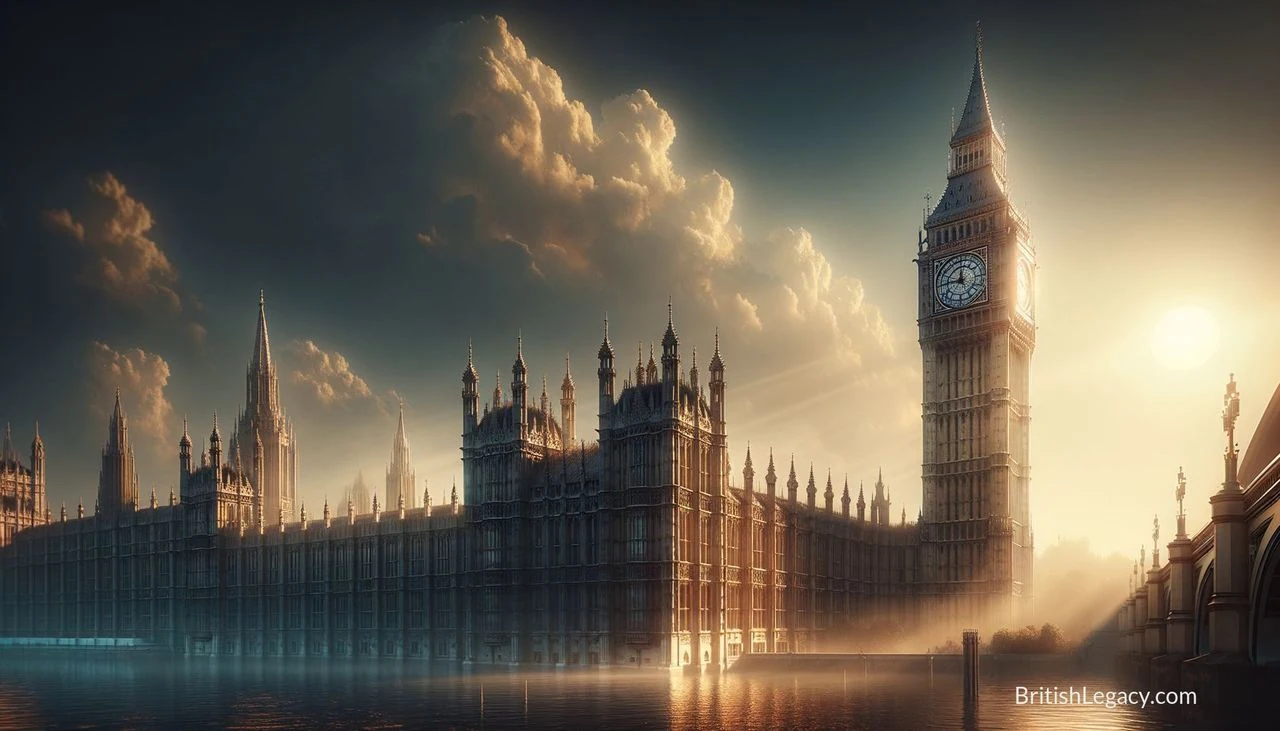
Big Ben is the name most people give to the great clock tower at the north end of the Palace of Westminster. Strictly, the name belongs to the Great Bell; in everyday use, it can mean the bell, the clock or the tower. That familiar shorthand points to a landmark whose identity is made up of all three: a Gothic Revival structure, a carefully engineered timepiece and a sound heard far beyond Westminster.
A new tower for a rebuilt Parliament
The tower formed part of Charles Barry’s design for a new Palace of Westminster after fire destroyed much of the old palace on 16 October 1834. Barry was the chief architect of the neo-Gothic palace, but Augustus Pugin designed the Clock Tower. Construction began on 28 September 1843, and the tower was completed in 1859. It rises 316 feet (96 metres), with its four clock dials set high above ground level.
Its appearance is more than a decorative frame for the clock. The tower’s Gothic Revival design includes stone carvings and symbols associated with the four countries of the United Kingdom and the Tudor dynasty. Its materials and proportions make the clock visible as part of the parliamentary complex, rather than as a separate monument. At the top, the Ayrton Light is lit when the House of Commons sits after dark, a practical signal linking the tower to the work taking place inside Parliament.
The building was originally called the Clock Tower. In 2012, the House of Commons backed a proposal to rename it Elizabeth Tower in honour of Queen Elizabeth II’s Diamond Jubilee; the name change was confirmed that June and formally announced later that year. The public continued to call it Big Ben, a reminder that a popular name can outlast the official one and come to describe a whole landmark.
How the clock keeps time
The Great Clock was designed by Edmund Beckett Denison and George Airy, the Astronomer Royal. Edward John Dent was commissioned to construct it; after his death, his stepson Frederick Dent completed the work. Its four dials measure 22.5 feet (6.9 metres) across. The clock began operating in 1859, and upon completion it was the largest and most accurate four-faced striking and chiming clock in the world.
Its reputation for reliability rests on an ingenious separation between the pendulum and the clock mechanism. Denison developed a double three-legged gravity escapement, intended to reduce the effects of wind, rain and snow on the clock’s timekeeping. The mechanism remains in use. Small adjustments can be made by adding or removing pre-decimal pennies on the pendulum: adding a coin slightly changes the pendulum’s effective length and makes the clock run faster. Big Ben keeps time to within a few seconds a week, and the clock is wound by hand three times a week.
The Great Bell is a separate part of this working system. The first bell, cast in 1856, weighed 16 tons but cracked during testing. A replacement, cast at the Whitechapel Bell Foundry in 1858, weighs about 13.5 tons. It cracked after it was installed and began sounding, and the repair involved removing a square of metal from its rim and turning the bell so the hammer struck elsewhere. The crack remains; the bell continues to ring, with a changed tone.
Four quarter bells join the Great Bell in the belfry. They play the Westminster Quarters on the quarter hours, followed by the hour bell. The nickname “Big Ben” is generally understood to refer first to the Great Bell, but it has also become a common name for the clock and tower. One proposed origin connects it to Sir Benjamin Hall, who oversaw the bell’s installation; the nickname’s precise origin is debated.
Parliament, broadcasts and public memory
The clock is part of a working parliamentary building, not simply a backdrop to it. The Ayrton Light signals when the Commons is sitting after dark, while the tower’s bells and clock have marked national occasions. Their sound was broadcast by the BBC from 1923, and Big Ben’s chimes have become familiar through radio, television and New Year celebrations. The tower itself is often used in film and television as a visual shorthand for London and, more broadly, the United Kingdom.
That public role can carry solemn as well as celebratory meaning. The bells have been silenced for state funerals, including those of Winston Churchill and Margaret Thatcher, and their tolling has marked periods of remembrance. On Remembrance Sunday in 2022, the chimes returned to regular service after the restoration, preceding the hour strike that marked the beginning of the two minutes’ silence. These uses make the clock’s sound more than a time signal: it is a shared public cue, heard by listeners who may be nowhere near Westminster.
The clock and tower have also endured interruption and repair. During the First World War, the bells were silenced and the clock faces kept dark at night. In the Second World War, the tower was damaged during the 1941 air raid that destroyed the Commons chamber, although the clock continued to run and chime through the Blitz. The mechanism has stopped on other occasions too, from weather and mechanical faults to planned maintenance. These episodes show the practical demands behind the reputation for continuity.
Restoration and the return of the chimes
A major conservation project began in August 2017. The bells were silenced to protect workers’ hearing, although they could still be sounded for certain important occasions using an electric motor. The work extended beyond the clock mechanism to the tower’s fabric, roof, lighting and dials. Once restoration began, the team found more damage from the 1941 bombing than had been expected, alongside problems including asbestos, lead paint, broken glass and deterioration of the stone carvings.
The clock faces were restored to their original Prussian blue colour, and their surrounds and details were regilded. The project also included restoring the Ayrton Light and installing a lift in the tower’s ventilation shaft. After four years of work, the tower emerged from its scaffolding in December 2021; the supporting gantry was removed the following April. The chimes returned to regular service in November 2022.
The restoration’s discoveries and scale help explain why looking after a famous landmark is not simply a matter of keeping it visible. The clock, bells and tower are interdependent, but each has its own maintenance needs. The conservation work repaired and renewed the structure while retaining its historic mechanism and visual character.
Why Big Ben deserves a place in British Legacy
Big Ben deserves a place in British Legacy because it brings architecture, engineering and parliamentary life together in a single, recognisable landmark. Barry’s palace design and Pugin’s tower make it part of the setting of the UK Parliament; the clock and bells give that setting a regular, audible presence. Its mechanism is not just an ornament. The gravity escapement, pendulum adjustments and hand winding are practical solutions that have helped a large clock keep time reliably. The Great Bell’s cracked rim, repaired so it could continue sounding, gives the landmark’s history a material connection to the craft and maintenance that keep it working.
Its British connection is also expressed through public use. The chimes have been broadcast for generations, marking the hour for listeners across the country and abroad, and have accompanied moments of national mourning, remembrance and celebration. The landmark is a familiar image of London, but its role reaches beyond tourism: the Ayrton Light relates directly to the sitting of the Commons, and the bells have helped make parliamentary time audible. Restoration between 2017 and 2021, followed by the return of the chimes, shows how the country has invested in preserving both an historic structure and a living public instrument. Big Ben’s legacy lies in this continuing combination of civic setting, ingenious timekeeping and shared cultural meaning.
Sources
Big Ben — Wikipedia revision 1378287552
Adapted in part from Big Ben by Wikipedia contributors, under CC BY-SA 4.0. Text has been edited and combined with the existing article; this adapted text is shared under the same licence. Contributor history.