Tower Bridge: The Iconic Symbol of London’s Greatness
When one thinks of London, an array of captivating images might come to mind – Big Ben, the Houses of Parliament, the majestic Thames River, and the awe-inspiring Tower Bridge. Not merely a physical structure, Tower Bridge stands as an emblem of British engineering prowess, historical significance, and architectural grandeur, all of which contribute profoundly to the great British legacy and its global impact.
A Masterpiece of Victorian Engineering
Tower Bridge, a combined bascule and suspension bridge, was completed in 1894 after eight years of meticulous construction. It was designed by Sir Horace Jones and engineered by Sir John Wolfe-Barry, exemplifying the peak of Victorian innovation and industrial might. This bridge was conceived out of necessity, aimed at easing congestion in the bustling heart of London while maintaining access to the Pool of London, a key area for river trade.
The term 'bascule' derives from the French word for seesaw, aptly describing how the two massive sections of the bridge can be raised to allow ships to pass through. Originally powered by steam, the bascules are now operated by a sophisticated electro-hydraulic system, demonstrating Britain’s continual embrace of technological evolution.
Architectural Grandeur
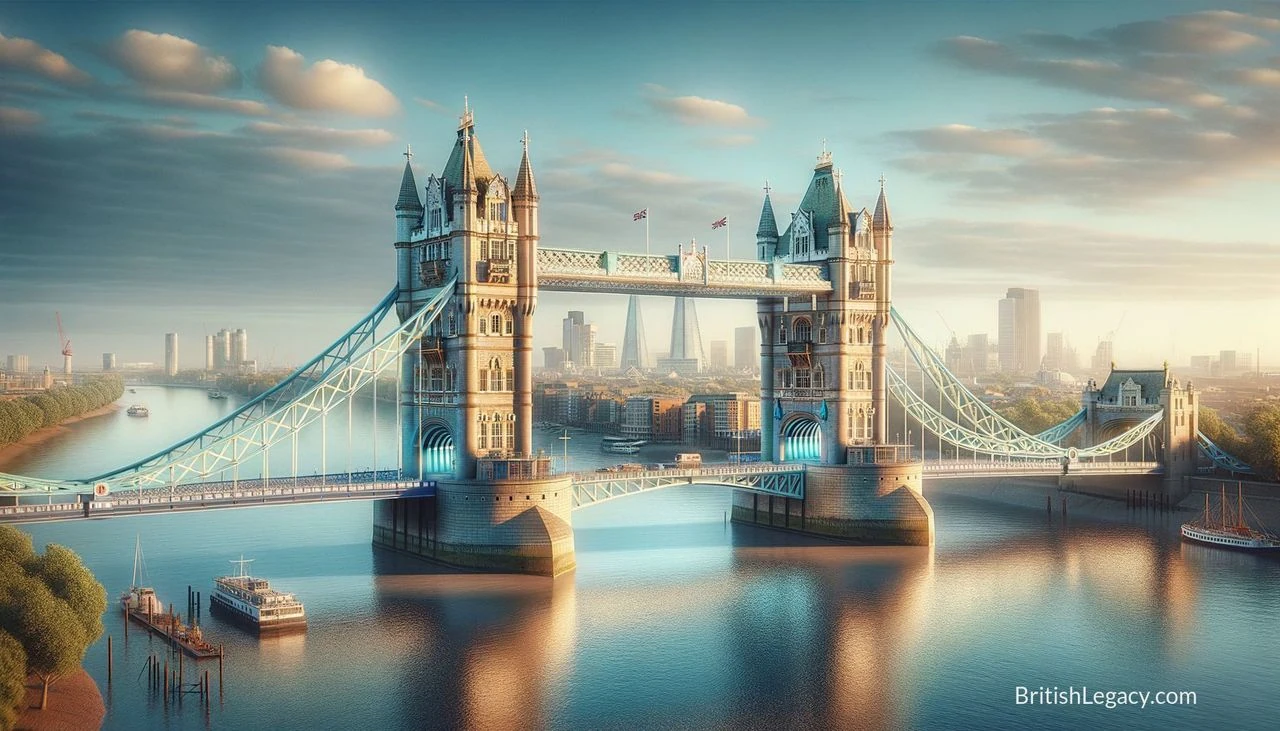
Beyond its functional excellence, Tower Bridge is a visual marvel. Its distinctive Gothic Revival style, marked by twin towers and ornate detailing, complements the medieval Tower of London situated nearby. This harmonious blend of old and new fortifies the bridge’s status as a quintessential London landmark. Visitors and Londoners alike are often spellbound by its majestic presence, especially when the bridge is illuminated against the night sky, casting a picturesque reflection in the Thames below.
Historical Significance
Many narratives intertwine with Tower Bridge, enriching its historical fabric. It has witnessed the city’s metamorphosis from the Industrial Age to the current cosmopolitan metropolis. The bridge has stood firmly through two World Wars, bearing witness to London’s resilience and indomitable spirit.
Moreover, Tower Bridge has been a stage for numerous significant cultural and public events. Over the years, it has been a focal point for the annual London Marathon, celebratory light displays during national events, and even the venue for memorable moments such as the Olympic rings' hoisting during the 2012 London Games.
Cultural Impact and Global Legacy
The importance of Tower Bridge goes much beyond its practical utility; it represents London to the world. Its iconic status is reflected in countless films, postcards, and artworks, serving as a perennial muse that embodies the essence of British culture and heritage.
Tourists from all corners of the globe flock to experience its grandeur, contributing significantly to London’s status as a leading global city. The Tower Bridge Exhibition allows visitors to delve deeper into its history, offering panoramic views from its high-level walkways and insight into the bridge’s inner workings within its Victorian engine rooms.
Furthermore, Tower Bridge has become a universal symbol of engineering excellence and aesthetic beauty, inspiring similar infrastructural projects around the world. It encapsulates a unique blend of practicality and ornamentation that continues to influence contemporary bridge design.
Wrap-Up
Tower Bridge is more than just a crossing over the Thames; it is a testament to British ingenuity, resilience, and flair. It captures the spirit of London – a city perpetually in motion but forever respectful of its storied past. By linking history with modernity, Tower Bridge stands as a proud beacon of the great British legacy, a heritage brimming with remarkable achievements that have left an indelible mark on the world.
As the bustling traffic and rivercraft navigate around its towering structure, Tower Bridge continues to inspire awe and admiration, solidifying its place in the annals of British heritage. It remains, and will always be, an iconic symbol of London – a bridge that not only connects two sides of a river but also bridges the past with the future.