Introduction
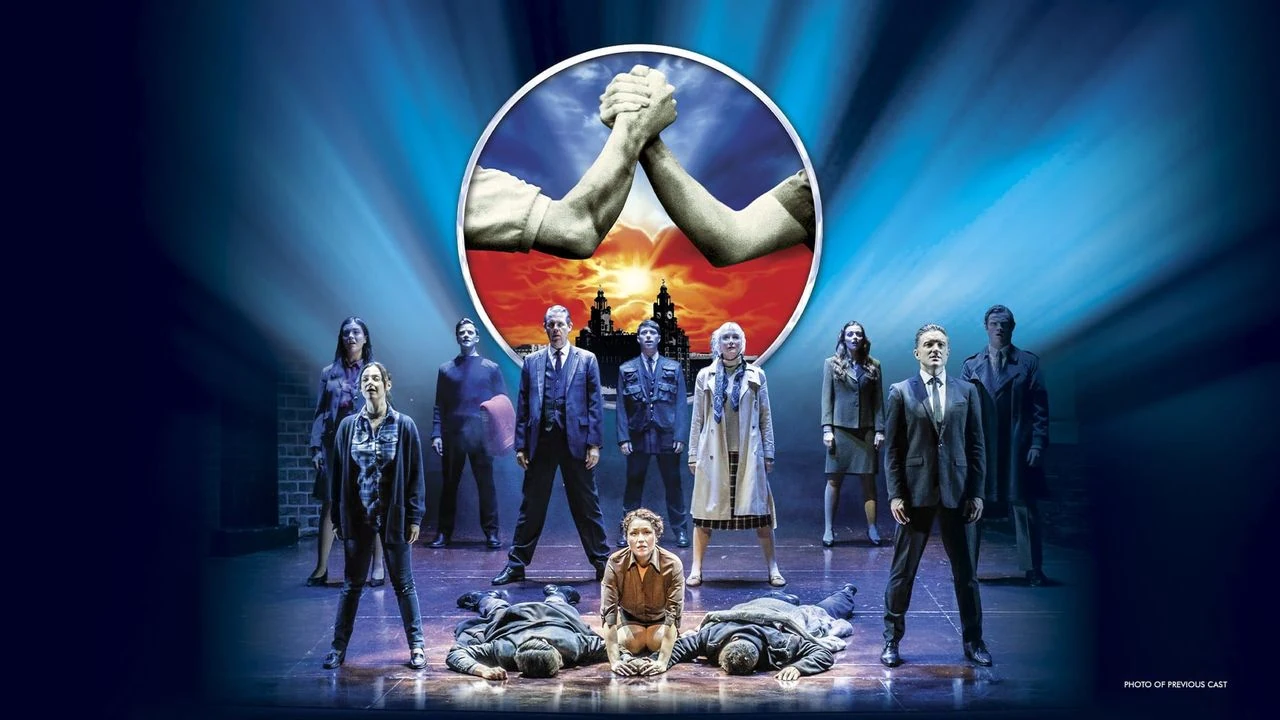
Two boys share a birthday, become “blood brothers” and grow up in the same city, but in sharply different circumstances. In Willy Russell’s Blood Brothers, twins Mickey and Edward are separated at birth: Mickey stays with their financially struggling mother in Liverpool, while Edward is raised by her more affluent employer. Their friendship and diverging fortunes give the musical its emotional force. As the story reaches its tragic conclusion, it asks whether their fate is governed by superstition or by the unequal conditions that shape their lives.
Russell wrote the book, lyrics and music. The play’s Liverpool setting and attention to differences in family resources, work and opportunity place a local story at the centre of a much wider social drama. Its route from a school production to a lengthy West End revival made it a notable part of British musical theatre.
A Liverpool beginning
Russell first wrote Blood Brothers as a school play. It was performed at Fazakerley Comprehensive School in Liverpool in November 1981 in conjunction with Merseyside Young People’s Theatre. He later developed the work into a musical. The Liverpool Playhouse production opened on 8 January 1983, with Barbara Dickson as Mrs Johnstone, Andrew Schofield as the Narrator, George Costigan as Mickey and Andrew C. Wadsworth as Edward.
The Liverpool production had only modest success, but transferred to London’s Lyric Theatre on 11 April 1983. It ran until October and won the Laurence Olivier Award for Best New Musical; Dickson also won an Olivier for her performance. A UK tour followed in 1984. The early productions carried a story that began in Liverpool to audiences beyond the city.
Synopsis
Mrs Johnstone is a single mother with seven children who discovers that she is expecting twins. Unable to afford to raise both babies, she accepts a proposal from her employer, Mrs Lyons, who cannot have a child. Mrs Johnstone keeps Mickey and gives Edward to the Lyons family. The arrangement is built on secrecy. When Mrs Lyons fears the twins will discover the truth, she plays on Mrs Johnstone’s superstitions, warning that separated twins who learn they are brothers will die.
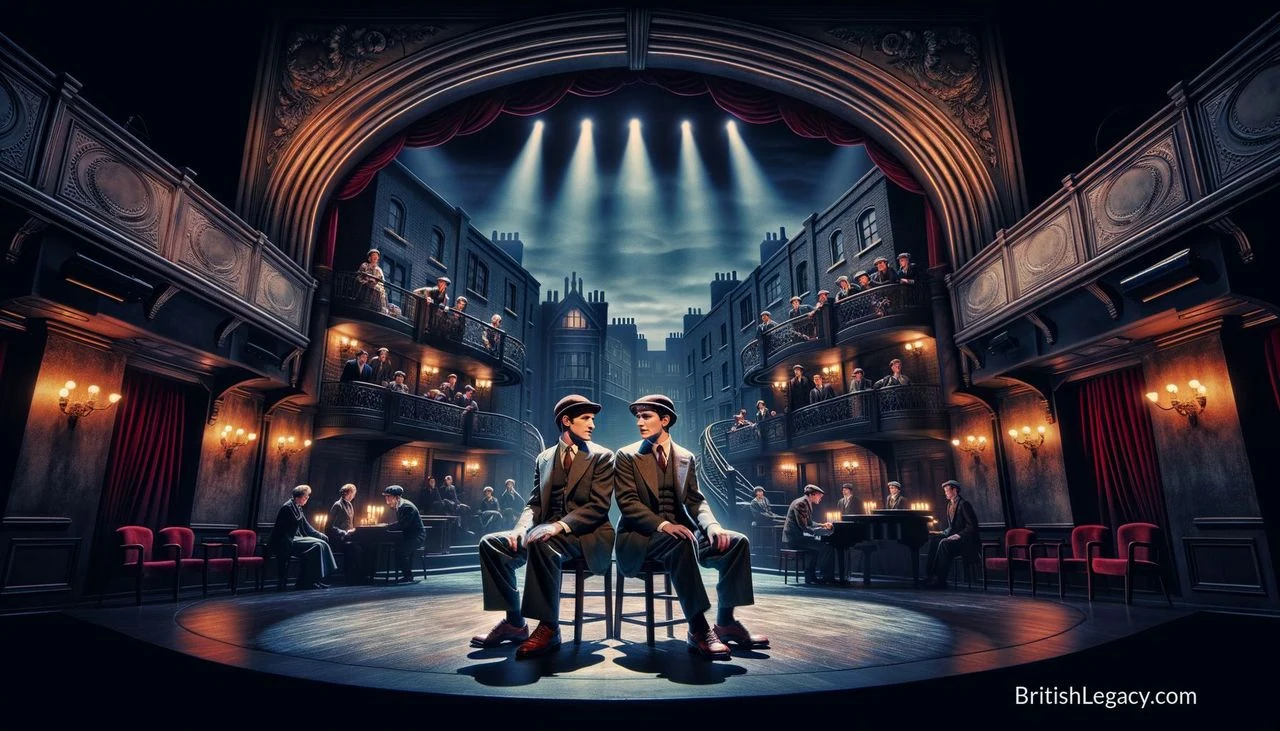
The boys meet as children, discover they share a birthday and make a pact to be blood brothers without knowing that they are biological brothers. Their paths separate, then cross again. Edward grows up with the advantages of a wealthier home; Mickey’s life is marked by financial hardship and fewer opportunities. They share a bond with Linda, their childhood friend, who later becomes Mickey’s wife.
As an adult, Mickey loses his factory job during the recession. He becomes involved in a robbery with his older brother Sammy, and is imprisoned as an accessory to a murder committed by Sammy. Released early, Mickey remains depressed and dependent on medication. Edward, meanwhile, becomes a local councillor and helps Mickey and Linda obtain a home and a job. The difference between their lives is not simply a matter of temperament: the brothers’ circumstances drive the plot towards its final crisis.
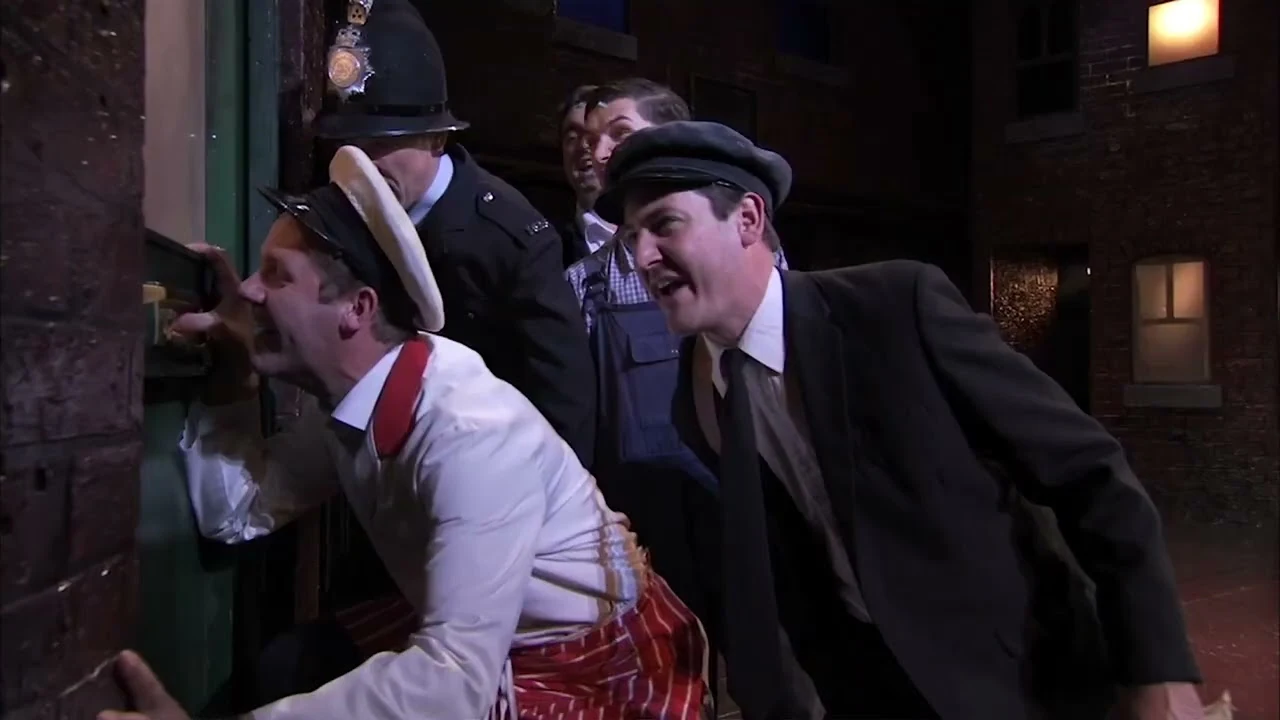
After Mrs Lyons tells Mickey that Edward and Linda are having an affair, Mickey takes a gun to confront his brother. Mrs Johnstone arrives and reveals the truth about the twins’ birth. In the usual ending, Mickey accidentally shoots Edward, and the police then shoot Mickey. The Narrator’s closing question invites the audience to weigh the superstition against the social forces that have shaped the brothers’ lives. A rare alternative ending changes the sequence of events and who fires the fatal shots.
Critical Reception and Longevity
The 1983 London engagement was followed by a longer-lived revival. After a tour in 1986–87, the production opened at the Albery Theatre on 28 July 1988, directed by Bob Tomson, and transferred to the Phoenix Theatre in November 1991. The West End run ended in November 2012. It played more than 10,000 performances and ran for more than 24 years, making it the third-longest-running musical production in West End history. Con O’Neill won an Olivier Award for Best Actor in a Musical for his performance in the revival.
The musical also reached Broadway, opening at the Music Box Theatre in 1993. It played 840 performances and received Tony Award nominations, including for Best Musical, Best Book and Best Direction. The work has also been staged on tour and internationally. These productions extended the life of Russell’s story beyond its original Liverpool and London audiences.
Cultural Impact and Legacy
Productions have appeared in Australia and New Zealand, South Africa and other countries. In 2012, David Kramer adapted and directed a South African version set in Cape Town’s District Six during the apartheid era, with a black cast. It was the first time Russell had allowed the musical to be adapted in this way. Placing the story in a distinct setting gave its questions about unequal lives a new context while retaining the family drama at its centre.
The production’s performers have changed over the years. Mrs Johnstone has been played by, among others, Dickson, Kiki Dee, Stephanie Lawrence, Lyn Paul, Petula Clark and Melanie C. O’Neill’s performance as Mickey in the revival brought him an Olivier Award. The continuing succession of casts has kept the central roles in circulation across tours and revivals.
Blood Brothers is often taught as a prescribed play for GCSE English Literature in English schools. Its structure offers students ways to consider how a musical tells a story: the Narrator’s interventions, the twins’ repeated encounters, the contrast in their upbringings and the songs that carry the action. Numbers such as “Easy Terms”, “Bright New Day” and “Tell Me It’s Not True” are part of the dramatic telling, as well as memorable songs.
Conclusion
From its first performance as a school play in Liverpool to its long West End revival, Blood Brothers has travelled through different theatrical settings without losing the story of the Johnstone and Lyons families. Its central relationships make its themes of class and opportunity immediate: Mickey and Edward are not abstractions in a debate, but brothers whose shared beginnings lead to sharply unequal lives.
Why Blood Brothers deserves a place in British Legacy
Blood Brothers deserves a place in British Legacy because its production history connects a specific Liverpool beginning with an exceptional period in London theatre. Russell first wrote it as a school play in Liverpool; it went on to the Liverpool Playhouse and then the West End. The revival’s run from 1988 to 2012, with more than 10,000 performances, is a substantial achievement in British musical theatre. Its Olivier recognition and Broadway engagement record a success that reached beyond one venue and one city.
The musical’s importance also lies in what it puts on stage. By following twins raised in very different economic circumstances, it gives a human shape to questions about class, education, employment and opportunity. Their friendship and family ties make those differences personal, while the final confrontation leaves the audience to consider the influence of social conditions as well as the play’s superstition. Its use in English schools gives students a work through which to explore character, performance and social themes; tours and adaptations have carried the story to audiences elsewhere. Liverpool origins, West End longevity, educational life and international productions together make Blood Brothers a lasting contribution to British musical theatre.
Sources
Blood Brothers (musical), revision 1378925813 · Blood Brothers (musical)
Adapted in part from Blood Brothers (musical) by Wikipedia contributors, under CC BY-SA 4.0. Text has been edited and combined with the existing article; this adapted text is shared under the same licence. Contributor history.