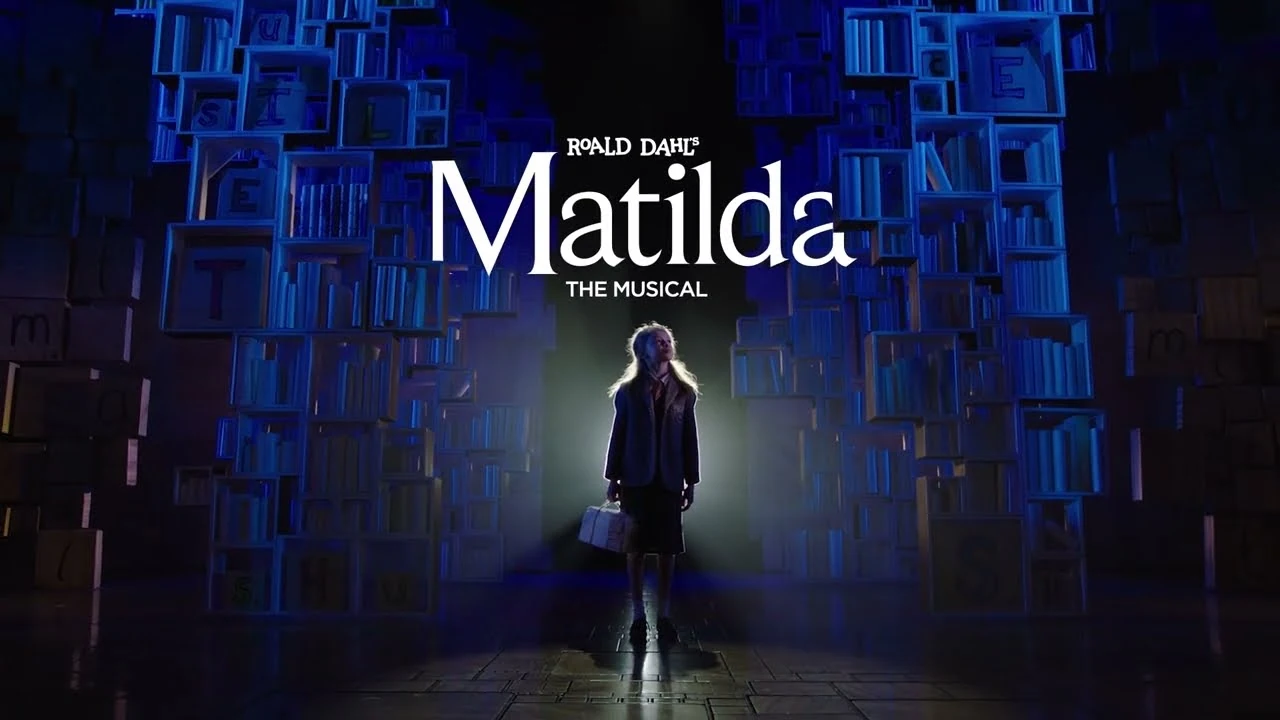
A gifted child, an unruly school and a headmistress who rules by fear: Matilda the Musical takes Roald Dahl’s darkly comic story and gives it a life of its own on stage. First performed by the Royal Shakespeare Company in Stratford-upon-Avon in 2010, it brought together a book by Dennis Kelly and music and lyrics by Tim Minchin. Its move to London, Broadway and productions around the world made a distinctly British theatrical undertaking an international success.
A book becomes a musical
Dahl’s 1988 novel follows Matilda Wormwood, a precocious five-year-old who loves reading but finds little encouragement at home. Her parents, Mr and Mrs Wormwood, mock and neglect her. At school, the cruel headmistress Miss Trunchbull terrorises the pupils, while Matilda’s teacher, Miss Honey, recognises her intelligence and tries to help her.
The musical retains the novel’s clash between children and adult authority, along with Matilda’s telekinetic power. It also gives her a way to tell a story of her own: at the library, she invents a tale about an acrobat and an escapologist. As that story unfolds, it begins to echo Miss Honey’s past. The show’s songs carry the action as well as its humour and feeling, while Matilda’s love of books and capacity for resistance remain central.
The Royal Shakespeare Company announced its plans for a musical adaptation in 2009, with Kelly writing the book, Minchin composing the music and lyrics, and Matthew Warchus directing. The production also brought together choreographer Peter Darling, designer Rob Howell, orchestrator and musical supervisor Chris Nightingale, and illusionist and special-effects creator Paul Kieve. It opened at the Courtyard Theatre in Stratford-upon-Avon on 9 December 2010, following previews from 9 November. Three young performers—Adrianna Bertola, Josie Griffiths and Kerry Ingram—shared the title role.
From Stratford to the West End
After its Stratford engagement ended on 30 January 2011, the production transferred to London’s Cambridge Theatre. Its West End opening, on 24 November 2011, followed a delay to the planned previews and opening night because of structural and installation work at the theatre. The production had also acquired its familiar title, Matilda the Musical.
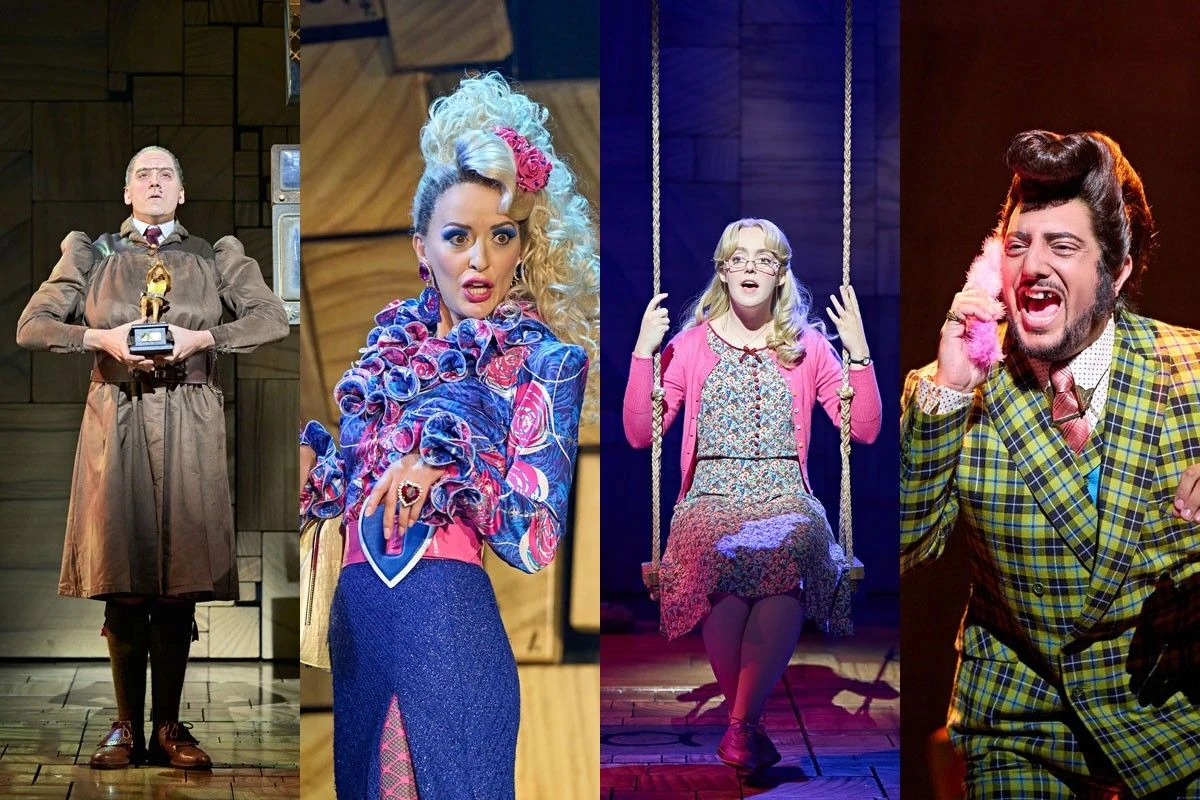
Several principal performers from Stratford returned in London. Bertie Carvel played Miss Trunchbull, with Lauren Ward as Miss Honey and Paul Kaye and Josie Walker as the Wormwoods. The title role was shared by four young actors: Eleanor Worthington-Cox, Cleo Demetriou, Sophia Kiely and Kerry Ingram. The combination of a large adult cast, a rotating child lead and an ensemble of pupils helped make the production’s storytelling depend on performance, music and movement rather than on Matilda alone.
The London production was recognised across several parts of theatre-making. It received seven Laurence Olivier Awards in 2012, including Best New Musical, Best Director for Warchus, Best Theatre Choreographer for Darling, Best Set Design for Howell and Best Sound Design for Simon Baker. Carvel won Best Actor in a Musical, while the award for Best Actress in a Musical was shared by the four performers playing Matilda. In 2011, the production had also won the UK Theatre Award for Best Musical and the Evening Standard’s Ned Sherrin Award for Best Musical.
The West End run was interrupted when performances were suspended on 16 March 2020 during the COVID-19 pandemic. The show returned to the Cambridge Theatre on 16 September 2021. A tenth-anniversary performance later that year brought Kelly and Minchin together for a pre-show speech and included many former cast members, among them 42 people who had played Matilda. In April 2025, the production marked its 5,000th performance.
A British production travels
The RSC announced a Broadway transfer in 2012. It opened at the Shubert Theatre on 11 April 2013, with previews beginning in March. The production retained its English setting despite early pressure for it to be Americanised. Carvel and Ward reprised their London roles, while four young performers—Sophia Gennusa, Oona Laurence, Bailey Ryon and Milly Shapiro—shared the title role. Some lyrics and staging details changed for the New York production. It closed on 1 January 2017 after 1,555 performances.
The Broadway production won five Tony Awards in 2013. Among them was Best Book of a Musical for Kelly; Gabriel Ebert won Best Featured Actor in a Musical, and the production also received awards for scenic design and lighting design. The show was nominated for Best Musical, and Minchin’s score was nominated for Best Original Score. These distinctions show that its recognition extended beyond the performances: the writing, design and music were all part of how the story worked on stage.
Further productions carried the musical to audiences beyond London and New York. A US national tour ran from 2015 to 2017, opening at the Ahmanson Theatre in Los Angeles. An Australian and New Zealand production began in Sydney in 2015 before visiting Melbourne, Brisbane, Perth, Adelaide and Auckland. The first UK and Ireland tour opened at Curve in Leicester in March 2018 and continued to theatres in cities including Dublin, Sunderland, Birmingham, Manchester, Cardiff and Edinburgh. Other productions included Toronto, Manila and a Korean-language version. Later productions in Spain, Argentina and Japan extended its reach further.
That reach has included more than touring English-language companies. The Korean production that opened in 2018 was the first non-English version, while Madrid hosted the first Spanish-language production in 2022. A second UK and Ireland tour opened at Curve, Leicester, in October 2025 and was scheduled to continue through January 2027. The sequence of tours and licensed or local-language productions demonstrates how the work could be staged in different theatrical settings while retaining its central characters and story.
From the stage to the screen
The musical also became the basis for a film adaptation released in the United Kingdom on 25 November 2022. The film’s development had been discussed years earlier: in 2013, Minchin spoke of plans for an adaptation, with Kelly writing the screenplay, Minchin contributing additional songs and music, and Warchus directing. The finished film featured Alisha Weir as Matilda, Emma Thompson as Miss Trunchbull and Lashana Lynch as Miss Honey. Its release brought the stage adaptation’s version of Dahl’s story to a wider screen audience.
The stage production’s success is reflected in a substantial collection of awards, but its history is not only a list of ceremonies. In Stratford, London and New York, the creative work was carried by performers, musicians, designers, choreographers and production teams. The four young actors sharing Matilda’s role were a defining feature of the first London and Broadway productions. Meanwhile, the changes required for transfers—such as the Broadway lyrics and staging—show how the production could adapt to a new venue without changing its English setting or abandoning the book’s basic conflict.
Why Matilda the Musical deserves a place in British Legacy
Matilda the Musical deserves a place in British Legacy because its history shows a British theatre company turning a familiar children’s novel into a new theatrical work, rather than simply reproducing it on stage. The RSC’s Stratford production joined Kelly’s adaptation to Minchin’s songs and Warchus’s direction, with contributions from a wider creative team in choreography, design, orchestration and stage effects. The result proved adaptable enough to move from Stratford to the West End and Broadway, winning major theatre awards in both London and New York. Its seven Oliviers and five Tonys give concrete evidence of recognition across production, performance, writing and design.
Its cultural reach also matters. Tours took the production around the UK and Ireland, across the United States and Australia, and to audiences in countries including the Philippines and South Korea. Local-language versions in Korea and Spain carried the work beyond English-speaking audiences. These performances extended the life of a story about reading, intelligence and children challenging unfair authority, while the 2022 film brought the musical adaptation to another medium. The British connection is therefore specific: the show began with the RSC in Stratford, developed through a British creative team and the West End, and then travelled internationally as a production that could be re-staged and translated. Its continuing tours offer a clear example of British theatre reaching audiences abroad without losing the setting and character of its original work.
Sources
Adapted in part from Matilda the Musical by Wikipedia contributors, under CC BY-SA 4.0. Text has been edited and combined with the existing article; this adapted text is shared under the same licence. Contributor history.