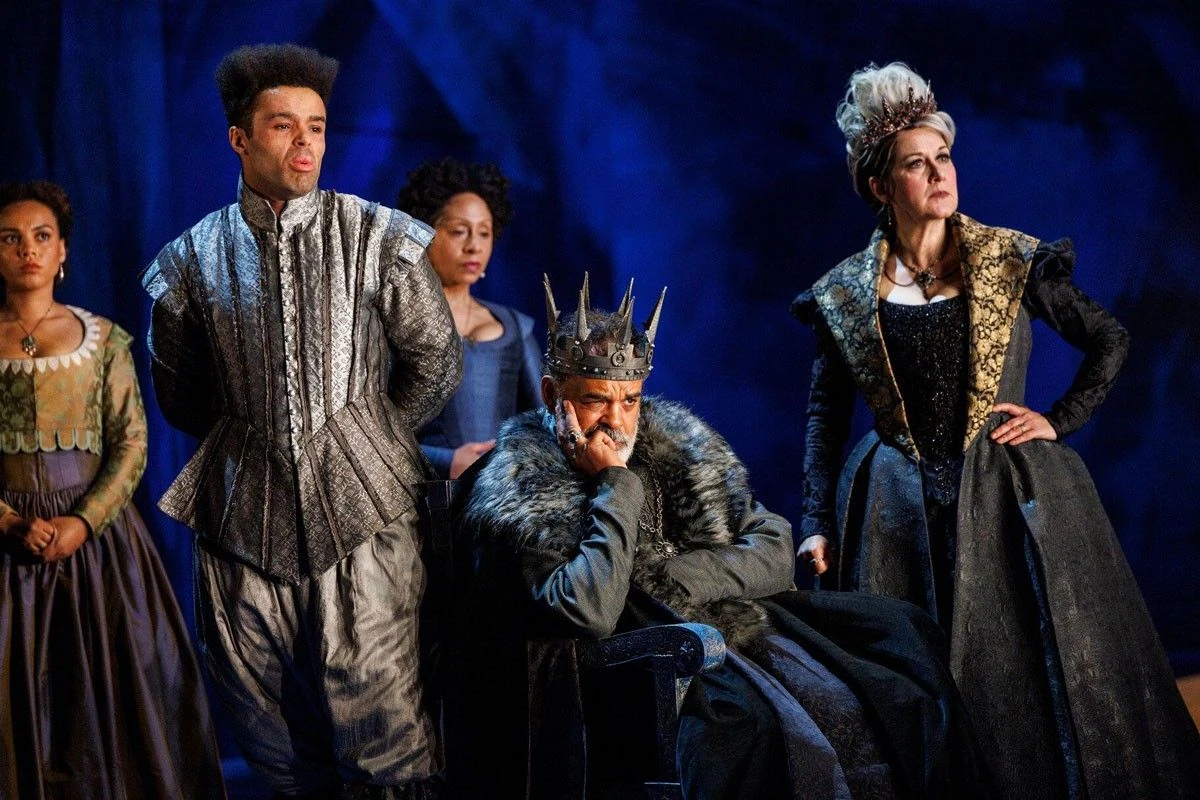
In Cymbeline, a dispute between Britain and Rome unfolds alongside a family story shaped by deception, separation and mistaken identity. Shakespeare sets the play in ancient Britain under King Cymbeline, but its concern with the idea of British nationhood also speaks to political questions of his own time. The result is a work that moves between tragic danger, comedy and romance, and ends not with a single victory but with a series of revelations and reconciliations.
A British setting and a changing political world
Shakespeare wrote Cymbeline, one of his later plays, around 1608–10. Its setting looks back to a legendary Britain, yet the play’s interest in political union and national identity connects that imagined past with concerns associated with Shakespeare’s era. Britain is not simply scenery: the kingdom’s relationship with Rome supplies the public conflict against which the characters’ private choices take shape.
The play resists a single generic label. Its plot includes political intrigue and the threat of death, but also comic misunderstandings and a romantic reunion. That mixture gives the story room to move between public and domestic worlds: a battle over the kingdom’s obligations sits beside questions of trust between spouses, loyalty within families and the consequences of deception. Its shifting tone is one reason directors and actors can approach the material from different angles.
Imogen, Posthumus and the cost of suspicion
At the centre of the personal story is Imogen, Cymbeline’s daughter, and her love for Posthumus Leonatus, who has been banished. The Queen’s influence and Iachimo’s schemes help turn their relationship into a test of trust. Iachimo wagers that he can persuade Posthumus that Imogen has been unfaithful. When Posthumus accepts the false account, he orders her death; Imogen survives and must find her own way through the danger that follows.
Disguised as a boy, she travels through the Welsh wilderness. There she encounters Pisanio, a loyal servant, and Guiderius and Arviragus, two princes abducted when young. They do not know that Imogen is their sister. The disguise keeps her identity hidden while the story draws together people separated by earlier events. It also places a family’s private losses within the play’s wider pattern of concealment and discovery.
Meanwhile, the conflict between Rome and Britain brings the domestic and political plots to a head. The Romans arrive to claim tribute owed by Cymbeline, and the Britons fight them. The battle does not resolve the story on its own: its aftermath opens the way for revelations about the characters’ identities and the Queen’s treachery, as well as the unmasking of her son Cloten. Imogen and Posthumus are reunited, and peace returns to Cymbeline’s realm.
Why Cymbeline deserves a place in British Legacy
Cymbeline belongs in a British cultural story not just because Shakespeare places it in ancient Britain, but because it makes the country’s identity part of the drama. The conflict with Rome gives the play a national dimension, while its divided families and damaged relationships show how political disorder reaches into private life. Its interest in union and British identity also links the play’s legendary setting to questions that concerned Shakespeare’s time. These strands make the work more than a tale of a king and his household: it considers leadership, loyalty and the difficult restoration of trust.
The play’s changing combination of tragedy, comedy and romance remains a practical resource for theatre-makers. Its interwoven plots offer performers and directors contrasting registers, from suspicion and danger to reunion, without reducing the story to one mood or one theme. The account of the play’s performance history includes continuing revivals by the Royal Shakespeare Company, placing it within the repertory of a major British theatre institution. Its lasting value lies in this combination of a distinctly British imaginative setting, complicated family relationships and a form flexible enough to invite renewed interpretation.