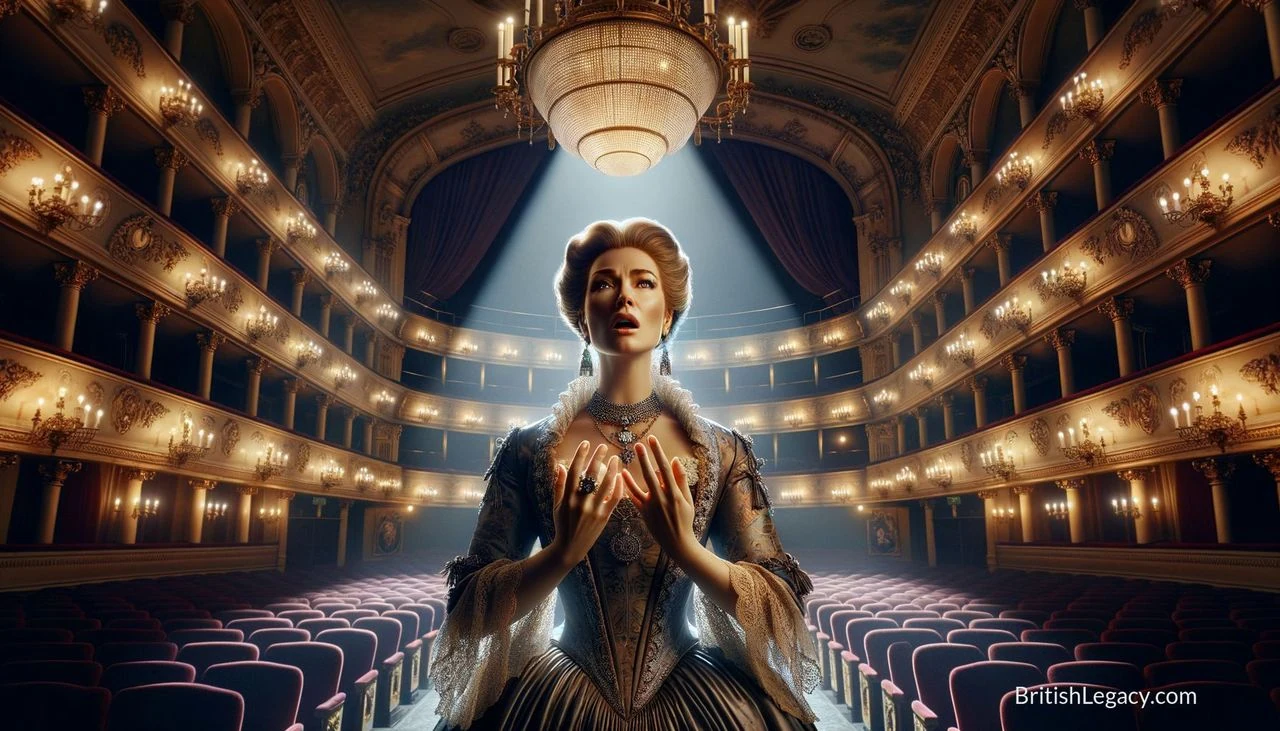
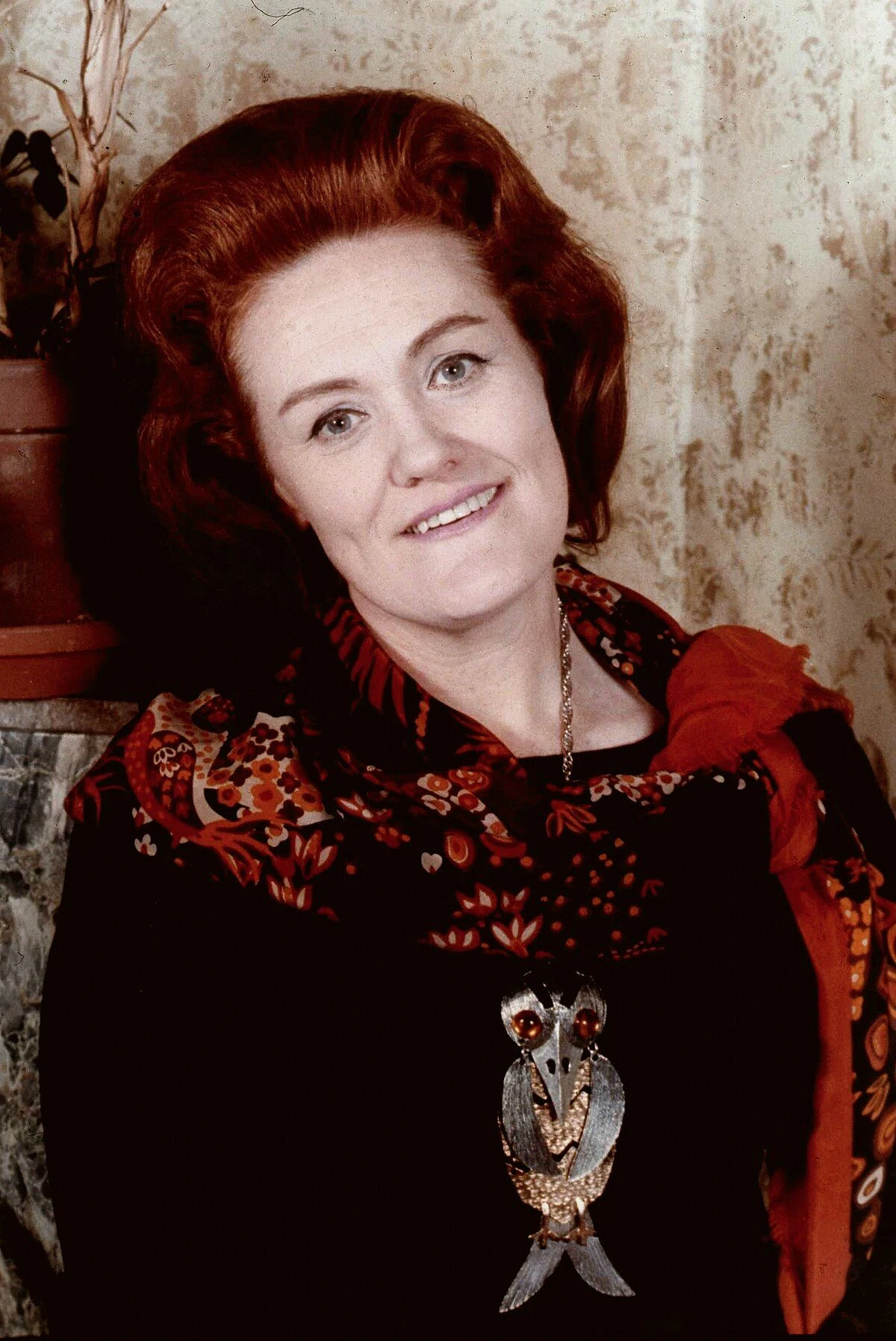
Joan Sutherland’s breakthrough came at Covent Garden. In 1959, her performance as Lucia in Donizetti’s Lucia di Lammermoor helped launch an international career and drew renewed attention to the intricate bel canto repertoire. The Australian soprano would become known as “La Stupenda”, but her achievement was not simply a matter of vocal range: through her roles, recordings and long collaboration with conductor Richard Bonynge, she helped make operas by Donizetti, Bellini and Rossini central to modern performance.
Sydney beginnings and a London stage
Born Joan Alston Sutherland in Sydney on 7 November 1926, she attended St Catherine’s School in Waverley. Her mother, a mezzo-soprano who had taken voice lessons, sang at home; Sutherland began serious voice study with John and Aida Dickens when she was 18. She made her concert debut in Sydney in 1947 as Dido in Purcell’s Dido and Aeneas. In 1949 she won the Sun Aria, then Australia’s leading singing competition, and the following year won the Mobil Quest.
After making her staged-opera debut in Eugene Goossens’s Judith in Sydney in 1951, Sutherland went to London to study at the Royal College of Music’s Opera School with Clive Carey. Covent Garden engaged her as a utility soprano. She made her debut there on 28 October 1952 as the First Lady in Mozart’s The Magic Flute, followed by the smaller role of Clotilde in Bellini’s Norma. In December she sang her first leading role at the house, Amelia in Verdi’s Un ballo in maschera.
At first, Sutherland trained towards the dramatic Wagnerian repertory, admiring the Norwegian soprano Kirsten Flagstad. She married Australian conductor and pianist Richard Bonynge in 1954. Bonynge encouraged her to reconsider that path: her facility with high notes and coloratura, the rapid, intricate ornamentation characteristic of the style, suggested a different repertoire. She increasingly turned to bel canto, developing into a dramatic coloratura soprano. Their son, Adam, was born in 1956.
Lucia and the bel canto revival
Sutherland’s Covent Garden Lucia di Lammermoor in February 1959 was conducted by Tullio Serafin and staged by Franco Zeffirelli. It marked the beginning of her international career. She went on to sing Lucia in Paris in 1960 and at La Scala and the Metropolitan Opera in 1961. At her New York Met debut, the Mad Scene received a 12-minute ovation. Newspapers around the world soon used the nickname “La Stupenda”.
The success of Lucia helped focus attention on a wider body of bel canto opera. In the 1960s Sutherland added leading roles including Violetta in Verdi’s La traviata, Amina in Bellini’s La sonnambula, Elvira in I puritani and the title role in Rossini’s Semiramide. She took on Norma in Bellini’s opera of that name in 1963 and Marie in Donizetti’s La fille du régiment in 1966. These roles demanded control of elaborate vocal lines, agility and a secure upper register. Her work, alongside Bonynge’s conducting, helped bring neglected works by Donizetti, Bellini and Rossini back into prominent performance.
Her repertoire continued to broaden. In the 1970s she added Donizetti’s Maria Stuarda and Lucrezia Borgia, as well as Massenet’s Esclarmonde; in the following decade she took on Anna Bolena and Adriana Lecouvreur. Sutherland said later that Esclarmonde was her greatest achievement and that she regarded its performances and recordings as her best. She also made a studio recording of Puccini’s Turandot with Luciano Pavarotti in 1972, though she never performed the role on stage.
Performance, recordings and public life
Recordings carried Sutherland’s interpretations beyond the opera house. Her album The Art of the Prima Donna, recorded in 1960, won the Grammy for Best Classical Performance – Vocal Soloist in 1962. The award made her the first Australian to win a Grammy. She toured Australia in 1965 with the Sutherland-Williamson Opera Company, accompanied by a young Luciano Pavarotti, and later recorded and performed with him.
Sutherland’s international schedule included 223 performances at the Metropolitan Opera, where her last appearance was a concert in March 1989. Her final full-length dramatic performance was as Marguerite de Valois in Les Huguenots at the Sydney Opera House in 1990. On New Year’s Eve that year, she appeared at Covent Garden in a gala performance of Die Fledermaus, accompanied by Pavarotti and mezzo-soprano Marilyn Horne. These milestones mark the close of her performing career, rather than a single last appearance on stage.
She also reached audiences through television. In 1972 she starred in Who’s Afraid of Opera, a six-part children’s series in which she performed selections from six operas for a puppet audience. In 1997 she published her autobiography, A Prima Donna’s Progress. After retirement she made relatively few public appearances, but served on the jury of the Cardiff Singer of the World competition five times and became its patron in 2003. At a 2002 London dinner, she accepted the Royal Philharmonic Society’s gold medal.
Honours and remembrance
Sutherland received British and Australian honours during her career. She was appointed a Commander of the Order of the British Empire in the 1961 Birthday Honours and became a Dame Commander in 1979. In 1991 the Queen bestowed the Order of Merit on her. Australia named her its Australian of the Year in 1961 and made her one of the first Companions of the Order of Australia in 1975.
In 2008 she fell while gardening at her home in Les Avants, Switzerland, and broke both legs. She died there on 10 October 2010, aged 83, of cardiopulmonary failure. Her family held a private funeral at her request. Opera Australia arranged a state memorial service at the Sydney Opera House in November 2010; a memorial service followed at Westminster Abbey in February 2011.
Her honours continued after her death. In 2012 she was voted into the first Gramophone Hall of Fame. The Joan Sutherland Performing Arts Centre in Penrith and facilities at her former school in Waverley carry her name, reflecting the continuing recognition of her contribution to performance and musical life.
Why Dame Joan Sutherland deserves a place in British Legacy
Sutherland’s place in British Legacy rests on a substantial, clearly documented connection with British musical institutions and audiences. London was not a brief stop in her career: she came to study at the Royal College of Music, joined the Royal Opera House, and made Covent Garden the stage for the 1959 performance that began her international breakthrough. Her later return to that house for her final public appearance in 1990 gives that relationship a span of nearly four decades. Her British honours—from CBE to DBE and the Order of Merit—also recognise the standing she achieved within the country’s cultural life.
Her influence extended beyond a celebrated performance. Sutherland helped bring bel canto works by Donizetti, Bellini and Rossini back into circulation, giving singers and audiences renewed access to a repertoire whose demands had often made it less familiar. Her performances and recordings, many shaped through her artistic partnership with Bonynge, helped establish these roles as a lasting part of operatic life. She also took opera to younger viewers through television and supported emerging singers through her involvement with the Cardiff Singer of the World competition. Her story belongs in a British cultural account not because she was British—she was Australian—but because her study, work and achievements were deeply connected to British institutions and stages, while her artistry travelled far beyond them.
Sources
Adapted in part from Joan Sutherland by Wikipedia contributors, under CC BY-SA 4.0. Text has been edited and combined with the existing article; this adapted text is shared under the same licence. Contributor history.