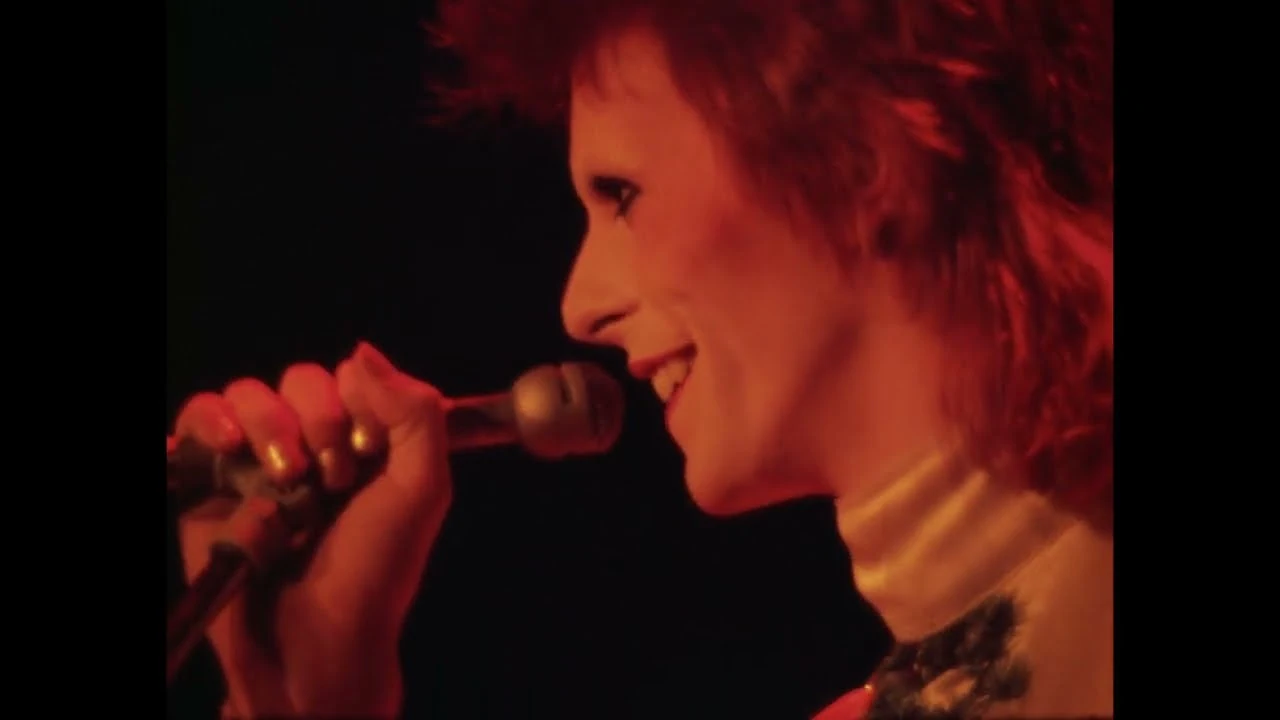
On 3 July 1973, David Bowie brought the Ziggy Stardust tour to a close at London’s Hammersmith Odeon. Near the end of the concert, he told the audience that it would be “the last show that we’ll ever do”. The words sounded like a farewell to Bowie himself, but the announcement marked the retirement of his stage persona, not the end of his performing career. The distinction gives the concert its particular place in his story: an ending staged at the height of a character’s public life.
The making of Ziggy Stardust
Bowie introduced Ziggy Stardust through the 1972 album The Rise and Fall of Ziggy Stardust and the Spiders from Mars. The character was a flamboyant, androgynous rock star, shaped by science-fiction imagery and a futuristic visual style. The album achieved critical and commercial success and established Ziggy as a defining persona for Bowie’s early-1970s work.
Through the character, Bowie explored themes of alienation, identity and fame. Ziggy’s appearance made visual presentation part of the performance: theatrical clothing and androgyny sat alongside the music, challenging conventional expectations of a rock star’s image. The Hammersmith concert brought those elements together on the tour’s final night, making the end of the character a public event as well as a musical one.
The final night at Hammersmith
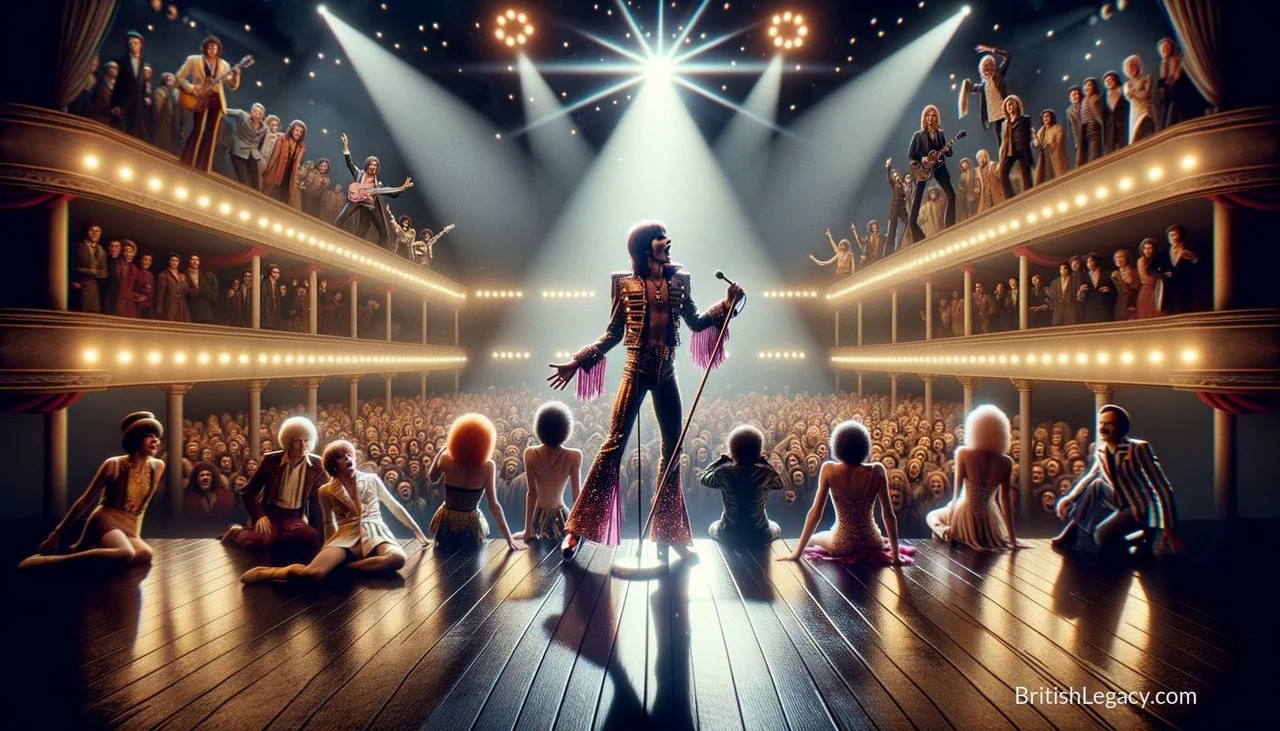
Concert-goers arrived without knowing that Bowie would announce Ziggy’s retirement. The performance included “Starman”, “Moonage Daydream” and “Rock ’n’ Roll Suicide”. Bowie’s dramatic poses and changing costumes contributed to a show in which the visual spectacle was closely bound to the songs. The concert’s theatrical style was not separate from Ziggy’s identity; it helped present the character to the audience.
Near the end of the show, Bowie said: “Of all the shows on this tour, this particular show will remain with us the longest because it’s not only the last show of the tour, but it’s the last show that we’ll ever do.” The statement could be taken as a retirement from live performance. Its significance here was narrower: it announced the end of Ziggy Stardust. Bowie was closing one highly visible phase of his career, rather than giving up performance altogether.
A farewell preserved
The concert was later released as an album and a film, carrying the performance beyond the Hammersmith Odeon and allowing later audiences to encounter the farewell. The recording preserves both the music and the moment when Bowie declared the tour over. That combination helps explain why the concert is remembered as more than a final date on a touring schedule: its ending was spoken on stage, in front of an audience, and tied directly to the fate of Ziggy.
Ziggy Stardust was closely associated with glam rock, whose theatricality and flamboyant fashion formed part of the character’s appeal. Bowie’s androgynous persona also made self-expression and gender presentation visible within this rock performance. The concert stands as a clear endpoint for that particular creation. Claims that this single show catalysed glam rock’s acceptance or transformed music worldwide go further than the account can establish; its documented importance lies in the ending Bowie chose to make public.
Why David Bowie’s Ziggy Stardust farewell deserves a place in British Legacy
The farewell deserves a place in British Legacy as a London concert that made artistic reinvention tangible. Ziggy Stardust was not simply a name attached to a set of songs: Bowie built a character through science-fiction imagery, androgynous appearance and theatrical performance. At Hammersmith Odeon, he gave that creation a definite ending, announcing it in the same live setting where audiences had encountered the persona. The event’s importance rests on this specific act of performance and closure, rather than on broad claims that one concert changed an entire genre.
The story also shows how a live event can outlast the room in which it took place. The album and film releases carried the performance to later audiences, preserving the songs, visual presentation and announcement together. Bowie ended Ziggy’s public life while leaving his own career open to what came next. That combination—an artist making a character, bringing it to a conclusion in front of an audience, and leaving a record of the moment—makes the concert a distinctive example of British popular culture’s meeting of music, image and theatrical craft.