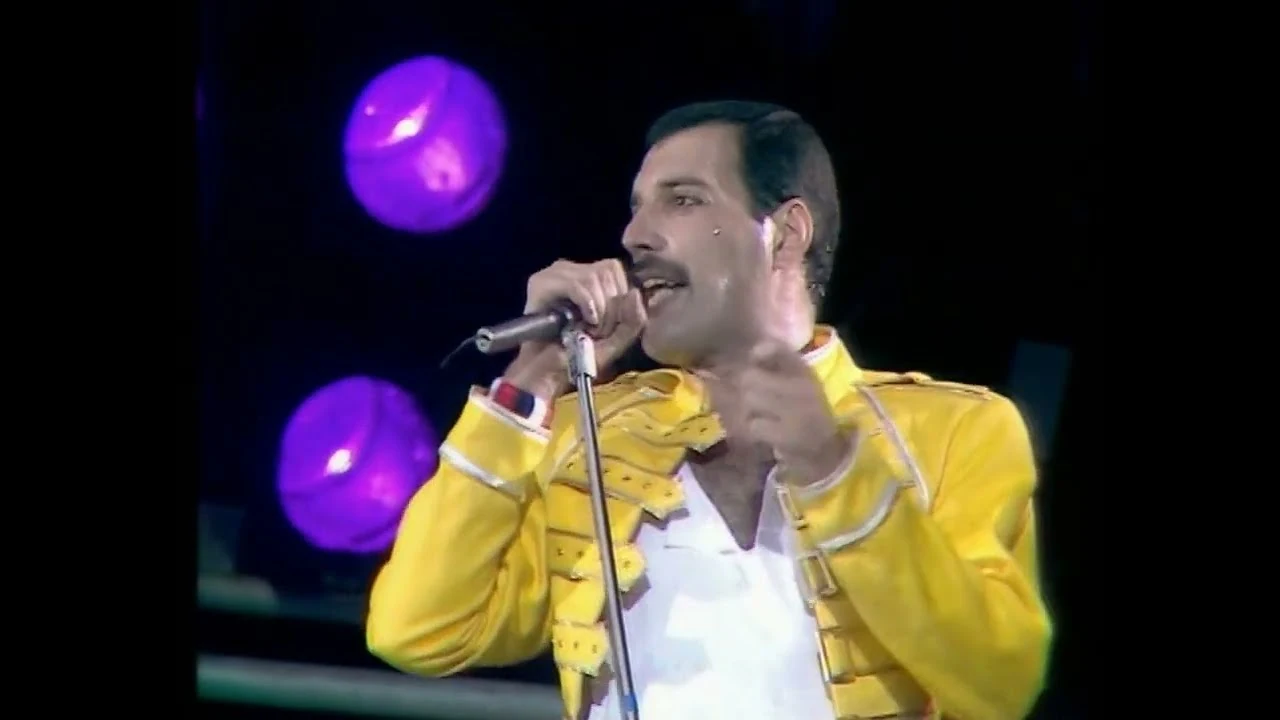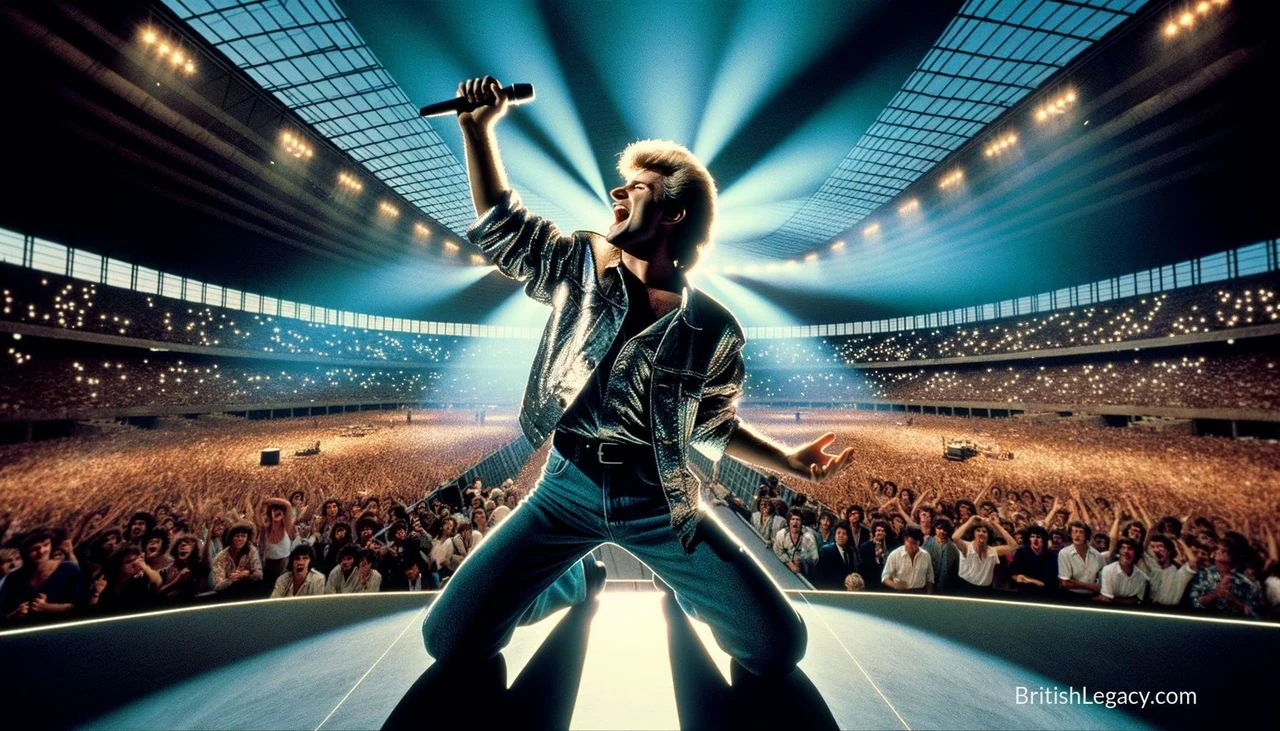
On 11 and 12 July 1986, Queen played Wembley Stadium as part of the band’s Magic Tour. The two concerts brought Freddie Mercury, Brian May, Roger Taylor and John Deacon before a crowd reported in the original account as more than 150,000 people across the two nights. The performances became a lasting record of Queen on a vast stage, with Mercury’s crowd engagement and the band’s mixture of rock songs and theatrical presentation at their centre.
Queen brings the Magic Tour to Wembley
The tour supported A Kind of Magic, Queen’s 1986 album, which was also the soundtrack for the film Highlander. Wembley was one stop on a European tour, but the scale of the stadium made the London dates distinctive. The venue had opened in 1923 and was best known as a sporting landmark; by the 1980s, it had also become a major concert setting.
Queen’s four members brought contrasting roles to the stage: Mercury as lead singer and focal point, May on guitar, Taylor on drums and Deacon on bass. The original account describes the performances as technically assured and emotionally compelling. More concretely, their appeal rested on the combination of a full-band rock sound, a large repertoire of recognisable songs and Mercury’s ability to address a stadium audience without losing the sense of direct engagement.
Mercury and the stadium audience
Mercury’s stage presence is a defining part of the Wembley story. He moved between theatrical display and moments of apparent closeness with the crowd, wearing several costumes, including the yellow jacket remembered from the performances. The set included “Bohemian Rhapsody”, “Radio Ga Ga”, “We Will Rock You” and “We Are the Champions”: songs with very different textures, but all suited to a performance in which audience participation and shared recognition mattered.
The concerts’ significance lies not simply in the size of the venue or the fame of the band. Wembley placed Queen’s combination of rock musicianship and theatrical staging before a huge audience. Mercury’s command of the setting gave the performances a clear centre, while the contributions of May, Taylor and Deacon made them a collective achievement rather than a solo spectacle.
From live performance to lasting record
The Wembley shows were recorded and later released as Queen Live at Wembley ’86, in album and video forms. That record allowed people who were not in the stadium to encounter the performances, and gave the concerts a life beyond the two dates themselves. The original account describes the releases as best-selling, but provides no sales figures; the more firmly supported point is that the recording preserved both the music and an impression of the event for audiences elsewhere.
That afterlife also changed how the concerts could be remembered. A stadium performance is temporary: the crowd disperses, and the music ends. A recording makes the event repeatable, carrying its set and staging to listeners and viewers in other places and at later times. For Queen, the Wembley release became an enduring way to revisit a particularly prominent stop on the Magic Tour.
Why Queen’s Wembley concerts deserve a place in British Legacy
Queen’s Wembley concerts deserve a place in British Legacy because they connect a British band’s musical identity with one of the country’s best-known public venues. The performances brought Queen’s rock repertoire and theatrical approach to a stadium more commonly associated with sport, demonstrating how a venue could also serve as a setting for a major cultural event. The occasion depended on the work of all four musicians: Mercury’s stagecraft, May’s guitar, Taylor’s drumming and Deacon’s bass combined to make the concerts a band performance on an exceptional scale.
The concerts’ recorded afterlife is part of that legacy. Queen Live at Wembley ’86 carried the performances beyond the people who attended, preserving the music and a sense of the event for later audiences. The dates therefore matter both as live shows and as a record through which Queen’s approach to large-scale performance could continue to be encountered. Their British connection is specific: a British band, performing its 1986 tour at Wembley Stadium in London, created an event whose reach extended beyond the stadium through its subsequent release.