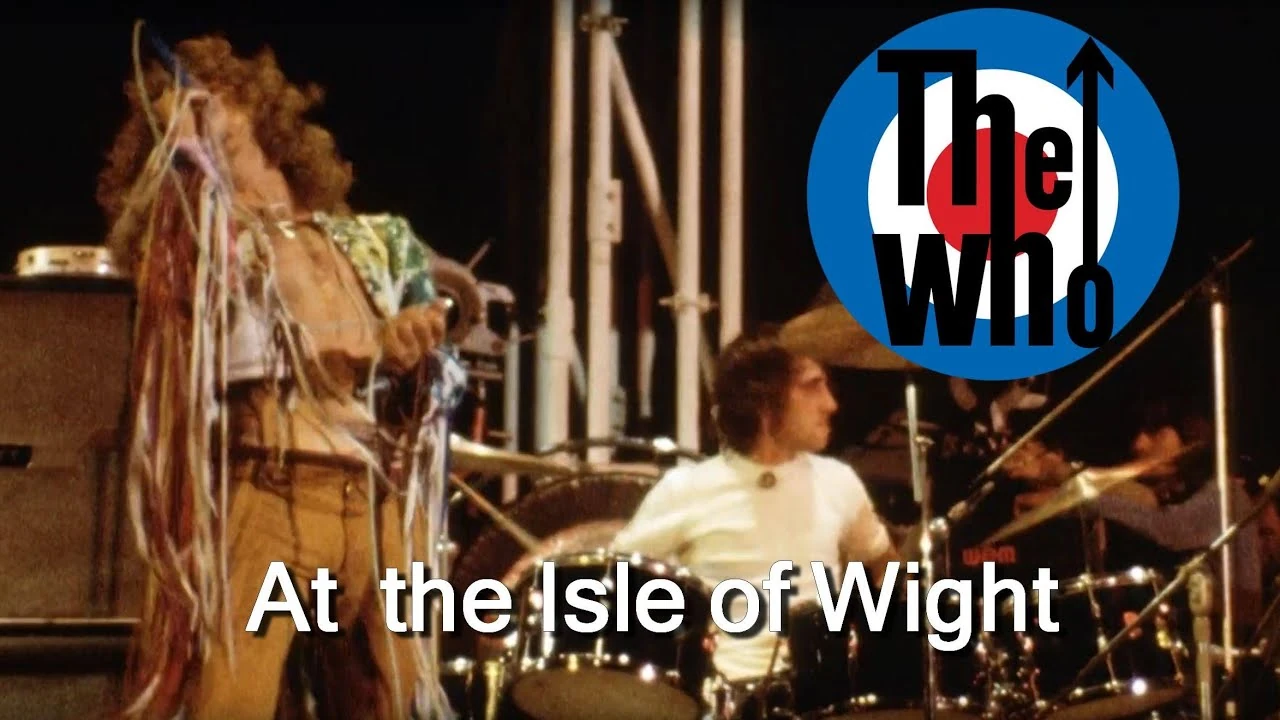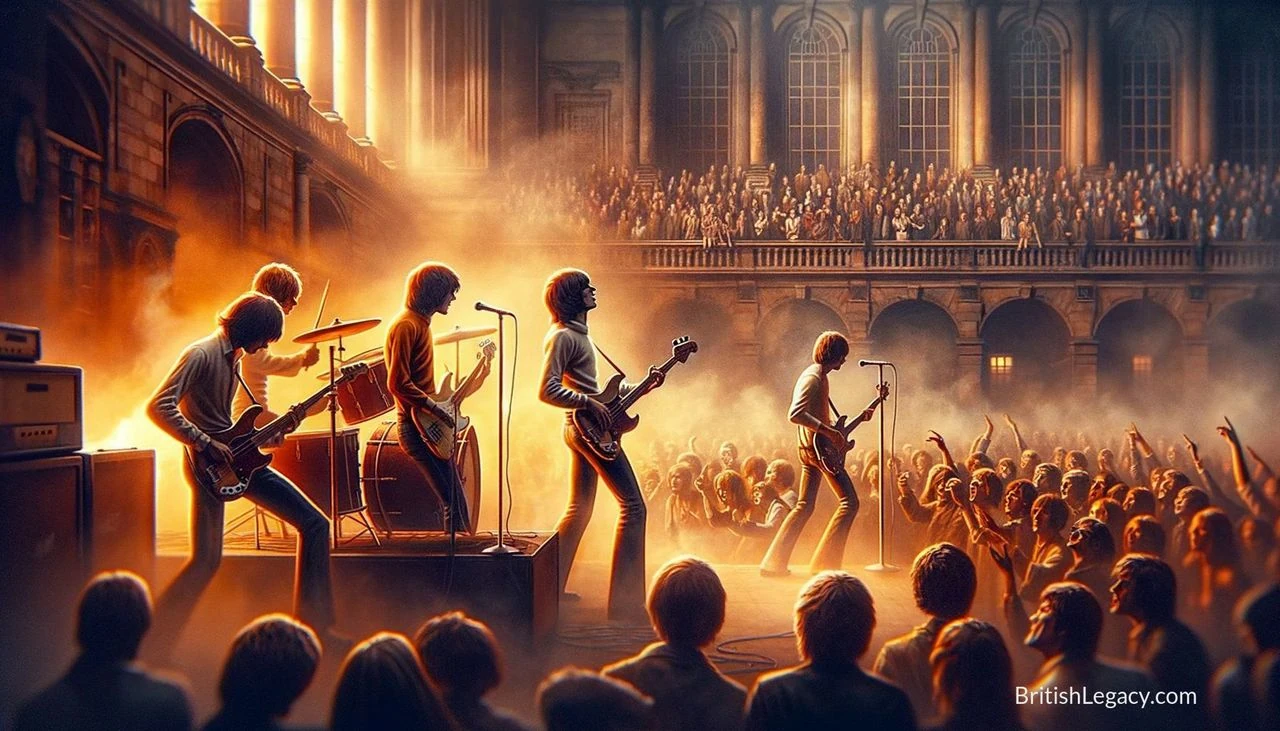
On a February evening in 1970, The Who played the University of Leeds refectory. The concert became the source of Live at Leeds, a record valued for the force of its performance and the immediacy of its sound. Rather than the polish of a studio session, listeners encounter a band playing together before an audience: guitar, bass, drums and voice, with the noise and exchanges of a live show still present. The setting and performance are inseparable from the album’s character: this is music made in a particular room, in front of a crowd.
A university refectory becomes a concert venue
The venue was a university refectory, a modest room far removed from the grand scale often associated with rock history. Its everyday function contrasts with the intensity of the performance preserved on the record. Leeds was not simply a location named on a sleeve; the live setting is central to the album’s identity. The audience, the room and the musicians’ interaction all form part of what a listener hears.
By 1970, The Who comprised Pete Townshend, Roger Daltrey, John Entwistle and Keith Moon. The band had established itself in British rock and was riding high on the success of its rock opera Tommy. At Leeds, Townshend’s guitar, Daltrey’s vocals, Entwistle’s bass and Moon’s drumming meet in an unvarnished performance. Each has a distinct role, but the recording’s effect comes from hearing those parts work together, rather than from treating any one musician as the whole story.
What the recording preserves
The set combines The Who’s own songs with cover versions. It opens with “Young Man Blues” and includes extended performances of “My Generation” and “Magic Bus”. The selections give the band room to interpret other material as well as to stretch familiar songs in concert. That range is one reason the record works as more than a document of a single celebrated performance: it also shows the group moving between its own repertoire and songs from the wider rock tradition.
Feedback, audience reactions and spoken exchanges belong to the recording’s texture. Their presence gives the performance an immediacy different from a studio production, where such sounds and interruptions would not play the same part. The record lets listeners hear the band in the moment, responding to the conditions of a live show. Its energy is not only a matter of volume or force; it also comes from the shifts, exchanges and rough edges that remain audible.
Released in May 1970, Live at Leeds has since appeared in expanded reissues. The record is often described as one of the greatest live rock albums, but that remains a critical judgement rather than a measurable fact. More concretely, its contents preserve a concert by The Who, including the members’ musical interplay and the atmosphere of a performance in front of an audience. The reissues have added material to the original release, carrying the recording in expanded forms beyond its first appearance.
Why Live at Leeds deserves a place in British Legacy
Live at Leeds earns its place in British Legacy through the specific achievement it records: a British band’s performance at a university in England, preserved with the immediacy of a live setting. The album brings together Townshend’s guitar, Daltrey’s voice, Entwistle’s bass and Moon’s drums, making the force of their collective performance audible. Its mixture of original songs and covers also captures a band working with its own material while engaging with the wider rock tradition. The University of Leeds refectory is not incidental background; it is the particular place in which this musical document took shape.
The record’s continuing value lies in giving later listeners access to the character of that performance: feedback, audience response and spoken exchanges remain part of the experience. Expanded reissues have made more material available, while the album’s original identity remains tied to one concert and one venue. These features make Live at Leeds a concrete piece of British musical history, rather than simply a title surrounded by claims of greatness. It preserves musicians making music together at a specific moment, and allows that performance to be heard well beyond the room in which it happened.