When Arthur Miller’s Death of a Salesman opened in London in July 1949, British audiences encountered a story rooted in American life: a travelling salesman, a family under financial pressure and the promise of success that keeps slipping away. The play’s subsequent British productions have brought that story into new theatrical settings, from Warren Mitchell’s performance at the Royal National Theatre in 1979 to the Royal Shakespeare Company’s centenary-season revival in 2015 and a West End staging in 2019.
A tragedy of memory and expectation
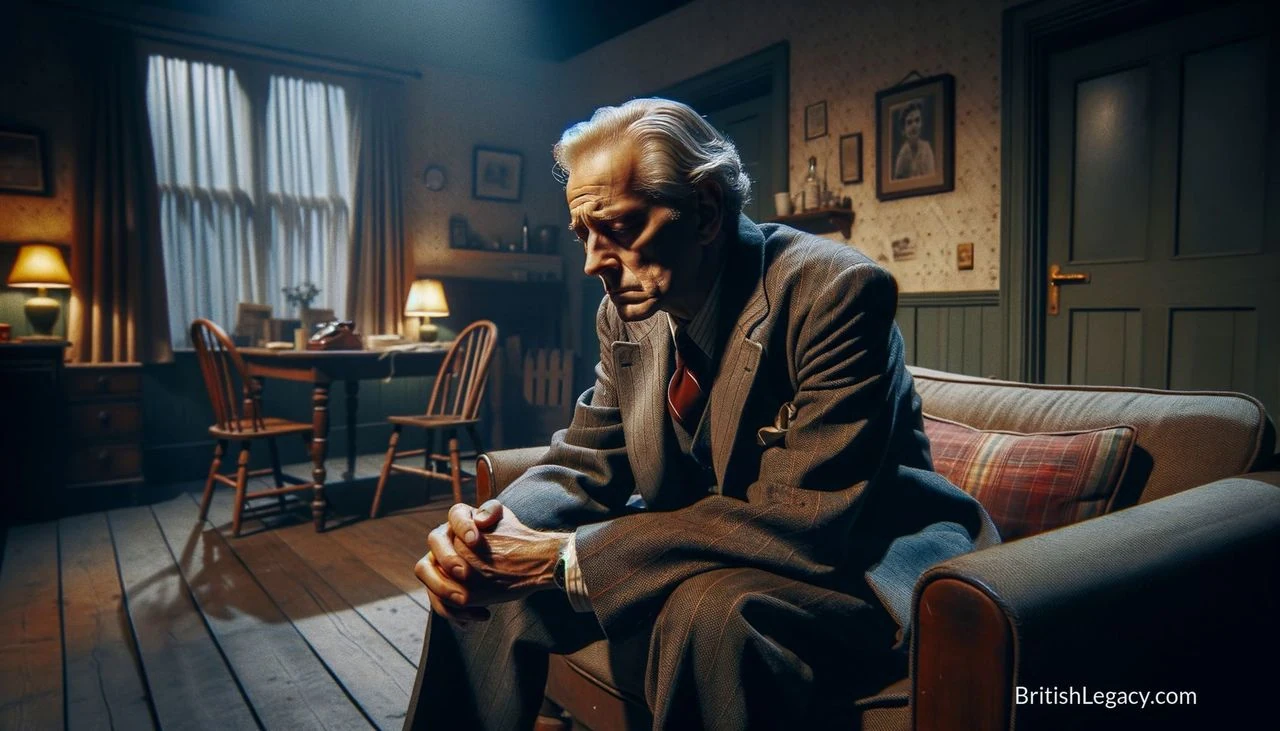
Miller’s two-act play centres on Willy Loman, an ageing salesman who returns home exhausted and troubled by his increasingly uncertain state of mind. His hopes for success have not come to pass, and he struggles to reconcile the life he imagined with the one he and his family actually lead. The action moves between the present and Willy’s memories, dreams and arguments, so that past events intrude upon the family’s attempts to deal with the immediate crisis.
Willy’s wife, Linda, tries to support him while urging their sons to recognise how badly he is struggling. Their elder son, Biff, once a promising school athlete, has not found the direction his father expected of him. He has drifted between jobs and places, and his relationship with Willy is shaped by a painful discovery from his youth: in Boston, Biff found his father with another woman. The encounter shattered his image of Willy and helps explain his rejection of the ambitions his father continues to press upon him.
Happy, the younger son, offers a different version of the family’s disappointment. He presents himself as successful, yet remains dissatisfied and seeks approval. The contrast between the brothers, and between Willy’s self-image and their less flattering understanding of him, drives the family’s confrontations. Biff wants to stop pretending that he is destined for business success; Willy mistakes his son’s honesty and emotion for renewed agreement with his own dream.
In the play’s final movement, Willy imagines that his death will provide insurance money for Biff and secure the recognition he has sought. He dies in a car crash. At the funeral, the family and a small number of others gather, rather than the crowd Willy had imagined. Biff decides against following his father’s ambitions, while Happy resolves to continue in business. Linda, having paid the family’s remaining debts with the insurance payout, says they are free. The ending makes the cost of Willy’s mistaken hopes tangible without offering the family a simple resolution.
From Broadway to London
Death of a Salesman premiered at the Morosco Theatre in New York on 10 February 1949. The original Broadway production ran for 742 performances and won the Pulitzer Prize for Drama and the Tony Award for Best Play. Its London opening followed on 28 July that year. British responses were mixed but mostly favourable: The Times questioned the timing of the transfer, while Punch critic Eric Keown praised the production’s imagination and theatrical sense.
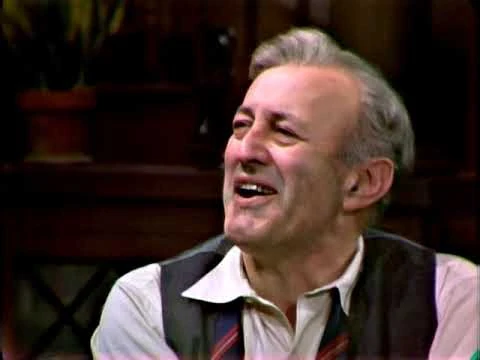
The play’s British history includes productions beyond London. In 1966, Shay Gorman played Willy for Unity Theatre in London in a production directed by Harry Landis. In 1979, Warren Mitchell played the role at the Royal National Theatre after performing it in Perth, Western Australia, earlier that year. His National Theatre performance brought him both an Evening Standard Award and an Olivier Award. Miller described Mitchell’s interpretation as one of the best he had seen in the part.
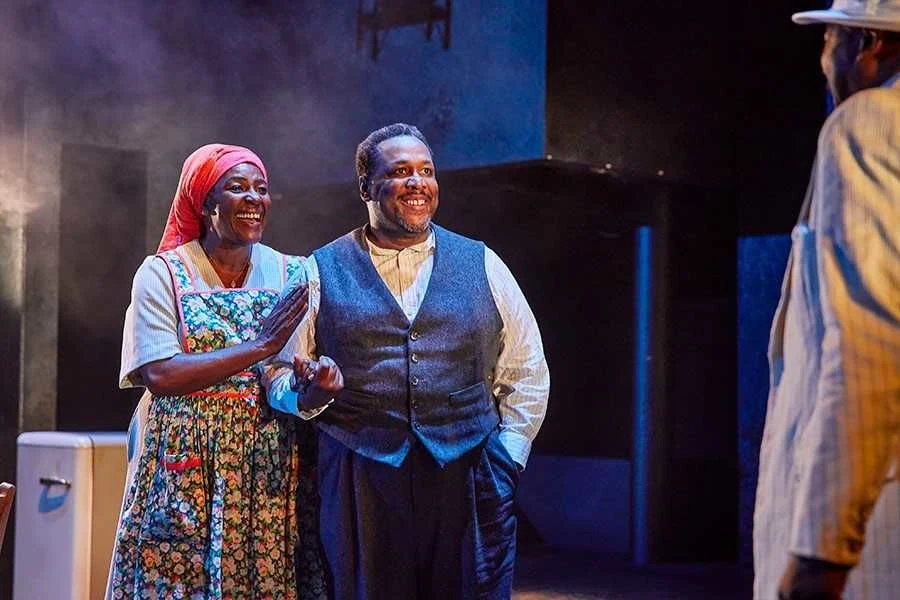
In 2015, the Royal Shakespeare Company staged the play in Stratford-upon-Avon, with Antony Sher as Willy and Harriet Walter as Linda. Directed by Gregory Doran, the production formed part of the celebrations marking Miller’s centenary and later transferred to the Noël Coward Theatre in London for a ten-week West End run. Four years later, Wendell Pierce and Sharon D. Clarke starred in a London production at the Piccadilly Theatre, which ran from October 2019 to January 2020. Clarke won the Laurence Olivier Award for Best Actress for her performance; director Marianne Elliott and co-director Miranda Cromwell were also recognised at the awards.
Why the play keeps returning
Miller wrote a tragedy in which public measures of success press upon private family life. Willy believes that being liked and appearing successful should lead to security. Biff, after seeing the gap between his father’s claims and actions, tries to name a less grand truth about himself. Their conflict is not simply between ambition and failure: it is also about whether a family can speak honestly when its members have built their hopes around competing versions of the past.
The play’s structure gives that conflict theatrical force. Memories and imagined conversations do not sit apart from the present; they interrupt it. Willy’s recollections of Biff’s school years sit alongside the strained exchanges of the adult family, making it possible to see both his longing for the past and the damage caused by his inability to accept change. The movement between memory and present also lets an audience encounter the family’s history as Willy experiences it, rather than as a neatly ordered account.
Its British productions have placed the work in the hands of different generations of performers and companies. Mitchell’s award-winning National Theatre performance, the RSC’s centenary-season revival with Sher and Walter, and the 2019 West End production with Pierce and Clarke mark distinct moments in that history. The play’s London opening in 1949 and its return to British stages over subsequent decades show a continuing theatrical engagement with Miller’s drama, rather than a single celebrated transfer.
Why Death of a Salesman deserves a place in British Legacy
Death of a Salesman belongs in British Legacy not because Miller was British—he was an American playwright—but because the play has a documented history on British stages. Its London opening came in 1949, only months after its Broadway premiere, and British productions have continued to revisit it. The Royal National Theatre production featuring Warren Mitchell earned him both an Evening Standard Award and an Olivier Award. The Royal Shakespeare Company’s 2015 staging brought the play to Stratford-upon-Avon and then to the West End, while the 2019 Piccadilly Theatre production received further recognition through Sharon D. Clarke’s Olivier Award.
Those performances have made British theatre a continuing setting for the play’s examination of work, family expectation and the pursuit of success. The story remains specific to Willy Loman and his family, but its stage life in Britain has given successive companies and audiences the opportunity to encounter Miller’s construction of memory, conflict and self-deception. Recording that history recognises the contribution of British actors, directors and institutions to the play’s performance tradition without claiming the work as a British creation. Its place in the country’s theatrical record lies in that sustained engagement: a major American play repeatedly staged, interpreted and honoured in Britain.
Sources
Death of a Salesman — revision 1379344293
Adapted in part from Death of a Salesman by Wikipedia contributors, under CC BY-SA 4.0. Text has been edited and combined with the existing article; this adapted text is shared under the same licence. Contributor history.