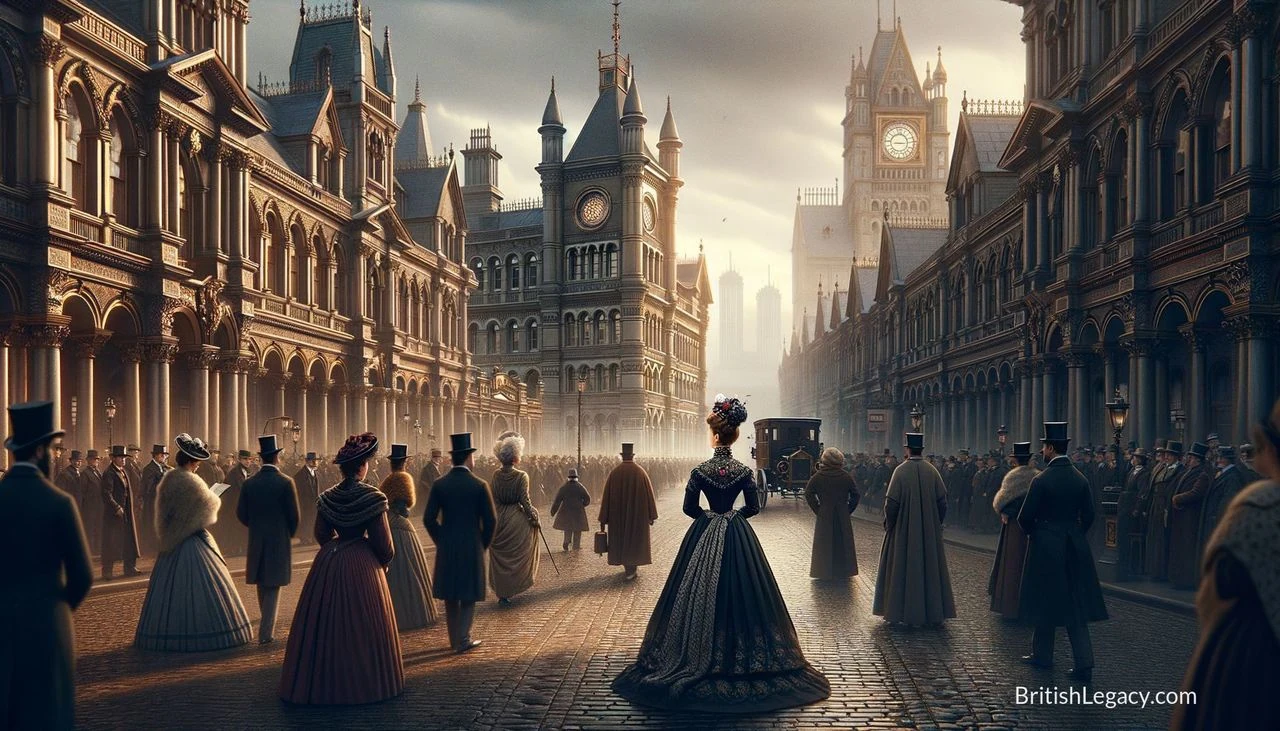
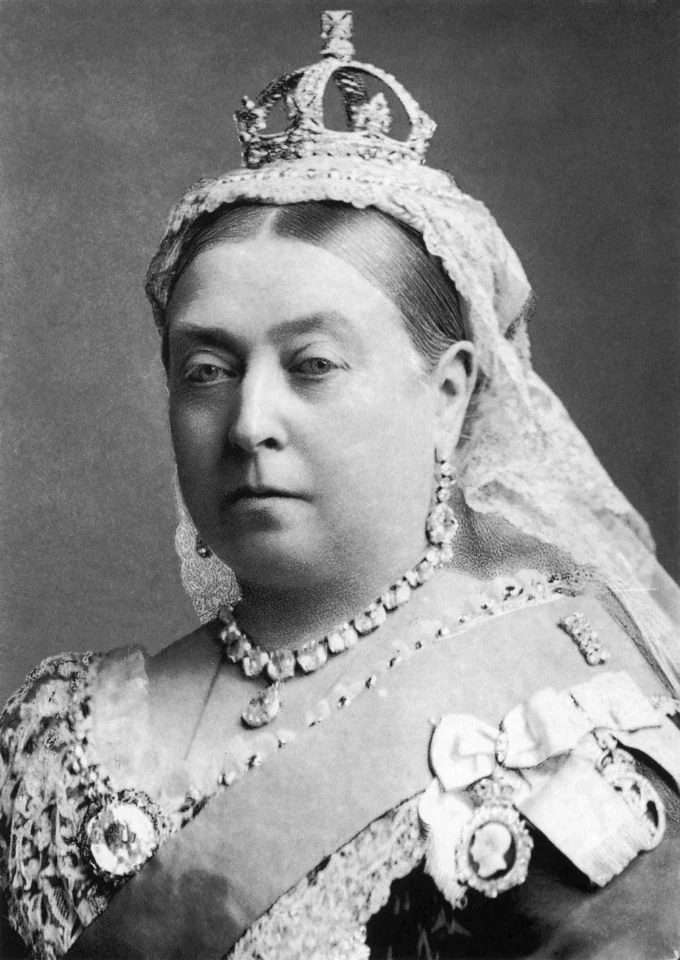
Victoria became queen in 1837, aged 18, and reigned for more than 63 years. Her time on the throne encompassed industrial growth, political reform and a vast expansion of the British Empire. She was neither a passive symbol nor an all-powerful ruler: early in her reign she tried to influence ministers and appointments, while the constitutional monarchy around her continued to change. Her long public life also gave the monarchy a recognisable domestic image, shaped by her marriage to Prince Albert, their family and the mourning that followed his death.
A young queen takes the throne
Born Alexandrina Victoria at Kensington Palace on 24 May 1819, she was the only child of Prince Edward, Duke of Kent, and Princess Victoria of Saxe-Coburg-Saalfeld. Her father died when she was less than a year old. Raised under close supervision by her mother and her mother's comptroller, John Conroy, Victoria spent much of her childhood isolated from other children. The rules of what became known as the Kensington System were intended to keep her dependent on them. As an adult, she resisted Conroy's attempts to secure a position in her household.
Victoria became heir presumptive when her uncle William IV succeeded to the throne in 1830. She turned 18 on 24 May 1837; less than a month later, William died and she became queen. The coronation took place at Westminster Abbey on 28 June 1838. Lord Melbourne, the Whig prime minister, was an important early adviser to a monarch with little political experience. Victoria took a close interest in public affairs, and early events showed the limits as well as the reach of her influence.
In 1839, when Melbourne's government fell, Victoria asked the Conservative Robert Peel to form a ministry. She objected to Peel's expectation that he could replace several Whig ladies of the royal household with Conservative wives. The dispute, known as the bedchamber crisis, ended with Peel resigning and Melbourne returning to office. It was a conspicuous example of the young queen trying to shape political arrangements, and of the conventions governing a monarch's relationship with ministers still being worked out.
Marriage, family and public life
Victoria married her maternal first cousin, Prince Albert of Saxe-Coburg and Gotha, on 10 February 1840 at the Chapel Royal of St James's Palace. She had proposed to him the previous October. Albert became her companion and an influential political adviser, and the couple had nine children. Their family connections reached across European royal houses: their descendants included the future German emperor Wilhelm II. Victoria's public image as a wife and mother later helped give the monarchy a form with which many middle-class people could identify.
The early years of the marriage were not secluded from public danger. Victoria survived several attempts on her life, including an 1840 attack by Edward Oxford, who fired at her carriage while she was pregnant. The attack briefly increased her popularity. Her reign also encompassed hardship and political disagreement. During the Great Famine in Ireland, which began in 1845, more than a million people died and another million emigrated. Victoria donated £2,000 to the British Relief Association in 1847 and supported a grant to the Catholic seminary at Maynooth. She also made visits to France and Ireland and took an active interest in relations between Britain and other states.
Albert's public work included his central role in the Great Exhibition of 1851, which presented industrial products and achievements from Britain and abroad. Victoria later used chloroform during the births of two of her children, in 1853 and 1857, despite objections from some clergy and medical practitioners. These episodes reveal a monarch whose private choices and public position could intersect with wider debates about technology, religion and social convention.
A monarchy altered by loss
Albert died of typhoid fever on 14 December 1861, aged 42. Victoria was devastated. She withdrew from many public appearances and wore black for the rest of her life. Her seclusion damaged the monarchy's popularity and gave republican sentiment greater room to grow. She continued her official duties from royal residences including Windsor, Osborne House and Balmoral, but for years was rarely seen in London. The nickname “the Widow of Windsor” reflected both her mourning and the public's awareness of her absence.
Her return to a more visible public role was gradual. In 1866 she attended the State Opening of Parliament for the first time since Albert's death. She supported the Reform Act of 1867, which extended the vote to many urban working men, although she did not favour votes for women. Her relationships with successive prime ministers varied. Benjamin Disraeli charmed her, while she found William Gladstone's manner difficult. Such relationships mattered, but the growth of parliamentary government meant that the monarch's political authority was increasingly constrained by constitutional practice.
In 1876, following the Royal Titles Act, Victoria took the title Empress of India. It formally connected the sovereign to Britain's rule in the subcontinent, after the Indian Rebellion of 1857 had ended the East India Company's rule and brought British possessions and protectorates under the Crown. Victoria's reign thus joined changes at home to the extension of imperial power abroad. The empire's expansion brought influence and reach, but also involved colonial rule and conflict; its legacy cannot be reduced to celebration of Britain's global presence.
Jubilees and the end of the Victorian reign
By the 1880s and 1890s, Victoria's popularity had recovered. Her Golden Jubilee in 1887 marked 50 years since her accession, and her Diamond Jubilee in 1897 marked 60. The latter celebrations brought a procession through London, with troops from across the empire, and were presented as an imperial occasion. The jubilees made the length of her reign a public spectacle and reinforced the image of a monarch linked to both family life and the empire.
Victoria died at Osborne House on the Isle of Wight on 22 January 1901, aged 81. Her son succeeded her as Edward VII. She was buried beside Albert in the Royal Mausoleum at Frogmore, Windsor. Her reign of 63 years and 216 days was the longest of any British monarch at the time; Elizabeth II surpassed it in 2015. Victoria was the last British monarch of the House of Hanover, while her son belonged to the house associated with Albert's family.
Why Queen Victoria deserves a place in British Legacy
Victoria's place in British history rests not simply on the length of her reign, but on the way it illuminates a period of profound change. She became queen while the conventions of constitutional monarchy were still developing. Her early interventions, including the bedchamber crisis, show that she sought influence; her later reign demonstrates how political power increasingly rested with ministers and Parliament. The distinction between personal authority and constitutional role is central to understanding the modern British monarchy. Victoria's reign also saw the electorate expand, industrial society change and the crown acquire a new public character.
Her legacy is inseparable from the empire. The title Empress of India and the jubilees made imperial reach part of the monarchy's public image, while the history of colonial rule demands a clear-eyed account of what that reach entailed. At home, Albert's work on the Great Exhibition connected the royal household with industry and international display; Victoria's long mourning and later return to public appearances shaped perceptions of royal duty. These are specific, consequential threads in Britain's story: constitutional development, social and technological change, and imperial power. Remembering Victoria means examining all three, rather than treating the Victorian age as either uncomplicated progress or a single royal life.
Sources
Queen Victoria — Wikipedia, revision 1373999356
Adapted in part from Queen Victoria by Wikipedia contributors, under CC BY-SA 4.0. Text has been edited and combined with the existing article; this adapted text is shared under the same licence. Contributor history.