Beatrix Potter’s small books of animal stories grew from close observation: of pets, fungi and the countryside she returned to throughout her life. The creator of Peter Rabbit became one of Britain’s best-known children’s writers, but her work ranged well beyond the page. She studied the germination of fungi, developed a business around her characters and devoted much of her later life to farming and preserving the Lake District landscape.
A childhood spent observing
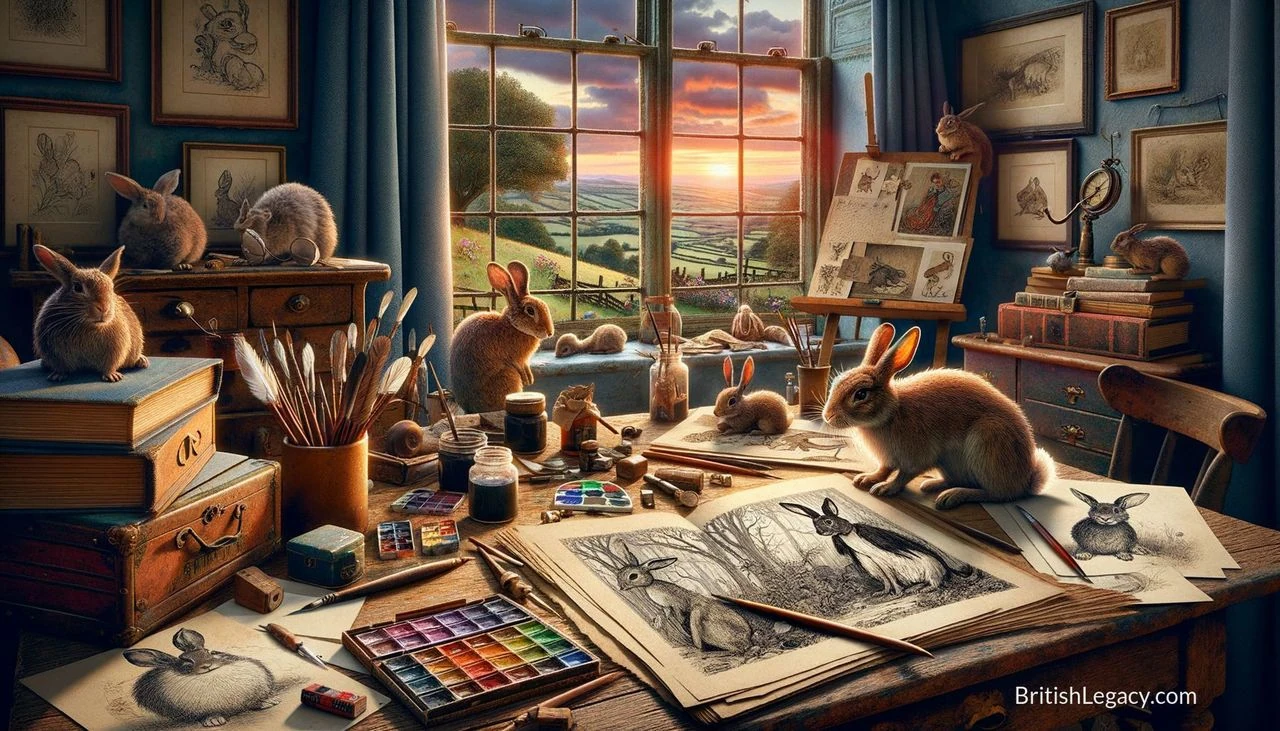
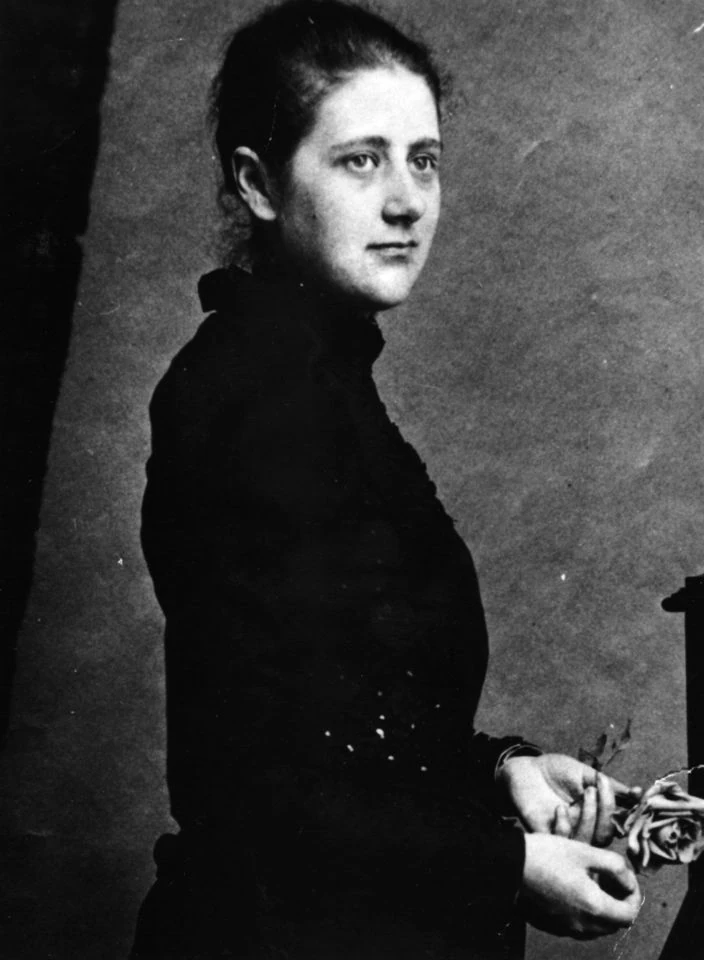
Helen Beatrix Potter was born in West Brompton, London, on 28 July 1866. Her parents, Rupert and Helen Potter, were comfortably off and artistically inclined. She and her younger brother, Walter Bertram, were educated at home by governesses and grew up with few friends beyond their extended family. Their schoolroom pets included rabbits, mice, a hedgehog and bats. Potter drew the animals she kept and studied, beginning a habit of careful looking that would inform both her illustrations and her natural-history work.
Family holidays gave that attention a wider landscape. Potter spent many childhood summers at Dalguise in Perthshire, where she sketched and explored. When the family began holidaying in the Lake District in 1882, she met Hardwicke Rawnsley, then vicar of Wray and later a founding figure in the National Trust. His commitment to country life and the preservation of the countryside would become an important influence. Potter also visited Scotland and North Wales; these journeys fostered her interest in the character of different places, their plants and animals.
Potter’s education was private, as was usual for women of her class, and the social conventions of the time restricted access to higher education. She pursued natural history through her own study. In the 1890s her scientific interests increasingly centred on fungi. The naturalist Charles McIntosh helped her improve the accuracy of her illustrations, taught her taxonomy and supplied specimens. Potter made microscopic drawings of spores and developed a theory about their germination.
In 1897, she submitted a paper on the germination of spores to the Linnean Society. Because women could not attend its proceedings or present papers themselves, her work was introduced by the botanist George Massee. She later withdrew the paper after realising that some samples had been contaminated. Potter continued her microscopic studies for several years, and her drawings were later consulted by mycologists. The Linnean Society issued a posthumous apology in 1997 for the sexism involved in its handling of her research.
From picture letters to Peter Rabbit
Potter’s first commercial illustrations included designs for Christmas and other greeting cards. She also sold drawings for books of verse. In September 1893, while on holiday in Dunkeld, she wrote an illustrated letter to Noel Moore, the ill son of her former governess Annie Moore. It told of four rabbits—Flopsy, Mopsy, Cottontail and Peter. Annie later encouraged Potter to consider turning such letters into books.
Potter developed the rabbit story into a book, but publishers initially rejected it. In December 1901 she paid to print an edition for family and friends. Frederick Warne & Co, which had earlier turned the story down, reconsidered it and agreed to publish it. Potter coloured her illustrations for the book, which appeared commercially on 2 October 1902 as The Tale of Peter Rabbit. Its success launched a sustained career as a writer and illustrator. She went on to produce 23 small-format children’s books, among them The Tale of Squirrel Nutkin, The Tale of Mrs. Tiggy-Winkle and The Tale of Jemima Puddle-Duck.
The appeal of the stories lay partly in the meeting of precise pictures and lively animal characters with a countryside rendered from close acquaintance. Potter’s tales were not simply lessons attached to pictures: their plots, settings and illustrations worked together. She also understood that the characters could live beyond the books. In 1903 she made and patented a Peter Rabbit soft toy, and later oversaw licensed products including games, wallpaper, figurines and china. The venture brought her income and established her as an early character-merchandising entrepreneur.
Hill Top and a working life in the country
Potter’s growing success helped her buy Hill Top Farm at Near Sawrey in 1905, using book income and a small inheritance from an aunt. She had wanted to own a farm in the village. The tenant farmer and his family stayed to manage it while she learned about fell farming and livestock. She bought more land, including Castle Farm in 1909, and worked with the local solicitor William Heelis on the practical demands of managing her properties.
Potter and Heelis married in 1913 and made their home at Castle Cottage, on Castle Farm. Hill Top remained a working farm, with space for Potter’s studio and workshop. The village and its everyday life entered her books: local places and characters helped shape stories such as The Tale of Ginger and Pickles and The Tale of Mrs. Tittlemouse. Her writing continued alongside the less romantic responsibilities of farm ownership.
She took a particular interest in Herdwick sheep, the hardy breed native to the Lake District fells. In 1923 she bought Troutbeck Park Farm and built up a prize-winning flock. She also became involved in local agricultural life and was asked to judge at shows. In 1942 she was elected president-elect of the Herdwick Sheepbreeders’ Association, the first woman to be elected to the role, but died before taking office.
Conservation for Potter meant protecting a working landscape, not simply preserving attractive views. She bought and restored farms, supported traditional fell farming and paid attention to buildings, stonework, grazing land and local crafts. In 1930, she and Heelis partnered with the National Trust to buy and manage farms within the Monk Coniston estate. Potter acted as the Trust’s estate manager for seven years, until it could afford to repurchase most of the property from her. Her approach had critics, but her practical stewardship helped keep land and farming in the same picture.
Books, land and a lasting inheritance
Potter continued to write and draw, though later in life her farming responsibilities and diminishing eyesight made the work harder. Cecily Parsley’s Nursery Rhymes appeared in 1922, and The Fairy Caravan followed in 1929. She and Heelis had no children, but she was close to members of his large family and supported the Girl Guides, allowing them to camp on her land.
Potter died at Castle Cottage on 22 December 1943, aged 77, from complications of pneumonia and heart disease. She left nearly all her property to the National Trust: more than 4,000 acres, sixteen farms, cottages and livestock. The gift helped preserve land now included in the Lake District National Park and supported the continuation of fell farming. Hill Top opened to the public in 1946. Potter also left the Trust almost all the original illustrations for her books; the copyrights to the stories and merchandise passed to Frederick Warne & Co.
Her characters have continued to travel beyond the books, through translations, stage and screen adaptations, and licensed products. In 2016, Peter Rabbit appeared on a British 50p coin and on Royal Mail stamps marking the 150th anniversary of Potter’s birth. The stories endure, but their afterlife is only one part of her inheritance: her scientific drawings, business sense and stewardship of land all belong in the account.
Why Beatrix Potter deserves a place in British Legacy
Beatrix Potter’s place in British cultural history rests on more than the enduring popularity of Peter Rabbit. She made picture books in which illustration and storytelling were inseparable, drawing on careful observation of animal life and the countryside. She also treated her characters as creative work with value beyond a printed page: her patented toy and licensed products helped establish a commercial model for fictional characters. That combination of artistic control and business understanding widened the possibilities for an author-illustrator, while the continued life of her stories has introduced generations of readers to her distinctive rural settings.
Her contribution to the Lake District was equally practical. Potter bought and managed farms, bred Herdwick sheep and worked with the National Trust to protect land and traditional farming. Her bequest of more than 4,000 acres, sixteen farms and associated property secured an unusually substantial legacy for conservation. She also pursued scientific study at a time when women faced barriers to recognition, producing detailed mycological illustrations and research on fungal spores. These achievements connect literature, science, enterprise and landscape stewardship in one British life. Remembering Potter in British Legacy means recognising not just the creator of much-loved books, but a woman whose skill and resources helped preserve both knowledge and a working countryside.
Sources
Beatrix Potter (revision 1379430682)
Adapted in part from Beatrix Potter by Wikipedia contributors, under CC BY-SA 4.0. Text has been edited and combined with the existing article; this adapted text is shared under the same licence. Contributor history.