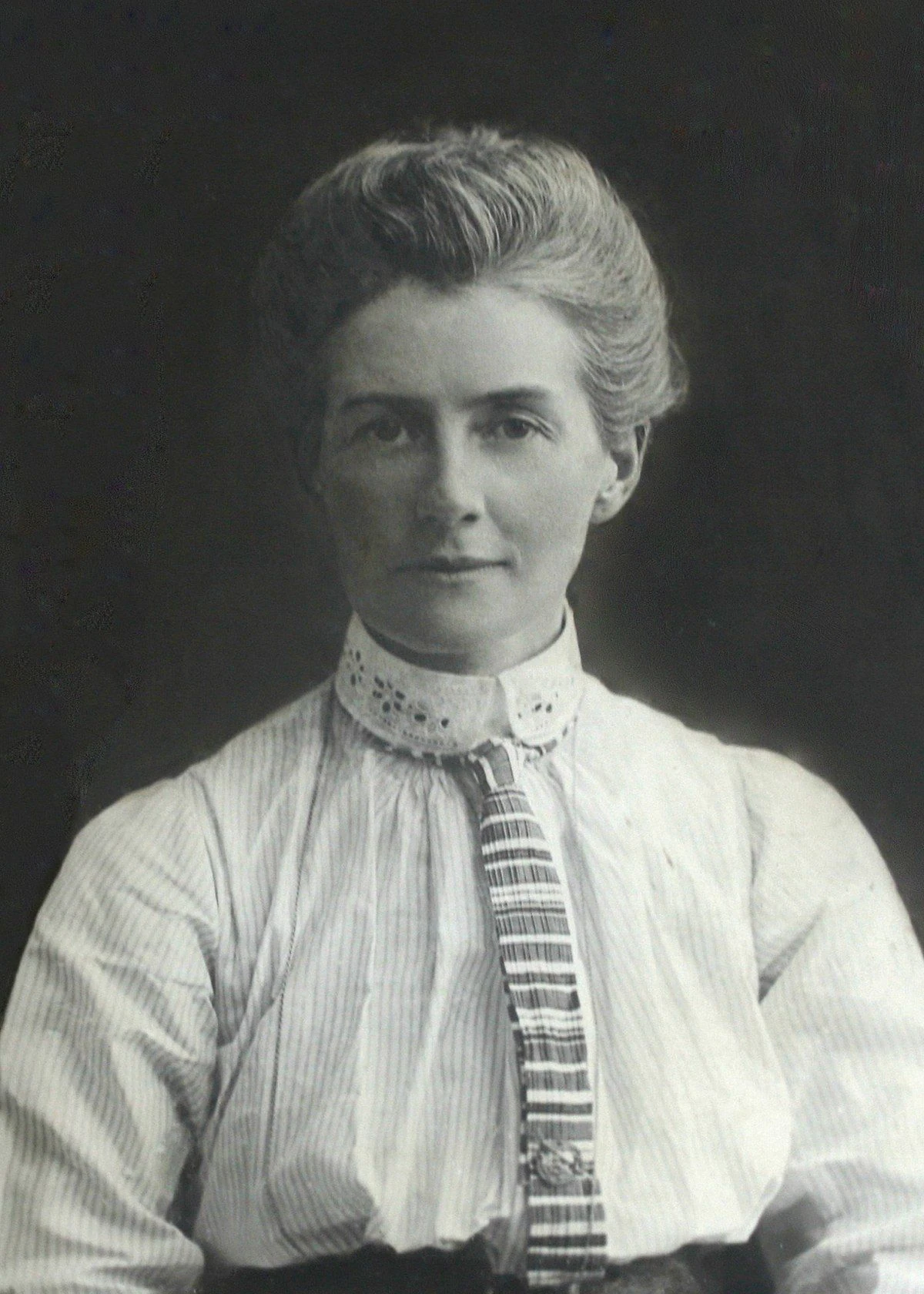
Edith Cavell’s wartime story joined two kinds of service that are sometimes presented as opposites. In German-occupied Belgium, she cared for wounded people without regard to nationality and also helped Allied soldiers escape across the Dutch border. Arrested and tried by the occupying authorities, she was executed in Brussels on 12 October 1915. Her death made her an international symbol, but the work behind that public image began years earlier: as a nurse and educator helping to establish professional nursing in Belgium.
From Swardeston to the London Hospital
Edith Louisa Cavell was born on 4 December 1865 in Swardeston, Norfolk. Her father, the Reverend Frederick Cavell, was the village vicar. She was the eldest of four children and attended Norwich High School for Girls, followed by boarding schools in Clevedon and Peterborough. Before training as a nurse, she worked as a governess, including for a family in Brussels from 1890 to 1895.
When her father became seriously ill, Cavell returned home to help care for him. His recovery did not end her interest in nursing: in December 1895 she began work at the Fountain Fever Hospital in Tooting, and in September 1896 entered the London Hospital as a probationer under Matron Eva Luckes. Her early service included nursing patients during the Maidstone typhoid epidemic of 1897. She and other staff received the Maidstone Typhoid Medal.
After training, Cavell worked as a private nurse, caring for patients in their homes. Her cases included cancer, pneumonia, gout and appendicitis. She later held senior roles at St Pancras Infirmary and St Leonard’s Infirmary in Shoreditch, then took a temporary post with the Manchester and Salford Sick and Poor and Private Nursing Institution in 1906. These posts formed a substantial nursing career before her name became associated with wartime resistance.
Building a nursing school in Belgium
In 1907, the Belgian surgeon Antoine Depage recruited Cavell to lead a new nursing school in Brussels. Known as L’École Belge d’Infirmières Diplômées, it was based at the Berkendael Medical Institute. Cavell’s role was not limited to managing a single institution. Within a few years she was training nurses for three hospitals, 24 schools and 13 kindergartens.
She also helped strengthen nursing as a profession. In 1910 she launched L’infirmière, a nursing journal, after concluding that the profession in Belgium had become established enough to benefit from a dedicated publication. Her work took place amid efforts to modernise medical care and move beyond systems of nursing provided chiefly by religious institutions.
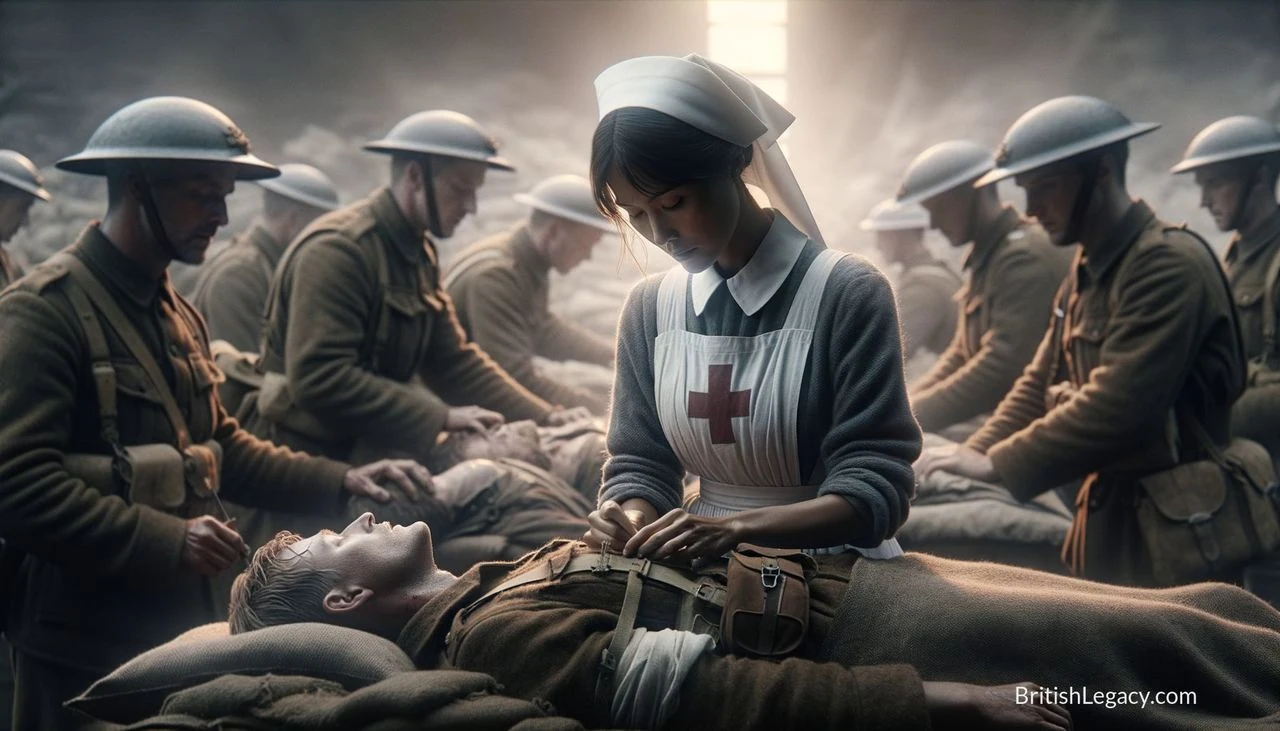
When the First World War began, Cavell was visiting her widowed mother in Norfolk. She returned to Brussels, where the clinic and nursing school were taken over by the Red Cross. She continued caring for wounded people, including soldiers from opposing sides. That impartial work sat alongside a separate, clandestine undertaking that placed her at risk under German military law.
Helping people cross occupied Belgium
After German forces occupied Brussels, Cavell began sheltering British soldiers and helping them leave occupied Belgium for neutral Netherlands. The network extended beyond her home and involved other people who hid those trying to escape, arranged false papers, provided money and found guides towards the Dutch frontier. Wounded British and French soldiers, as well as Belgian and French civilians of military age, were among those assisted.
At her trial, Cavell admitted helping people reach the frontier. In statements to German police, she described conveying about 60 British and 15 French soldiers, as well as about 100 French and Belgian civilians of military age. The wider account of her work is often summarised as helping about 200 Allied soldiers escape. The figures refer to different descriptions of those assisted and should not be collapsed into a claim that she helped more than 200 soldiers.
Her actions were not simply an extension of treating the wounded: helping soldiers escape and return to a country at war with Germany was treated by the occupation authorities as an offence. Cavell was arrested on 6 August 1915 and held for ten weeks at Saint-Gilles prison, including two weeks in solitary confinement. She was tried by court-martial under German military law. Her fellow defendants included Princess Marie de Croÿ; five defendants received death sentences, but only Cavell and the Belgian architect Philippe Baucq were executed.
Trial, execution and the making of a public symbol
Diplomats and other intermediaries made efforts to obtain clemency or delay the execution. The United States, which had not yet entered the war, applied diplomatic pressure; Spanish representatives also sought mercy. These efforts failed. Cavell was shot at the Tir national shooting range in Schaerbeek on the morning of 12 October 1915, aged 49.
The night before her execution, she spoke to the Anglican chaplain H. Stirling Gahan. Her words, later inscribed on memorials, included: “Patriotism is not enough. I must have no hatred or bitterness towards anyone.” The line expresses a distinction central to her remembered story: she acted for her country, yet rejected hatred as a principle. Her conduct as a nurse and her readiness to face death contributed to the enduring force of that account.
News of the execution travelled widely. In Britain, her death became a prominent subject of wartime publicity and recruitment propaganda, while her story was also reported in North America. Some contemporary accounts were inaccurate, and later representations often presented her as an innocent victim of an enemy rather than explaining the legal charge and the assistance she had admitted providing. Remembering how her image was used does not diminish her courage; it makes clear that her public legacy was shaped both by her actions and by the purposes for which others retold them.
Return to Britain and lasting memorials
Cavell was first buried in Belgium. After the war, her remains were returned to Britain aboard HMS Rowena, arriving at Dover on 14 May 1919. A funeral service was held at Westminster Abbey on 15 May, before she was reburied at Norwich Cathedral on 19 May. Her grave remains a focus of remembrance, including an annual graveside service in October.
Memorials to Cavell appeared in Britain and elsewhere. In London, a statue by George Frampton was unveiled in 1920 opposite the National Portrait Gallery, near Trafalgar Square. Norwich Cathedral also has a memorial to her, and the village of Swardeston holds an annual flower festival in her memory. The Church of England commemorates her on 12 October; this is a day of remembrance, not evidence of formal canonisation.
Her name has also been attached to continuing nursing support. The Cavell Nurses’ Trust supports nurses, midwives and healthcare assistants facing hardship. Alongside memorials and annual commemorations, this practical connection keeps her memory linked to the profession in which she worked, rather than only to the circumstances of her death.
Why Edith Cavell deserves a place in British Legacy
Edith Cavell’s place in British Legacy rests first on the substance of her work. Before the First World War, she helped build nursing education in Belgium, training staff across hospitals, schools and kindergartens and supporting the profession through a dedicated journal. That record gives context to the wartime nurse remembered in Britain: her care for patients of different nationalities was part of a longer professional commitment, not a role adopted for the sake of a public image.
Her wartime choices also demand a clear account. Cavell helped people escape occupied Belgium, was prosecuted under German military law and was executed despite efforts to secure mercy. Her death became a powerful symbol in Britain, but her story was also shaped by wartime propaganda and sometimes inaccurate reporting. Holding those facts together offers a more useful legacy than simple hero worship: it recognises courage while showing how public memory can simplify a complex life. The British memorials at Norwich and London, her commemoration in the Church of England calendar and the Cavell Nurses’ Trust all connect remembrance to place, ritual and practical support for people working in nursing and care. Her British significance therefore lies both in her Norfolk origins and in the continuing response to her example: service to patients, professional nursing, and the difficult moral choices made under occupation.
Sources
Adapted in part from Edith Cavell by Wikipedia contributors, under CC BY-SA 4.0. Text has been edited and combined with the existing article; this adapted text is shared under the same licence. Contributor history.