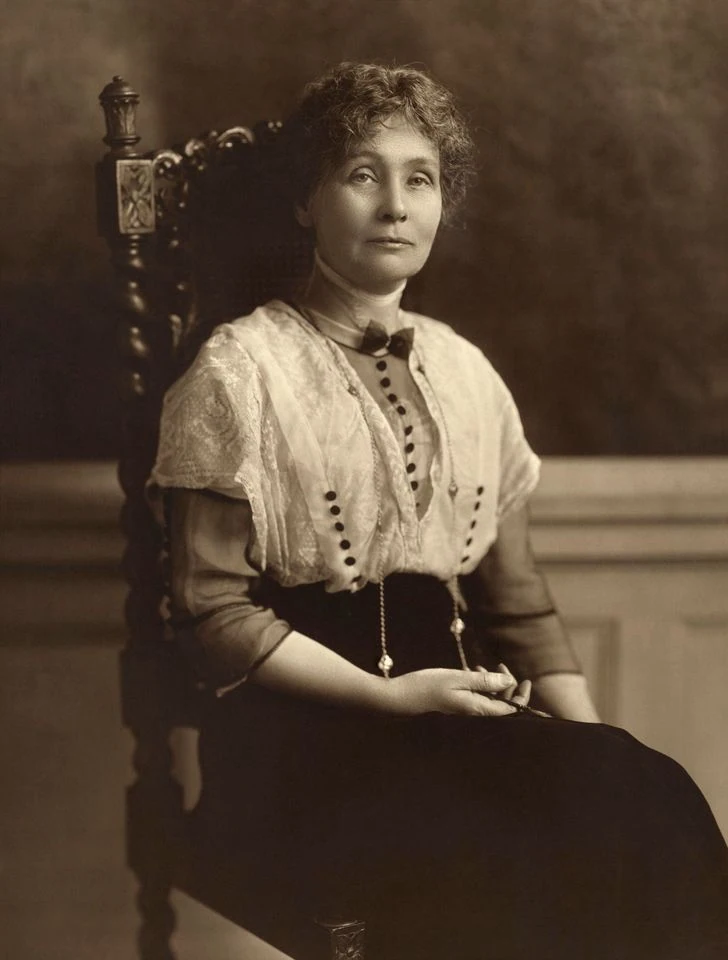
Emily Pankhurst: A Torchbearer of the Suffragette Movement
In the tapestry of British history, the Pankhurst name is synonymous with the daring defiance and fervent activism that sought to alter the course of women's rights. When discussing the great British legacy, one cannot overlook the pivotal role played by Emily Pankhurst, whose contributions to the suffragette movement have left an indelible mark on both the national and global stage.
Born into a family steeped in political activism, Emily Pankhurst was the offspring of the formidable Emmeline Pankhurst, the renowned leader of the British suffragette movement. With activism etched into her very essence by her mother’s relentless pursuit of women’s enfranchisement, Emily stepped into the vanguard of the struggle with both vigour and an unbending will. She was more than just a daughter following in her mother’s footsteps; she was a pioneering force in her own right, helping to shape what we now celebrate as a cornerstone of modern democracy.
A Legacy Inherited and Expanded
Emily's foray into activism was far from accidental. From an early age, she was exposed to discussions about social justice and equality, ingraining in her a deep sense of duty towards achieving change. Her mother, Emmeline, often regarded as the firebrand of the suffrage movement, established the Women’s Social and Political Union (WSPU) in 1903, a group known for its militant tactics in advocating for women's voting rights. Emily took these teachings to heart, growing into a capable and impassioned leader within the movement.
The Militant Milieu
As the struggle for suffrage intensified, Emily Pankhurst adopted the militant strategies that defined the WSPU. Whether it was organising protests, participating in hunger strikes, or enduring imprisonment, Emily’s commitment was unwavering. She played a critical role in galvanising support for the movement, often serving as a bridge between different factions of the suffragette cause. Her speeches and writings resonated profoundly, urging women to take up the mantle of their rights with persistence and passion.
One notable episode in her activism was the notorious "Cat and Mouse Act" (officially the Prisoners (Temporary Discharge for Ill Health) Act of 1913). Women on hunger strikes, including Emily, were temporarily released from prison when their health declined perilously, only to be re-arrested once they regained strength. Emily’s resilience in these trying times highlighted the tenacity and unyielding spirit of the suffragettes.
A Steady Beacon of Change
Beyond the protests and the prison cells, Emily worked tirelessly behind the scenes to strategise, recruit, and spread the ideals of the suffragette movement. Her legacy extends beyond mere participation; it lives in the very fabric of the egalitarian principles she fought for. The culmination of her efforts, alongside those of countless other suffragettes, came to fruition with the Representation of the People Act 1918, followed by the Equal Franchise Act of 1928, which granted equal voting rights to women.
Global Influence and a Lasting Heritage
Emily Pankhurst’s influence transcended the borders of the United Kingdom. Her work ignited a flame of activism worldwide, inspiring similar movements and reforms in countries around the globe. The suffragette movement under her and her mother's leadership became a template for courage, determination, and the quest for justice.
Her legacy is not merely enshrined in history books but is alive in the policies, rights, and freedoms that women enjoy today. The suffragettes' struggle is a testament to the power of collective action and the relentless pursuit of equality. Emily Pankhurst’s contributions underscore the essence of the British legacy—a legacy of progress, tenacity, and an unyielding quest for justice.
A Story of Unyielding Resolve
In capturing the essence of Emily Pankhurst’s impact, one must acknowledge that it is a story of unyielding resolve and boundless optimism. Her life and work exemplify the transformative power of the human spirit, acting as a beacon for future generations to strive for a better, more equitable world.
Emily Pankhurst’s name, echoing alongside Emmeline’s, is etched into the annals of history as a paragon of the fight for women’s rights. She is an essential chapter in the story of the great British legacy—one that continues to inspire change and champion the principles of equality and justice globally.
In the heart of Britain's rich heritage, Emily Pankhurst stands as a towering figure whose influence reverberates far beyond her time, embodying the relentless pursuit of a brighter, fairer future for all.