
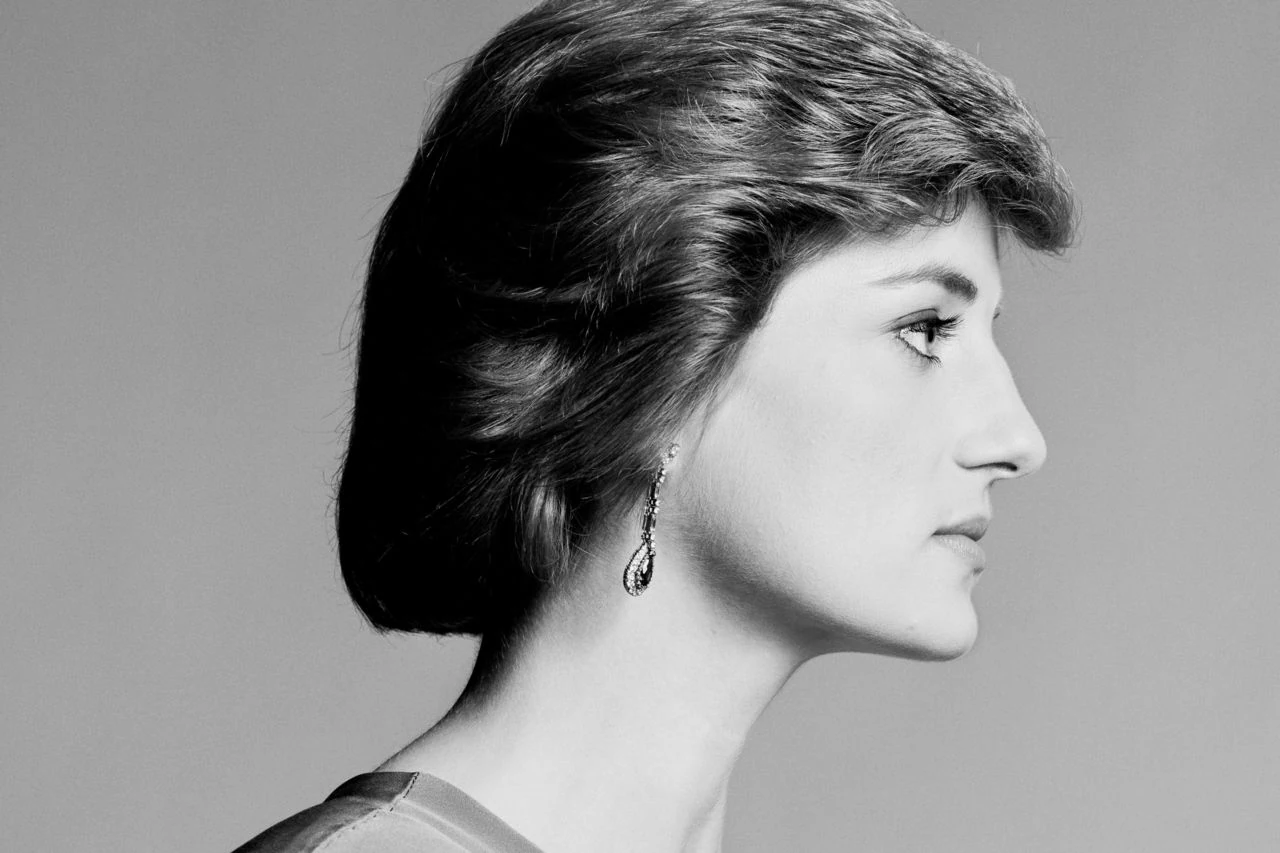
Diana, Princess of Wales, became one of the most recognisable public figures of her generation. Her marriage to the heir to the British throne placed her at the centre of royal life, but her enduring public identity was shaped by the causes she championed: people living with HIV and AIDS, those affected by leprosy, young people facing homelessness, and communities living with the consequences of landmines. She brought royal attention to people and experiences that were often marginalised, using personal contact and international visibility as part of her public work.
From the Spencer family to the royal household
Diana Frances Spencer was born on 1 July 1961 at Park House, on the Sandringham estate in Norfolk. She was the fourth of five children of John Spencer and Frances Roche. Her family was part of the British nobility and had longstanding connections with the royal family. After her father inherited the title of Earl Spencer in 1975, she became known as Lady Diana Spencer. She attended West Heath Girls’ School in Kent and later worked in London, including as a nursery teacher’s assistant.
Diana met Charles, Prince of Wales, in 1977. Their engagement was announced in February 1981, and they married at St Paul’s Cathedral on 29 July that year. The ceremony was watched by a global television audience of about 750 million, and Diana became Princess of Wales. Their sons, William and Harry, were born in 1982 and 1984. Diana carried out royal duties at home and abroad, representing the Queen at official functions and joining tours across the Commonwealth and elsewhere.
As the marriage deteriorated, the couple separated in 1992 and divorced in 1996. Diana retained the title Diana, Princess of Wales, but no longer held the style Her Royal Highness. The separation was intensely covered by the press. Her 1995 BBC Panorama interview, in which she spoke about the breakdown of the marriage and her mental health, became a defining moment in the public account of her life. An independent inquiry later found that interviewer Martin Bashir had used forged bank statements to gain her trust.
Charity work grounded in contact
Diana’s charitable work ranged across health, children and social welfare. In 1981 she established the Princess of Wales’s Charities Trust, which received donations from organisations with which she was involved. Her patronages included Great Ormond Street Hospital, the British Red Cross, the Leprosy Mission, the National AIDS Trust and Centrepoint, which supports homeless young people. She also supported work concerning cancer, mental illness, brain injury and drug and alcohol misuse.
Her approach often brought her into direct contact with people affected by illness. In 1987 she held hands with a man with AIDS at a time when fear and misinformation about transmission were widespread. She visited AIDS services and hospitals, opened the Landmark Aids Centre in London in 1989 and supported the National AIDS Trust. The significance of such gestures lay not in a claim that one encounter could solve a public-health problem, but in the visible challenge they offered to the idea that ordinary contact with people living with HIV was dangerous.
She also visited people affected by leprosy, a disease surrounded by stigma. After visiting a hospital in Indonesia in 1989, she became patron of the Leprosy Mission and continued visiting its projects in several countries. Her willingness to touch patients directly challenged the social exclusion many experienced. At home, her association with Centrepoint included visits to services for homeless young people. She also took her sons to see some of the charity’s work, bringing them into contact with people whose lives differed sharply from their own.
Landmines and the reach of a public platform
In 1997 Diana drew international attention to the lasting dangers of anti-personnel mines. As patron of the HALO Trust, which clears landmines and other debris left by war, she visited a minefield in Angola wearing a ballistic helmet and protective clothing. Photographs of the visit circulated widely. She also spoke at a landmines conference at the Royal Geographical Society and visited Bosnia and Herzegovina with representatives of the Landmine Survivors Network.
The campaign attracted criticism from some political figures, who argued that her involvement risked politicising the issue. But its public effect was clear enough to be acknowledged in Parliament: when introducing the Landmines Bill in 1998, Foreign Secretary Robin Cook credited Diana with helping bring the human cost of landmines to public attention. Her work formed part of a wider international campaign; it should not be mistaken for the work of governments and campaign organisations that secured the Ottawa Treaty, which established an international ban on anti-personnel mines.
After the divorce, Diana reduced her charitable commitments and retained patronages of six organisations, including Centrepoint, Great Ormond Street Hospital, the Leprosy Mission and the National AIDS Trust. She continued to use her profile for causes, including the sale of some of her clothes at charity auctions in 1997. These examples show the practical range of her public work: sustained support for organisations, visits to people receiving care, and the ability to make an issue visible to audiences far beyond a charity’s usual reach.
Death, public mourning and contested memory
Diana died on 31 August 1997, aged 36, after a car crash in Paris. Her funeral took place at Westminster Abbey on 6 September, with her sons walking behind the coffin. The televised service was watched by a large audience in Britain and around the world. Public mourning was extensive, and the response created a crisis for the Royal Household as it confronted the scale and expression of grief. Her brother, Earl Spencer, said at the funeral that she had shown she needed no royal title to continue generating her particular kind of public appeal.
The circumstances of the crash also generated allegations of conspiracy. A British inquest concluded in 2008 that Diana and Dodi Fayed were unlawfully killed through grossly negligent driving by the driver and the pursuing paparazzi. That finding is distinct from the allegations made by Mohamed Al-Fayed, which the inquest did not uphold. Keeping that distinction matters: the documented investigation and verdict provide a firmer account than later speculation.
Her legacy remains debated, as well as commemorated. Diana’s public image could not be separated from the intense media attention surrounding her, and accounts of her life have differed over her motives and influence. Yet her work on AIDS, leprosy and landmines is grounded in identifiable visits, patronages and public advocacy. Memorials, including the Diana, Princess of Wales Memorial Fountain in Hyde Park and the Diana Memorial Playground in Kensington Gardens, keep her name present in London’s public landscape.
Why Diana, Princess of Wales deserves a place in British Legacy
Diana’s place in British history is not explained simply by her marriage, her fame or the public response to her death. It rests in part on the way she used a uniquely visible role to make contact with people whom stigma and social convention often kept at a distance. Her visits to people with HIV and leprosy challenged public fears through direct, readily understood actions. Her support for Centrepoint brought royal attention to the needs of homeless young people, while her work with cancer and other health organisations extended that attention across a wider field of care.
Her landmines campaign showed how public visibility could serve a humanitarian cause beyond Britain. The photographs from Angola helped bring the effects of mines to a global audience; parliamentary recognition of her contribution places that work within the British political record, while acknowledging that it formed part of a larger campaign. These achievements offer a specific British connection: Diana carried out public duties as Princess of Wales, supported British charities and hospitals, and used her position to connect their concerns with international issues. Her legacy is therefore not a claim that one person changed everything, but a record of how sustained patronage, personal encounters and public attention can help shift what people see and discuss.
Sources
Diana, Princess of Wales — revision 1379528488 · Diana, Princess of Wales
Adapted in part from Diana, Princess of Wales by Wikipedia contributors, under CC BY-SA 4.0. Text has been edited and combined with the existing article; this adapted text is shared under the same licence. Contributor history.

_(cropped).jpg)