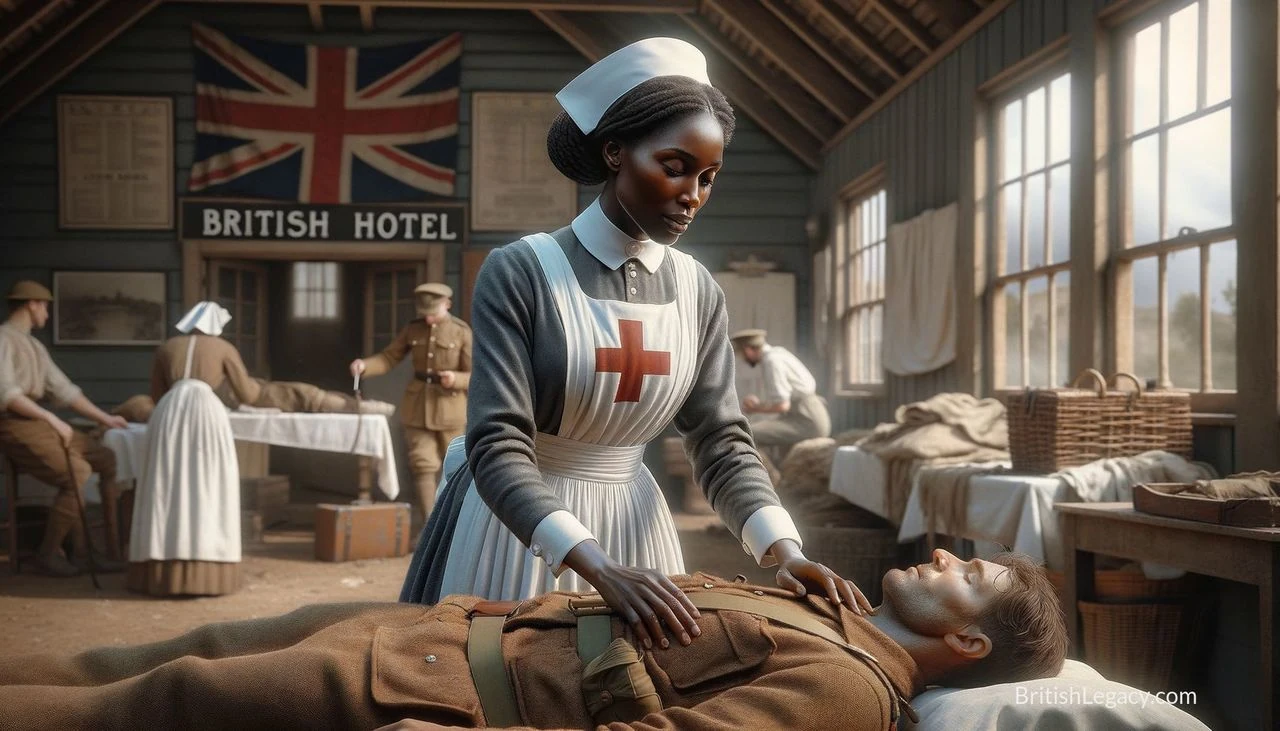
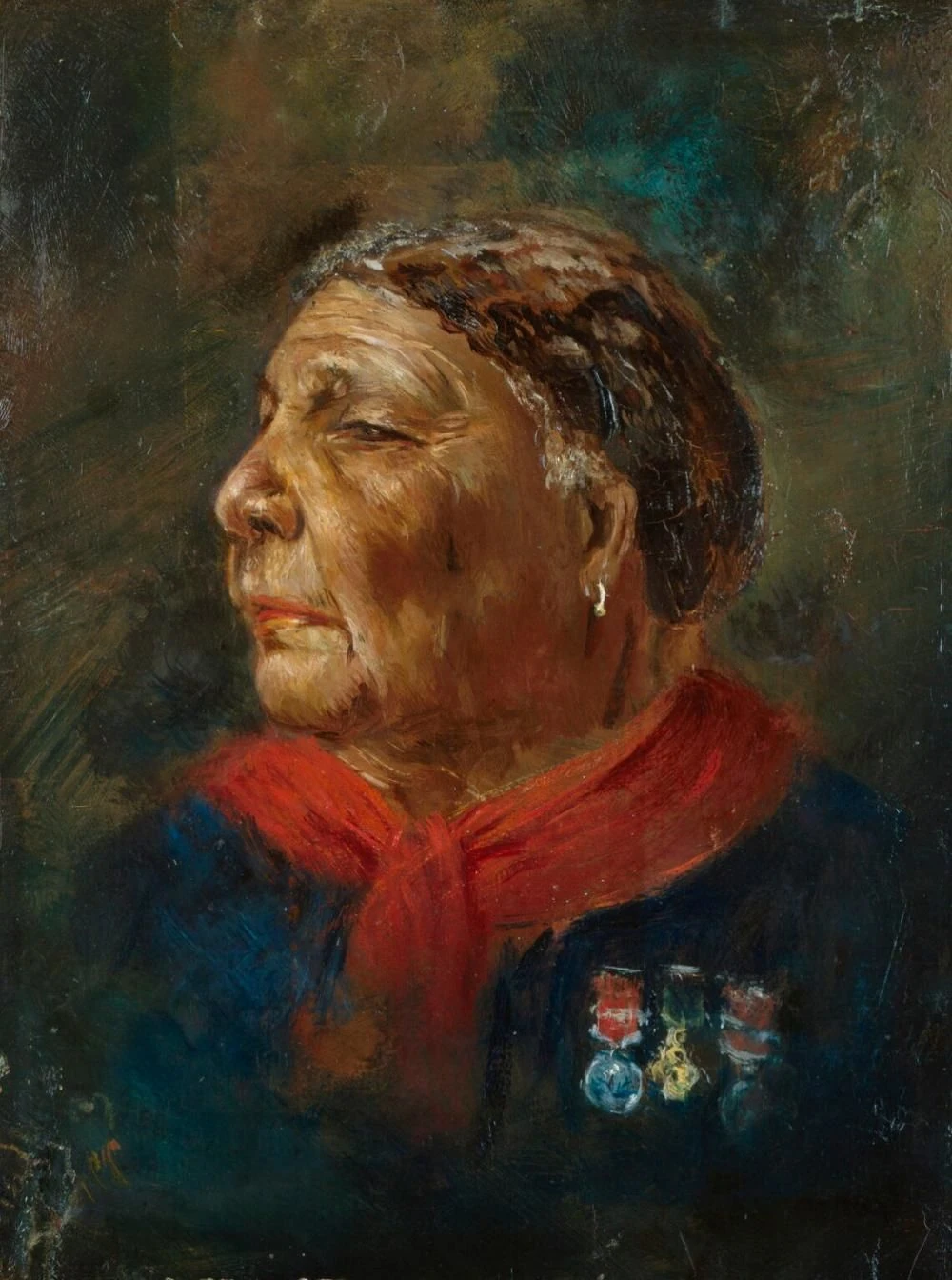
Mary Seacole’s Crimean War story is not simply one of a nurse arriving at the battlefield. She travelled to Crimea in 1855 to establish a business, the British Hotel, near Balaclava. It served food and supplies to officers, while Seacole also went out to assist sick and wounded soldiers. Her route there had taken her through Jamaica and Panama, where she had built experience in care and enterprise. The work she chose for herself, and the public recognition she later received in Britain, made her a distinctive figure in the history of the war.
Learning care in Jamaica
Mary Jane Grant was born in Kingston, Jamaica, on 23 November 1805. Her father, James Grant, was a Scottish lieutenant in the British Army. Her mother, known as “The Doctress”, was a healer who used Caribbean and African herbal remedies and ran the Blundell Hall boarding house. The house also accommodated military and naval personnel recovering from illness. Seacole learned nursing there, in a practice that included hygiene, ventilation, warmth, hydration, rest and food, as well as remedies made from herbs.
Seacole later wrote that she first tried her remedies on animals before helping her mother care for people. She was also able to observe military doctors through her family’s connections. In her memoir she took pride in both her Jamaican and Scottish ancestry, calling herself a Creole. The skills she developed at home were practical and formed in a setting where illness, hospitality and business were closely connected.
She travelled to London for about a year around 1821, then returned to Jamaica. In 1836 she married Edwin Horatio Hamilton Seacole. The couple opened a provisions store in Black River, but it did not prosper, and they returned to Blundell Hall. After her husband died in 1844, followed soon afterwards by her mother, Seacole took over the family business. She nursed patients during Jamaica’s 1850 cholera epidemic, among them people who stayed at the boarding house.
From Panama to the Crimea
In 1851 Seacole went to Cruces, Panama, where her half-brother had established a hotel serving travellers crossing the isthmus during the California Gold Rush. Cholera broke out shortly after she arrived. She treated patients, charging those who could pay and caring for the poor without charge. She later contracted the disease herself. In Panama she also ran a restaurant called the British Hotel; it was a business serving travellers, not a hospital.
Seacole returned to Jamaica in 1853 and was asked by the medical authorities to assist during a severe yellow fever outbreak. In 1854, after going back to Panama to settle business affairs, she decided to travel to England and then on to the Crimean War. She had nursed British soldiers in Jamaica and heard that men from regiments she knew were being sent to the conflict.
In London, Seacole tried to join the nursing effort for the war. She applied to government offices and the Crimean Fund, and also approached people connected with Florence Nightingale’s nursing team. Her memoir describes refusals and records her suspicion that prejudice about her colour may have influenced them. She did not, however, join Nightingale’s official nursing corps. Instead, she travelled using her own resources, with the intention of establishing a business with Thomas Day, a Caribbean acquaintance who became her partner.
Seacole sailed for Constantinople in January 1855 and visited Nightingale’s hospital at Scutari before continuing to Balaclava. She and Day set up the British Hotel near the British camp. The establishment was built using salvaged materials and opened in March 1855. Seacole had planned it as a mess-table and comfortable quarters for sick and convalescent officers; after advice from the chef Alexis Soyer, she concentrated on food, drink and supplies rather than accommodation. The hotel sold provisions to officers and visitors, and its kitchen also catered outside the premises.
Business and care near the front
The British Hotel was a commercial enterprise, but Seacole’s activities extended beyond it. She sold provisions near the camp and went to assist casualties brought from the trenches. She also helped sick and wounded soldiers waiting for transport at Balaclava, sometimes providing hot tea. The war correspondent William Howard Russell praised her presence near the battlefield and her work with the wounded. Soldiers knew her as “Mother Seacole”. Her care took place alongside her trading, and the distinction matters: the hotel was not simply a medical facility, while her contribution was not confined to running it.
Seacole’s work unfolded amid the war’s disease, poor conditions and heavy casualties. Her earlier experience in Jamaica and Panama had exposed her to cholera and yellow fever, and she brought that practical knowledge to the Crimea. The evidence also gives a more complicated picture than a simple account of a formal nursing service. She had been refused a place in the official corps, travelled independently and made a living through her business. She went out to the troops and assisted the injured, but should not be described as a member of Nightingale’s nursing team.
After the fall of Sevastopol in September 1855, Seacole visited the city with refreshments and went to a hospital there. The fighting continued until the Treaty of Paris was signed in March 1856. When the Allied armies left, the British Hotel’s stocks were difficult to sell and creditors were pressing for payment. Seacole returned to England poorer than she had left. Her wartime enterprise had brought her close to soldiers and officers, but it did not leave her financially secure.
Memoir, hardship and remembrance
Seacole published Wonderful Adventures of Mrs Seacole in Many Lands in 1857. The autobiography recounts her travels and work in Jamaica, Panama and the Crimea, and describes the soldiers she cared for and served. William Howard Russell, who had reported on the war, wrote its preface in support of her. The book is identified as the first autobiography written by a Black woman in Britain.
Back in England, Seacole faced financial difficulty. A canteen venture at Aldershot failed, and the Bankruptcy Court declared her bankrupt in November 1856. A public fund was raised for her and Day; they received certificates discharging them from bankruptcy in January 1857. Fundraising continued, though the military festival held that summer returned only part of its profits to Seacole. She later returned to Jamaica and, in 1860, joined the Catholic Church. She was back in London by 1870 and died at her home in Paddington on 14 May 1881, aged 75. She was buried in St Mary’s Catholic Cemetery, Kensal Green.
Her public recognition in Britain diminished after her death, while her memory was maintained in Jamaica. Her grave was rediscovered in 1973 and restored. In the 21st century, her life and work became more prominent in British public remembrance: she was voted Greatest Black Briton in a 2004 online poll, entered the National Curriculum in 2007, and a statue of her by Martin Jennings was unveiled at St Thomas’ Hospital in London in 2016. The statue’s location prompted debate, including objections that Seacole had no connection with the hospital. That debate forms part of the history of her commemoration, but does not alter the record of her independent work in the Crimea.
Why Mary Seacole deserves a place in British Legacy
Mary Seacole deserves a place in British Legacy because her life connects the history of Britain with Jamaica, the Caribbean and the Crimean War through specific acts of care and enterprise. She learned practical healing in her mother’s Jamaican boarding house, treated patients during cholera and yellow fever outbreaks, and carried that experience into the work she undertook near Balaclava. At the British Hotel she ran a business that supplied officers and visitors; beyond it, she went out to help sick and wounded soldiers. Remembering both sides of her work gives a fuller account than calling the hotel a hospital or presenting her as part of an official nursing corps.
Her story also records the costs of making a place for oneself when formal opportunities were closed. Seacole’s applications to join the Crimean nursing effort were unsuccessful; she travelled independently and financed her own route to the war. Her memoir preserved her account of those experiences, while the later restoration of her grave, her presence in the National Curriculum and the London statue brought her back into British public memory. The value of that remembrance lies in its attention to a Jamaican woman whose work crossed borders and whose own account documents the combination of care, trade and self-reliance behind her wartime reputation. Her place in British history rests not on inflated claims, but on the life she described and the service she rendered.
Sources
Adapted in part from Mary Seacole by Wikipedia contributors, under CC BY-SA 4.0. Text has been edited and combined with the existing article; this adapted text is shared under the same licence. Contributor history.