When scholars left Oxford after a dispute with local townspeople, some made their way to Cambridge. Their arrival in 1209 began a university that would become one of Britain’s oldest centres of learning. Over the centuries, its colleges, laboratories, libraries and publishers have helped shape work in mathematics, science, literature and public life. Cambridge’s story is not simply a roll-call of famous names: it is also the history of an institution whose teaching and organisation have changed, often after long struggles over who could study there.
From a scholars’ settlement to a collegiate university
Cambridge’s foundation followed a period of conflict in Oxford. After two scholars were hanged by the town’s authorities following the death of a local woman, other scholars feared further violence and left for more hospitable cities. Cambridge already had a scholarly and ecclesiastical reputation, helped by the intellectual work of monks at nearby Ely Cathedral. The people who settled there formed the nucleus of a new university.
Royal and papal recognition followed. A chancellor had been appointed by 1225, and writs issued by King Henry III in 1231 recognised the university’s customs. Cambridge was described as a studium generale in 1290, and its status was confirmed by a papal bull in 1318. Peterhouse, founded by the Bishop of Ely in 1284, became the university’s first college. Further colleges appeared over the centuries; the present university has 31, each a self-governing institution with its own property and endowments.
That collegiate structure remains central to how Cambridge works. Faculties and departments organise lectures, research and examinations, while colleges provide accommodation, welfare and much of the small-group teaching. Undergraduates are attached to a college and receive weekly supervisions, often in groups of only one to three students. This system makes the relationship between a student and a specialist teacher a defining feature of Cambridge education, alongside lectures, seminars and laboratory work.
The university’s academic priorities have shifted with the times. Mathematics became particularly influential from the late seventeenth century, with the Mathematical Tripos establishing a demanding examination tradition. Cambridge’s mathematical community later included James Clerk Maxwell, Lord Kelvin and Lord Rayleigh. In the nineteenth century, researchers such as G. H. Hardy and J. E. Littlewood helped raise pure mathematics at Cambridge to international standing. The university also expanded its curriculum: the Cambridge University Act 1856 formalised its organisation and helped introduce subjects including history and modern languages.
Science, collections and a culture of inquiry
Cambridge’s contribution to science grew through both individual work and institutional development. Its alumni and researchers include Isaac Newton, Charles Darwin, James Clerk Maxwell and Alan Turing. The Cavendish Laboratory became the setting for major work in physics: J. J. Thomson discovered the electron there, and Francis Crick and James Watson developed a model of DNA’s structure while working there. The history is not captured by a list of discoveries alone. Rosalind Franklin produced important X-ray crystallography data, which Maurice Wilkins shared with Watson; Wilkins later verified the proposed structure and received the Nobel Prize with Watson and Crick.
Other Cambridge-associated achievements span disciplines and generations. Cambridge alumnus Frank Whittle is credited with co-inventing the jet engine. Charles Babbage designed an early computing system, while Turing’s work helped establish the basis of modern computing; Maurice Wilkes later created the first programmable computer. Cambridge computer laboratories also produced a small but revealing innovation: the webcam, first used to monitor a coffee pot. These examples show how research at the university has ranged from abstract mathematics to technologies that entered everyday life.
The institution’s libraries and museums preserve evidence of that breadth. Cambridge University Library is a legal deposit library and holds millions of books; individual colleges and departments maintain their own collections. The university operates museums including the Fitzwilliam Museum, the Museum of Archaeology and Anthropology, and the Museum of Zoology, as well as the Botanic Garden, created in 1831. The zoology collection includes specimens gathered by Darwin, while the Sedgwick Museum holds geological material connected with his studies. Such collections support research and give the university’s scientific history a physical home.
Cambridge also has an influential publishing and assessment tradition. Cambridge University Press began in the sixteenth century and is now part of Cambridge University Press & Assessment, which includes the university’s examination and assessment work. The university’s Local Examinations Syndicate was established in 1858. Together, publishing and assessment extended Cambridge’s work beyond its own students, though its reach is not a reason to treat every claim about international impact as self-evident.
Access, change and the life of the city
For centuries, Cambridge admitted men but not women to full university degrees. Girton College was founded in 1869 and Newnham in 1872, creating places for women to study. Women could take university examinations from the late nineteenth century, but they were not admitted to the university as full members until 1948. The colleges, too, changed gradually: some began admitting women undergraduates in the 1970s, and Magdalene was the last previously all-male college to do so, in 1988. The history of Cambridge is therefore also a history of barriers to education and the gradual, incomplete work of removing them.
Questions of access remain part of its public life. The university has faced debate about the representation of state-school pupils and students from disadvantaged backgrounds. In 2021 it created foundation courses for students whose circumstances or educational opportunities had affected their preparation. The one-year programme offers 50 places to students achieving BBB at A level, below the usual entry requirements; successful students can progress to degrees in arts, humanities and social sciences. This route does not erase wider questions about admissions, but it is a specific attempt to open another path into university study.
The university and the town have not always lived easily together. Medieval disputes over academic privilege sometimes erupted into violence, including during the Peasants’ Revolt of 1381, when university property was attacked. Over time, the university became a major source of employment and economic activity in the region. The growth of technology and biotechnology companies around Cambridge has been described as the Cambridge Phenomenon: between 1960 and 2010, the area added about 1,500 companies and as many as 40,000 jobs, mostly in the business cluster known as Silicon Fen.
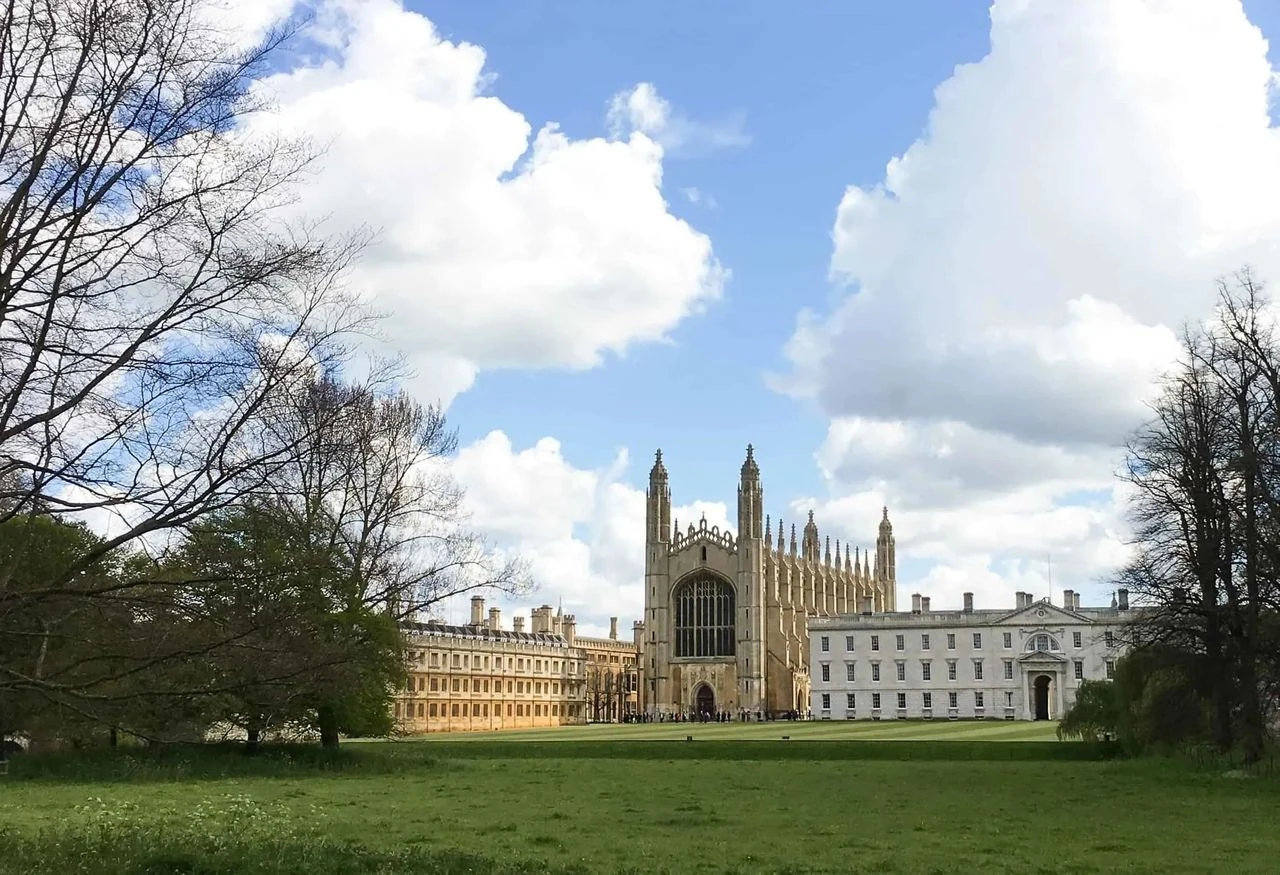
Cambridge’s traditions also extend beyond academic work. The annual Christmas Eve broadcast of the Festival of Nine Lessons and Carols from King’s College Chapel has been a national radio tradition since 1928. The Boat Race against Oxford remains its best-known sporting contest, while college rowing, formal dinners and student societies form part of university life. These customs belong to a changing institution, not a timeless pageant: Cambridge has repeatedly adapted its teaching, membership and civic relationships.
Why University of Cambridge deserves a place in British Legacy
Cambridge deserves a place in British Legacy because its history connects institutional longevity with concrete intellectual and public achievements. Founded in 1209, it developed a collegiate model that still shapes how students are taught, combining university departments with college-based supervision. Its contributions include major work in mathematics and physics, the development of ideas in computing, and research associated with the Cavendish Laboratory. Its libraries, museums and publishing arm have preserved and circulated knowledge, while its graduates and researchers have carried Cambridge learning into science, literature, public service and technology.
That legacy should include change as well as distinction. Women were excluded from full university membership until 1948, and debates about access continue; the foundation courses established in 2021 offer one practical response to unequal educational opportunity. Cambridge’s growth has also affected the surrounding city, supporting research-led businesses and employment in the region. These connections give the university a specifically British significance: it is an English institution shaped by medieval royal and church authority, by the evolution of higher education, and by an enduring relationship with its town. Its importance lies not in unqualified claims of greatness, but in the demonstrable ways its teaching, research and collections have influenced life beyond its colleges.
Sources
University of Cambridge — Wikipedia revision 1379639936
Adapted in part from University of Cambridge by Wikipedia contributors, under CC BY-SA 4.0. Text has been edited and combined with the existing article; this adapted text is shared under the same licence. Contributor history.