Lancaster University began teaching in borrowed rooms around Lancaster before moving to a purpose-built campus at Bailrigg. Established by royal charter in 1964, it was one of several new universities created during the expansion of higher education in the 1960s. Its development brought together a collegiate structure, a campus designed around a shared central route and research spanning fields from environmental science to the social sciences.
A new university in the city
The choice of Lancaster as the site of a new university was announced on 23 November 1961. The institution received its royal charter in 1964, with Princess Alexandra of Kent as its first chancellor. It admitted its first students in October that year. At the outset, its academic community was small: 13 professors, 32 other teaching and research staff, eight library staff and 14 administrators on academic grades. Its motto, Patet omnibus veritas—“Truth lies open to all”—set out an expansive ideal for the new institution.
Before a permanent campus was ready, teaching and student life occupied a patchwork of city-centre spaces. A lecture theatre and the first Junior Common Room were housed in Centenary Church, while former factory premises belonging to Waring & Gillow accommodated students. The Grand Theatre served as a main lecture room, and rooms at St Leonard’s Gate were used for teaching and recreation. The library occupied former workshops belonging to Shrigley and Hunt on Castle Hill. Some students lived in nearby Morecambe. This temporary arrangement preceded the move to Bailrigg, which took place in stages between 1966 and 1970.
Bailrigg and the collegiate plan
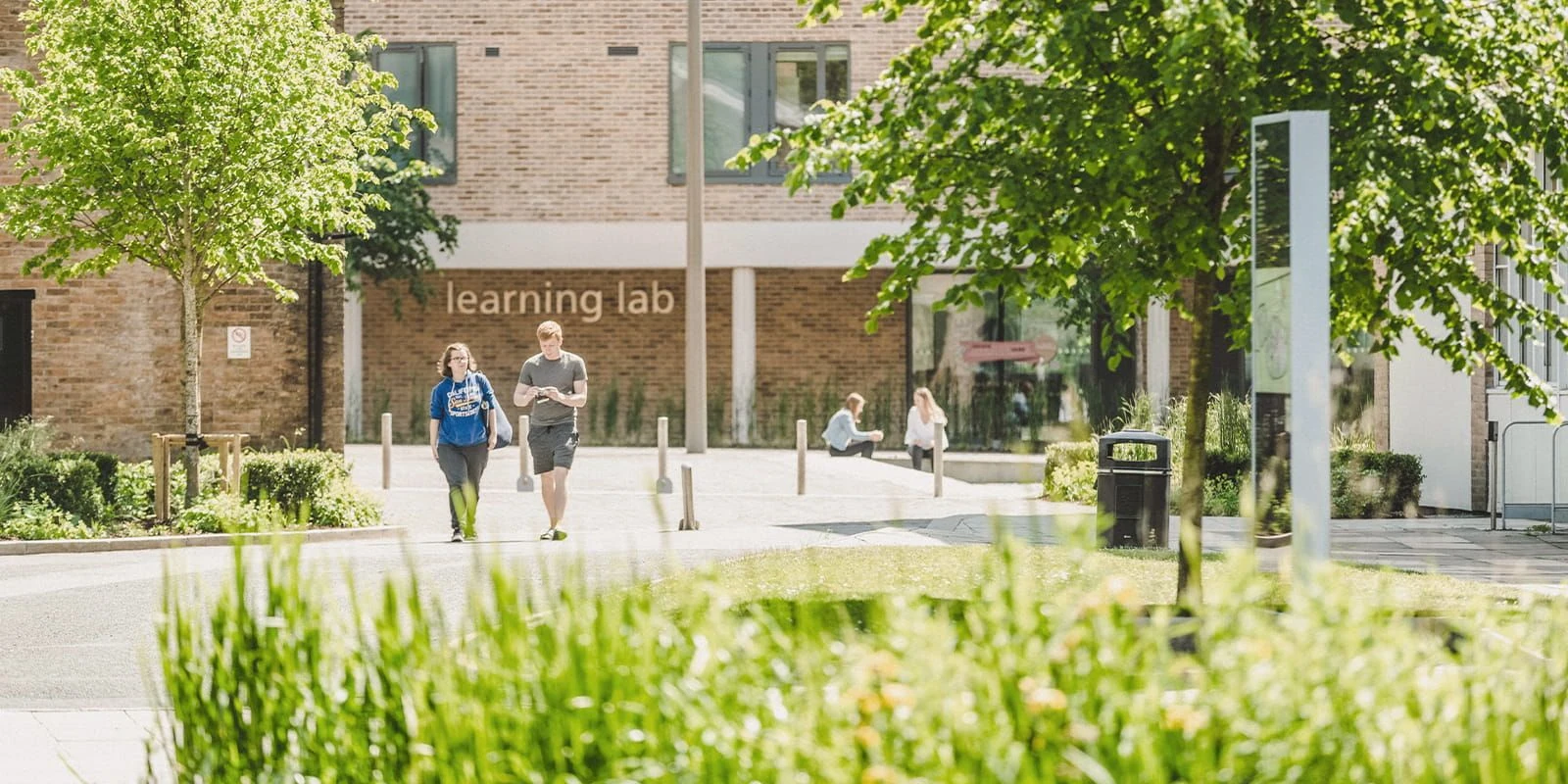
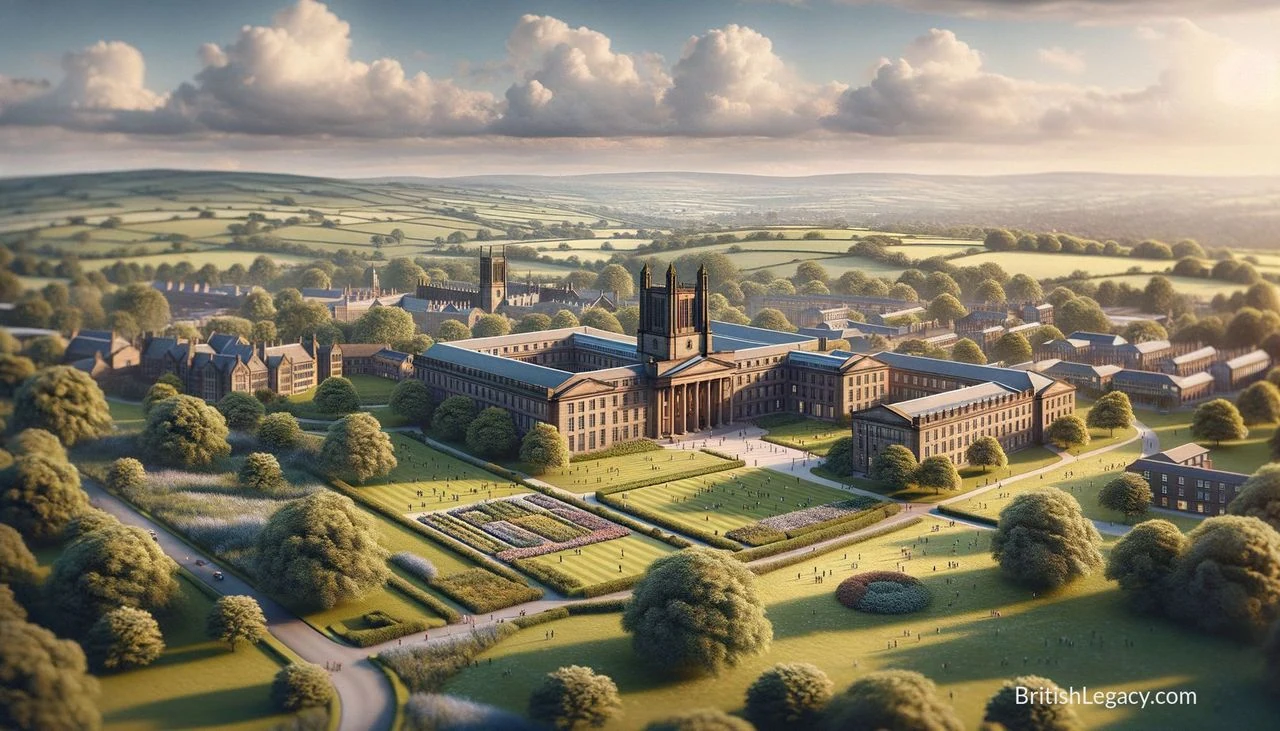
The Bailrigg campus, three miles south of the city centre, was built on land donated by Lancaster City Council in 1963. Its buildings were planned around a covered central walkway known as the Spine, which links the colleges and other parts of the campus. The design separated much vehicle traffic from pedestrian routes by keeping cars to a peripheral road. Alexandra Square, named for the first chancellor, forms the central plaza. The campus also includes landscaped parkland and Lake Carter, named after the university’s first vice-chancellor, Charles Carter.
Colleges were part of the university’s organisation from its earliest years. Bowland and Lonsdale, the first two, were founded in 1964; the first college buildings were not completed until 1966, and students moved into campus residences in 1968. The university now has nine colleges, including Graduate College, founded in 1992. The colleges provide residences and shared social facilities, while students also belong to the wider university. The college buildings accommodate some academic departments, but their principal role is residential and social.
The campus has continued to change. The Spine was remodelled between 2016 and 2018, with work intended to replace its deteriorating wooden canopy, widen bottlenecks and add landscaped green spaces. The library, whose first phase opened in 1966, has also been extended and refurbished. A project completed in 2021 added study, exhibition and research space, as well as a digital studio. These developments show how the original campus has been adapted for changing needs rather than preserved as a fixed plan.
Research, teaching and public life
Lancaster’s academic work ranges across the arts, humanities, social sciences, health, management, science and technology. Environmental research is represented by the Lancaster Environment Centre, which brings together work in biological sciences, environmental science and geography. The university’s social-science subjects include sociology, educational research, social work and criminology, alongside a School of Law. The breadth of these areas gives the university a basis for addressing environmental and social questions through more than one discipline.
Research is also part of Lancaster’s wider institutional profile. The university joined the N8 Group, a collaboration of research universities in northern England. In the 2014 Research Excellence Framework, it was ranked 18th among 128 UK universities, including 13th for the proportion of its research rated world-leading. That assessment provides a dated measure rather than a permanent ranking. The university also received a Gold rating in the government’s Teaching Excellence Framework in 2017 and 2023.
Teaching and student life are not confined to lecture rooms. Lancaster’s collegiate structure gives students college residences and shared social spaces, while the Students’ Union is organised through college Junior Common Rooms rather than a single main union building. The campus’s Great Hall complex includes the Peter Scott Gallery, the Nuffield Theatre and the Lancaster International Concert Series. These venues host public-facing cultural activity as well as contributing to university life. The Peter Scott Gallery’s collection includes works by British artists such as Barbara Hepworth, Terry Frost and William Scott, alongside international art.
Connections beyond Bailrigg
The university’s international work has included partnerships and programmes beyond Lancashire. It partnered with Sunway University in Malaysia on undergraduate dual awards from 2006. It announced a branch campus in Accra in 2013, and later established Lancaster University Leipzig in Germany, which opened in 2020. Its work with South China Agricultural University in Guangzhou began with a joint environmental research and education institute and an undergraduate environmental science degree in 2016. These initiatives form part of a wider international outlook, though they do not displace the university’s roots and principal campus in Lancaster.
Its relationship with the surrounding area is also visible in its campus and public facilities. The university’s arts venues are open to the public, and its cultural programme includes theatre, contemporary dance, live art and classical music. In 2016 it purchased Forrest Hills, a conference centre and golf course opposite the main campus across the M6, which it continues to operate as a conference venue. Together, these facilities connect university activity with audiences and organisations beyond its student and staff community.
Why Lancaster University deserves a place in British Legacy
Lancaster University’s place in British Legacy rests on a specific history of institutional and physical growth. Founded during the expansion of higher education in the 1960s, it began with a small staff and improvised accommodation spread across the city. It then developed Bailrigg as a purpose-built campus, organised around the Spine and a collegiate system. That evolution links the university’s story to Lancaster itself: the city provided its early teaching spaces, while the council’s land donation helped make the permanent campus possible.
Its contribution is not only architectural or local. Lancaster combines teaching with research across environmental science, social sciences, law, health, management, arts and other fields. Its research profile, membership of the N8 Group and assessed teaching record provide concrete measures of that work; its gallery, theatre and concert series make parts of campus life accessible to the public. International partnerships extend its reach, while its principal campus remains rooted in Lancashire. The result is an institution whose British significance can be explained through its history, its educational and research activity, and the ways its facilities serve students and wider audiences—not through general claims of national excellence.
Sources
Lancaster University (revision 1375542973) · Lancaster University
Adapted in part from Lancaster University by Wikipedia contributors, under CC BY-SA 4.0. Text has been edited and combined with the existing article; this adapted text is shared under the same licence. Contributor history.