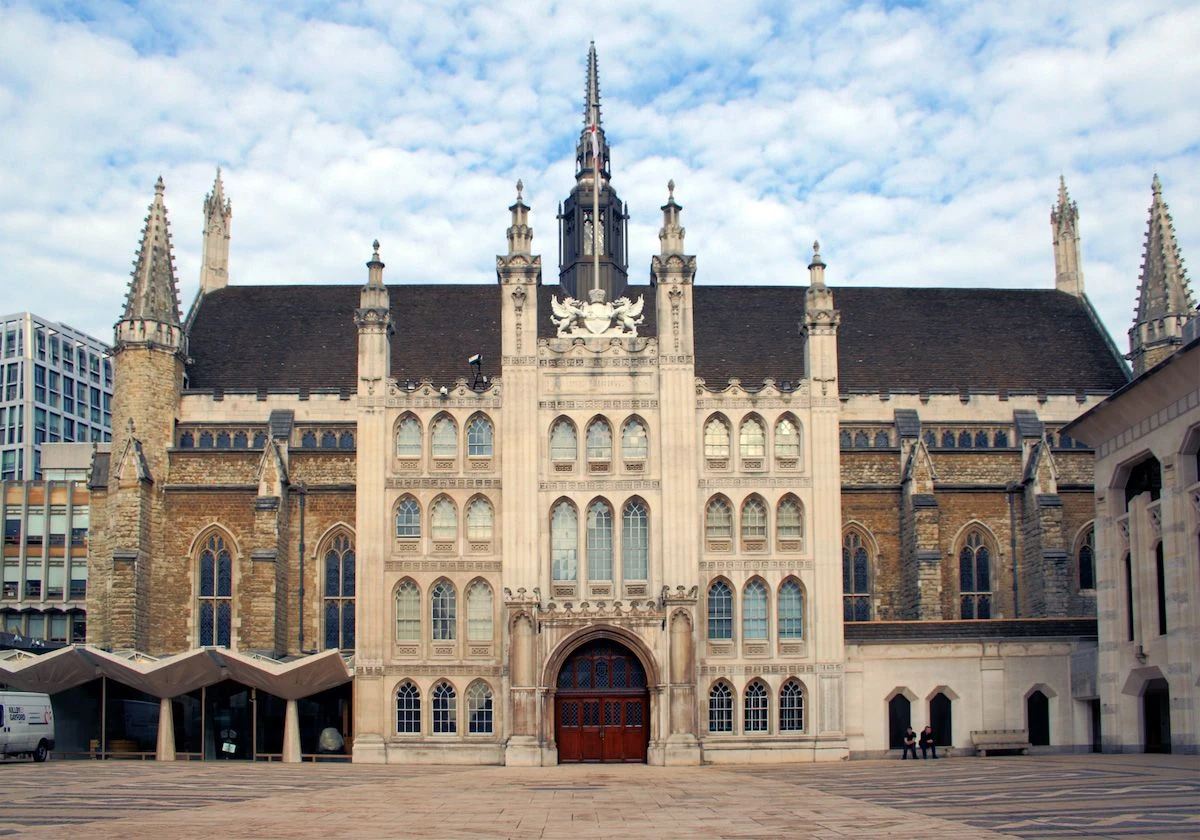
George Dance the Elder spent more than three decades as the City of London’s surveyor and architect. His best-known commission, the Mansion House, gave the Lord Mayor a new official residence and gave the City a prominent civic building. Dance also designed churches in London and a town hall in Ireland. His career joined the practical demands of public office to architectural work whose buildings remain part of the historical record of the places they served.
A city appointment and a major commission
Dance was born in 1695 and began his working life as a mason. He was appointed Clerk of the City of London’s works and became the City’s surveyor and architect in 1735, holding the post until his death in 1768. The role put him at the centre of the City’s building work, but his rise was already under way before he formally took it up: in 1734 he won a major commission for a new residence for the Lord Mayor.
The Mansion House was a substantial civic undertaking. Dance was one of three architects invited to submit designs; the others were James Gibbs and Giacomo Leoni. The City’s choice made his design the home of the Lord Mayor and one of the most prominent architectural commissions of his career. Construction continued until the building was completed in 1752, during Dance’s tenure as the City’s architect.
The Mansion House is marked by its grand portico and its Egyptian Hall. The latter takes its name from an arrangement of columns described as Egyptian by the Roman architect Vitruvius. These features give the building a distinctive architectural identity, while its original civic purpose remains central to its history. It was not simply a private residence: it was designed for the Lord Mayor, linking Dance’s work directly to the City’s institutions and public life.
Churches, civic buildings and a working practice
Dance’s commissions extended beyond the Mansion House. In London he designed St Leonard’s, Shoreditch, built between 1736 and 1740; St Botolph’s, Aldgate, from 1741 to 1744; and St Matthew’s, Bethnal Green, from 1743 to 1746. These church projects placed his work in different parts of the capital and served religious as well as local community needs. St Botolph’s Aldgate, highlighted among his important works, is one part of a broader body of ecclesiastical design rather than an isolated achievement.
He also designed the Great Synagogue of London, extending his work to another religious building tradition. Beyond the capital, Dance designed the Town Hall of Coleraine in Northern Ireland in 1743; that building was demolished in 1859. The range of these commissions shows the breadth of his professional work: churches, a synagogue, a town hall and the City’s principal civic residence all formed part of his practice.
Dance’s buildings have not attracted only praise. The architectural historian Sir John Summerson included him among London architects whom he considered to have debased Palladianism, describing the Mansion House as “cramped and overdressed”. That judgement offers a pointed counterweight to grand claims about the building’s influence. It also makes clear that Dance’s architectural reputation has been subject to critical assessment, rather than resting on unchallenged admiration.
Family and succession
Dance had five sons, three of whom became known in their own right. His eldest, James, became an actor and playwright associated with Drury Lane theatre and adopted the name Love. Nathaniel became the painter Sir Nathaniel Dance-Holland. His youngest son, George Dance the Younger, followed his father into the City’s architectural establishment and succeeded him as city architect.
That succession gives Dance’s career a further civic dimension. The appointment he held for more than thirty years passed to his son, connecting two generations of the Dance family with the City’s building work. George the Younger’s later prominence should not obscure the distinction between their careers: the elder Dance’s own record includes the Mansion House, several churches, the Great Synagogue and the Coleraine Town Hall, as well as his long public appointment.
Dance died on 8 February 1768 and was buried in the churchyard of St Luke’s, Old Street, north of the City of London. His working life had been closely tied to the capital, and his burial place remained within its wider urban landscape.
Why George Dance the Elder deserves a place in British Legacy
George Dance the Elder deserves a place in British Legacy because his work connects architectural design with the institutions and everyday settings of eighteenth-century public life. The Mansion House was commissioned as the Lord Mayor’s residence, not merely as an exercise in style. Dance’s design gave the City a major civic building, distinguished by its portico and Egyptian Hall, and its completion in 1752 brought a project begun under his direction to its realised form. The building’s particular architectural features and public function make his contribution specific and tangible.
His legacy also reaches beyond one landmark. Dance designed churches across London, the Great Synagogue, and a town hall in Coleraine, demonstrating a practice that served civic and religious needs in more than one setting. His work as the City’s surveyor and architect from 1735 until his death gives that range an institutional context: he was not simply a designer of individual monuments but a public architect responsible for the capital’s built environment. The succession of his son George the Younger to the same City role further links his family to London’s architectural history. Dance’s mixed critical reception is part of the record too. Summerson’s reservation about the Mansion House reminds us that architectural legacy includes debate as well as preservation. Together, his commissions, public office and continuing critical discussion make his career a meaningful part of Britain’s architectural heritage.
Sources
Adapted in part from George Dance the Elder by Wikipedia contributors, under CC BY-SA 4.0. Text has been edited and combined with the existing article; this adapted text is shared under the same licence. Contributor history.