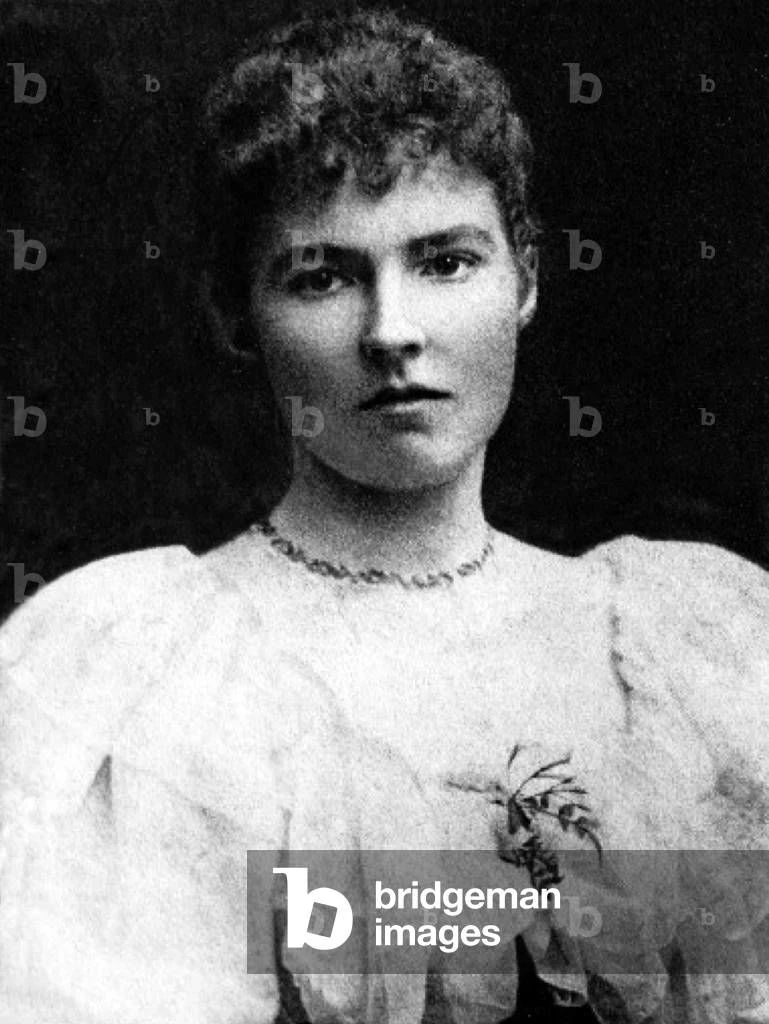
Gertrude Bell’s influence in the Middle East grew from two kinds of knowledge: the close observation of a traveller and the political understanding of an historian. She explored and mapped the region, documented its archaeological sites and built relationships with local leaders. During and after the First World War, those experiences brought her into British imperial administration. She became an adviser in the making of Iraq, while also helping to establish the institutions that would preserve its antiquities and scholarship.
An education that opened the world
Bell was born on 14 July 1868 at Washington New Hall in County Durham. Her family’s wealth made higher education and travel possible. Her father, Sir Hugh Bell, was an industrialist; her grandfather, Sir Isaac Lowthian Bell, was an ironmaster and Liberal politician. Bell’s mother, Mary, died when she was three. Her father later married Florence Bell, a writer who supported Gertrude’s intellectual development.
After attending Queen’s College in London, Bell went to Lady Margaret Hall, Oxford, to study modern history. Women faced restrictions at the university: Bell achieved first-class honours in 1888, but did not receive a degree at the time. Oxford awarded degrees to women retrospectively in 1920. Her academic training gave her a grounding in history that she carried into her later writing and political work.
Bell’s first journey to Persia began in 1892, when she travelled to visit her uncle, the British minister in Tehran. She returned with material for Persian Pictures, published in 1894, and continued to travel widely. She learned Arabic, Persian, French, German, Italian and Turkish, and translated Persian poetry. Her interests extended from the landscapes and communities she encountered to the remains of earlier civilisations.
Travelling, writing and recording the past
Bell’s travels were not simply journeys through unfamiliar places. She recorded routes, buildings and archaeological sites in photographs, notes and published accounts. In 1905, she travelled in Syria; the following year’s work became Syria: The Desert and the Sown, a book describing the region and its people. She later published Amurath to Amurath, drawing on her travels and archaeological work. Her letters and reports also carried observations back to Britain, where relatively few people knew the contemporary Middle East well.
In 1907, Bell worked with archaeologist William M. Ramsay at Binbirkilise in Asia Minor. She planned and funded the excavations, and their work appeared in A Thousand and One Churches. Two years later, she travelled through Mesopotamia, visiting Carchemish, Babylon and other sites. She mapped and described the palace at Ukhaidir, later publishing a study of its architecture. Her photographs and detailed records would become particularly valuable as documentation of places and monuments.
Bell also travelled extensively in Arabia. On a demanding journey in 1913–14, she went from Damascus to Ha’il and on to Baghdad and back to Damascus. Her accounts reflect both the practical difficulties of travel and the political conditions of the places she visited. By the time war changed the region’s political landscape, Bell had accumulated an unusual combination of geographical knowledge, language skills and personal connections.
From wartime reporting to political office
During the First World War, Bell first volunteered with the Red Cross, helping to trace wounded and missing soldiers. In 1915, she was summoned to Cairo and worked with the Arab Bureau, where officials assembled information about Arab tribes and the region. She was then sent to India and, in 1916, to Basra, where she became a liaison between British authorities in India and Cairo. She travelled between Basra and Baghdad, prepared reports and maps, and advised the British administration.
After British forces took Baghdad in 1917, Bell worked under High Commissioner Percy Cox as Oriental Secretary. She was the only woman in a senior political role of this kind in the British administration. Her position gave her access to discussions about the future of Mesopotamia, but her influence was not the work of one official acting alone. British policy was contested, and Bell disagreed with other administrators over the degree of direct British control and the place of local self-government.
Bell took part briefly in the Paris Peace Conference in 1919 and was among the British officials and advisers assembled by Winston Churchill at the Cairo Conference of 1921. There, she supported a route towards an Arab government in Iraq under Faisal, one of the sons of Sharif Hussein of Mecca. Faisal became king in 1921, and Bell advised him on local affairs and acted as an intermediary between his government, British officials and Baghdad’s notables. She favoured including the Mosul region in Iraq, but the country’s borders emerged through negotiations and later decisions, not through Bell’s work alone. The inclusion of Mosul was settled after the conference.
Bell’s political outlook combined support for Arab government with a continuing role for British influence. She believed that the region’s political circumstances could not be understood through distant administration alone. Her record also shows the limitations and contradictions of British policy: decisions made under imperial authority affected diverse communities, and Bell’s preferences did not represent every group’s interests. Her reports, including her 1920 review of the civil administration of Mesopotamia, remain part of the record of those debates.
Antiquities, libraries and a final chapter
In 1922, Faisal appointed Bell Honorary Director of Antiquities. She worked to organise archaeological excavation and the recording of finds, and helped develop legislation to regulate permits and the handling of antiquities. The 1924 law established a framework for oversight, though it still permitted some finds to be exported. Bell’s work helped bring greater order to excavation and collection at a time when archaeological practice in Iraq needed regulation.
She also campaigned for a museum in Baghdad to house the country’s archaeological treasures. After lobbying for a suitable location, Bell secured a site for the Baghdad Archaeological Museum, which opened in June 1926. It was later renamed the Iraq Museum. Her work included cataloguing finds and establishing procedures to record them. She also supported the Baghdad library, serving as its president from 1921 to 1924; it later developed into the National Library of Iraq.
Bell’s health declined during her final years. She died in Baghdad on 12 July 1926, aged 57, after taking an overdose of sleeping pills. Whether it was intentional or accidental is unknown. She was buried in Baghdad. Her death came soon after the museum she had worked to establish opened its doors, and her will left money to the Iraq Museum and to support archaeological work in Britain.
Why Gertrude Bell deserves a place in British Legacy
Bell’s place in British Legacy rests on a career that linked British education and scholarship with consequential work overseas. As a historian, linguist, traveller and archaeologist, she built knowledge through sustained observation and recorded what she saw in books, photographs, maps and reports. That work made her more than a public figure of desert travel: it gave her an informed, if not unchallenged, role in British decisions about the post-Ottoman Middle East. Her political influence should be described with care. She was one participant among officials and local leaders, and the decisions that shaped Iraq were contested and complex. But her work at the Cairo Conference and her advice to Faisal place her firmly within the history of Britain’s involvement in the region.
Her legacy also includes practical efforts to protect and make accessible Iraq’s archaeological and literary inheritance. As Director of Antiquities, Bell promoted recording and regulation; her campaigning helped bring the Baghdad Archaeological Museum into being. Her work with the Baghdad library supported another lasting public institution. These achievements connected her scholarship to institutions in Iraq rather than treating the region’s history simply as an object of study abroad. Remembering Bell in British Legacy means holding together both sides of that record: her contributions as a scholar and institution-builder, and her participation in an imperial administration whose choices shaped other people’s political futures.
Sources
Gertrude Bell — Wikipedia, revision 1378628944
Adapted in part from Gertrude Bell by Wikipedia contributors, under CC BY-SA 4.0. Text has been edited and combined with the existing article; this adapted text is shared under the same licence. Contributor history.