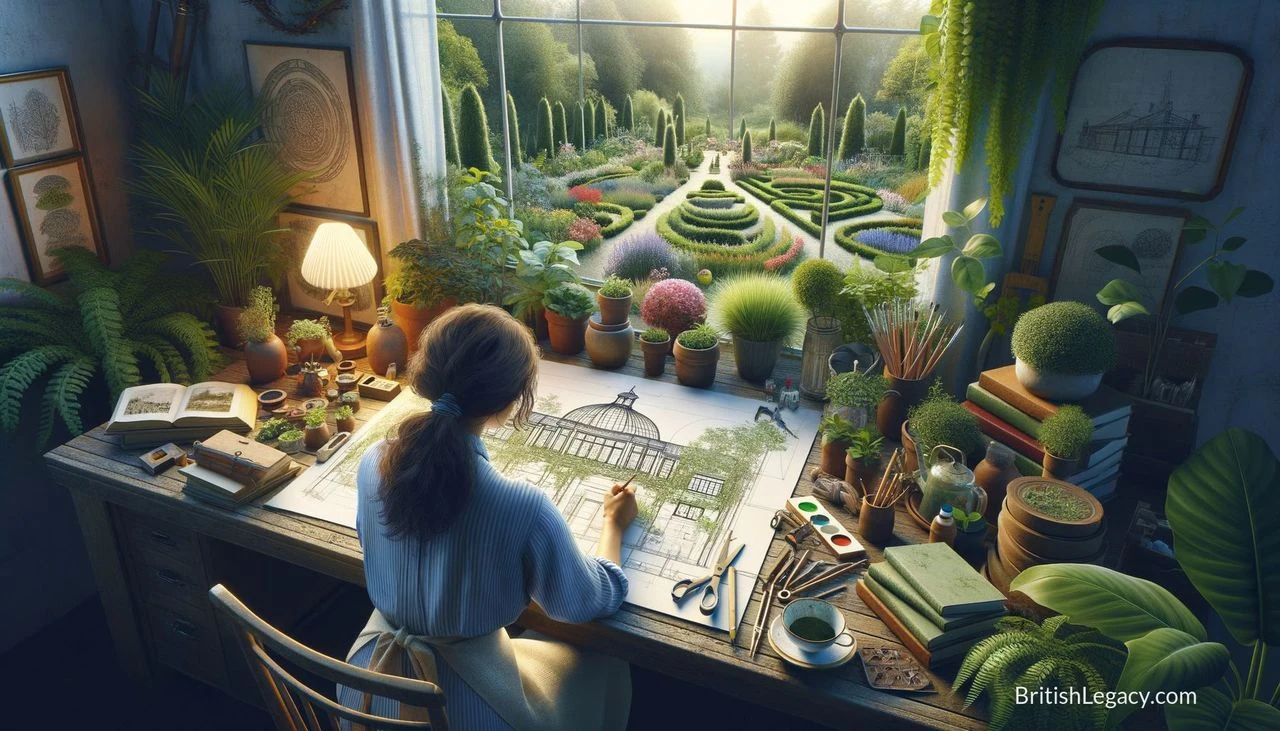
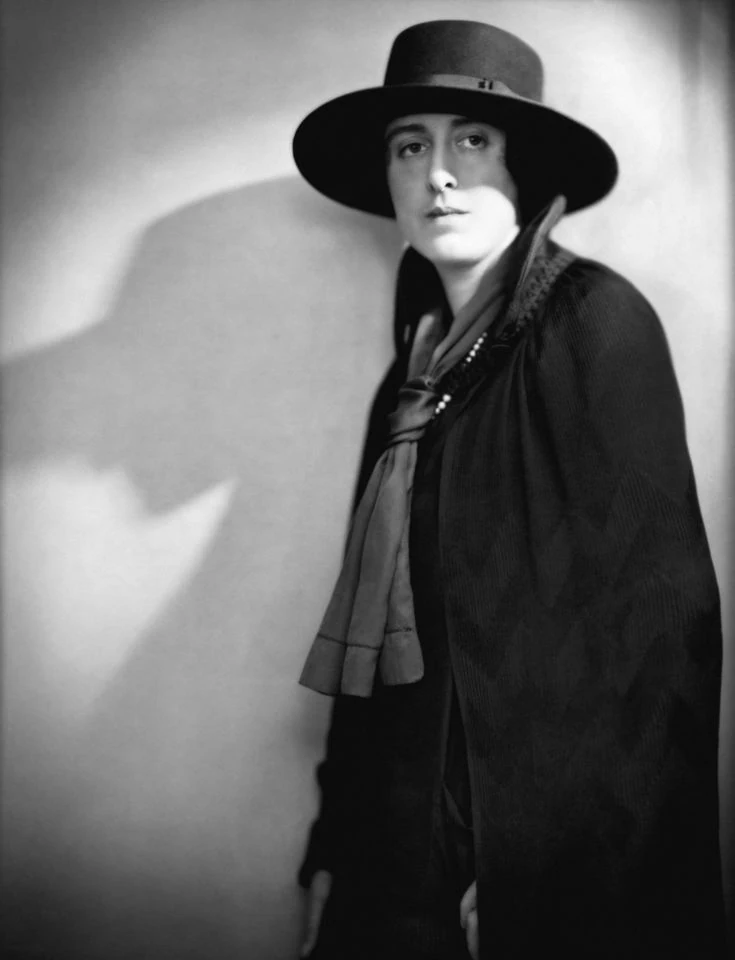
Gertrude Jekyll brought an artist’s eye to the practical work of making gardens. Over a career that ranged from painting and craft to horticulture, photography and writing, she developed a way of planting that treated colour, texture and the experience of a garden as parts of its design. She created around 400 gardens in Britain, Europe and North America, and her collaboration with architect Edwin Lutyens helped shape some of the best-known examples of the Arts and Crafts approach to house and landscape.
An artist’s education, a gardener’s practice
Jekyll was born in Mayfair, London, on 29 November 1843, the fifth of seven children of Captain Edward Joseph Hill Jekyll and Julia Jekyll. In 1848 the family moved to Bramley House in Surrey. Educated at home, she began sketching and gardening there. In 1861 she entered the National School of Art in South Kensington, and her paintings were later exhibited at the Royal Academy and the Society of Female Artists. A journey to Greece and Turkey in 1863 with Charles and Mary Newton stimulated a lasting interest in Mediterranean plants.
Her interests were never confined to painting or gardening alone. In 1868 the family moved to Wargrave Hill in Berkshire; the following year, she came to know William Morris. His idea of the unity of the arts influenced her work. During the 1870s she embroidered, made gates, designed interiors and gardens, and continued collecting plants on trips to the Mediterranean. These varied activities gave practical expression to an approach in which the garden belonged alongside the house, its furnishings and its setting.
Jekyll’s artistic work changed as her eyesight deteriorated, bringing her painting career largely to an end. She turned increasingly to garden design and writing. Her training and experience as an artist remained evident in her planting: rather than treating plants as separate specimens, she arranged them for the colour, texture and overall effect they produced together.
Colour, planting and the shape of a garden
Jekyll became known for subtle, painterly compositions, particularly her hardy flower borders. Her planting used radiant colour and brush-like strokes, guiding the eye through combinations of plants rather than relying on a single, static display. She considered how a garden would be seen and experienced, and brought colour theory to the arrangement of living materials. Her thinking about colour drew on the work of J. M. W. Turner, Impressionism and the colour wheel.
This approach connected aesthetic judgement with horticultural knowledge. Jekyll did not want gardening to be simply a set of instructions: she wrote about both its practice and its underlying principles, and about understanding the plants themselves. She also considered how flowers would look once cut and brought indoors, designing glass vases of her own for their display. Her work thus linked the outdoor garden with the rooms of the house, while retaining close attention to the character of individual plants.
From 1881 she provided designs or planting plans for some 400 gardens. More than half were directly commissioned; others were made with architects, among them Lutyens and Robert Lorimer. The number gives a sense of her reach, but many of the gardens have since been lost. Restored examples include her own garden at Munstead Wood, Hestercombe, The Croft in Brook, Surrey, and gardens at Woolverstone House and the Manor House in Upton Grey. Their survival offers a view of the range and detail of her work, rather than a complete record of it.
Munstead Wood and Edwin Lutyens
After her father’s death in 1876, Jekyll’s mother commissioned a house at Munstead Heath near Godalming from architect John James Stevenson; Gertrude designed its garden. Jekyll lived with her mother until 1895, when she built Munstead Wood nearby. Designed by Lutyens, it was the first of their house-and-garden collaborations. Jekyll established a nursery there, supplying plants for her designs.
The partnership brought different kinds of expertise together. Lutyens designed buildings and strong architectural forms; Jekyll made planting plans that related the garden to those structures and their surroundings. Their work at Hestercombe in Somerset remains a notable example of that relationship. The gardens show how structural lines and carefully composed planting could contribute to one design, rather than compete for attention. Jekyll also returned to Bramley in 1904 to design the garden at Millmead House, linking her professional work to the village where she had spent part of her childhood.
Her collaboration with Lutyens was part of a larger professional practice: she worked on hundreds of gardens, and many plans were undertaken with architects. The gardens that remain, restored or otherwise, should therefore be understood as parts of a much wider body of work. Her influence lies not only in particular surviving places but also in a method that gave planting a central role in the experience of architecture and landscape.
Books, photography and the record of rural life
Jekyll began writing for William Robinson’s magazine The Garden in 1881 and went on to contribute to gardening periodicals and Country Life. Her first book, Wood and Garden, appeared in 1899; Colour in the Flower Garden, published in 1908, became a best-seller. Other books included Old West Surrey, a record of aspects of nineteenth-century country life illustrated with more than 300 photographs she took herself. She also wrote about roses, water gardens, lilies, annuals and biennials, children and gardens, and colour schemes.
Her writing extended the reach of her ideas beyond the gardens she designed. It joined practical advice to explanations of how planting worked, and preserved material about domestic objects and rural crafts that she feared were disappearing. In 1907 she donated a collection of traditional household items and objects relating to Old Surrey to the Surrey Archaeological Society. Much of it remains on display at Guildford Museum.
Jekyll received the Royal Horticultural Society’s Victoria Medal of Honour in 1897 and its Veitch Memorial Medal in 1929. That year she also received the George Robert White Medal of Honor from the Massachusetts Horticultural Society. She died at Munstead Wood on 8 December 1932, aged 89, and was buried at St John the Baptist, Busbridge. The family memorial was designed by Lutyens.
Why Gertrude Jekyll deserves a place in British Legacy
Jekyll’s place in British garden history rests on the scale of her work and the thought she brought to it. She designed or planned planting for around 400 gardens, while her collaboration with Lutyens showed how a garden could be composed in active relation to a building. Her arrangements of colour, texture and form made planting a principal design element, not a final decoration. The surviving gardens at places such as Munstead Wood and Hestercombe allow later visitors and designers to encounter aspects of that achievement directly, even though many of her projects no longer survive.
Her contribution also travelled through the printed page. Books such as Wood and Garden and Colour in the Flower Garden shared both methods and ideas, while her magazine writing reached readers beyond the clients who commissioned gardens. Her photographs and collecting preserved records of rural life and household craft; her donation to the Surrey Archaeological Society helped keep some of that material accessible at Guildford Museum. This combination of designed landscapes, published knowledge and preservation gives her legacy a distinctly British setting and a continuing public value. Jekyll made gardens that joined artistic judgement to close knowledge of plants, then recorded and communicated that work for others to study and adapt.
Sources
Gertrude Jekyll — Wikipedia revision 1360829199
Adapted in part from Gertrude Jekyll by Wikipedia contributors, under CC BY-SA 4.0. Text has been edited and combined with the existing article; this adapted text is shared under the same licence. Contributor history.