In 1824, the British government bought 38 paintings from the heirs of banker John Julius Angerstein. The purchase established the National Gallery in a Pall Mall townhouse and gave the public a collection that had not been assembled from a royal gallery. Today, in Trafalgar Square, the institution holds more than 2,300 paintings dating from the mid-13th century to 1900. Its history is not simply one of acquiring celebrated pictures: it is also a story of public access, private gifts, cramped rooms, contested conservation and the continuing effort to make a national collection serve its visitors.
A collection made for public use
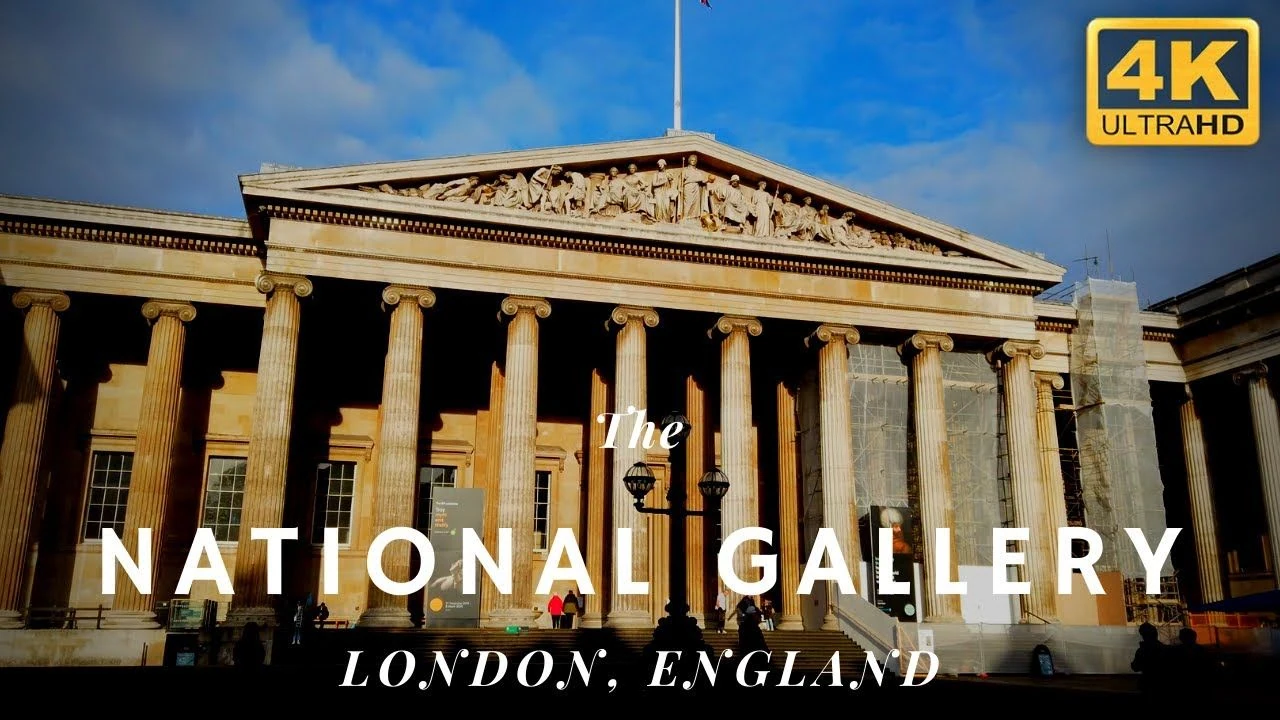
The Gallery opened at No. 100 Pall Mall, in Angerstein’s former home. Its early collection grew through further gifts and bequests: Sir George Beaumont’s paintings joined in 1826, followed in 1831 by 35 works left by the Reverend William Holwell Carr. In 1832, building began on a new home at Charing Cross, on the northern side of the developing Trafalgar Square. William Wilkins designed the building, which opened to the public in 1838.
The location carried an argument about who should be able to see the pictures. Trafalgar Square lay between the affluent West End and poorer districts to the east. In 1857, a parliamentary commission described the collection’s purpose as giving people “an ennobling enjoyment”, rather than treating the pictures’ existence as an end in itself. The Gallery’s present-day arrangement reflects that public remit: its collection is held in trust on behalf of the British public, and entry to the main collection is free.
The institution’s origins also distinguish it from national galleries formed by taking over a monarch’s existing collection. The British Royal Collection remained in the sovereign’s possession; the National Gallery began instead with a government purchase and developed through acquisitions and gifts. Private donations now account for two-thirds of its collection. Among the early figures who shaped its holdings was Charles Lock Eastlake, director from 1855 to 1865. He travelled in search of paintings, particularly by Northern and Early Italian Renaissance artists who had received less attention from the Gallery’s earlier acquisition policy.
Paintings, gifts and a changing collection
The Gallery’s range includes works by artists from across Europe, from medieval and Renaissance painting to the late 19th century. Jan van Eyck’s Arnolfini Portrait, Leonardo da Vinci’s Virgin of the Rocks, Diego Velázquez’s Rokeby Venus, Turner’s The Fighting Temeraire and van Gogh’s Sunflowers offer different ways into that collection. The pictures are not only renowned individual works: together they provide a view of changing styles and artistic traditions across several centuries.
Important additions have often depended on benefactors or public fundraising. The Gallery bought Holbein’s The Ambassadors in 1890 with help from private individuals. In 1906, the National Art-Collections Fund helped secure Velázquez’s Rokeby Venus. Later, major public appeals supported the purchase of Leonardo’s cartoon for The Virgin and Child with Saint Anne and Saint John the Baptist in 1962, and Titian’s Death of Actaeon in 1972. In the 21st century, fundraising helped acquire Raphael’s Madonna of the Pinks and, jointly with the National Gallery of Scotland, Titian’s Diana and Actaeon and Diana and Callisto.
The collection’s boundaries have also changed. In 1897, the establishment of the National Gallery of British Art—soon known as the Tate Gallery—allowed British works to move to a separate institution. In 1996, the National Gallery and Tate more clearly defined their respective remits, setting 1900 as the cut-off point for paintings at the National Gallery. More than 60 post-1900 works subsequently went to Tate on long-term loan. That boundary is not immutable: plans announced in 2025 for a new Gallery wing include a policy change that would allow the acquisition of works created after 1900.
A building repeatedly reimagined
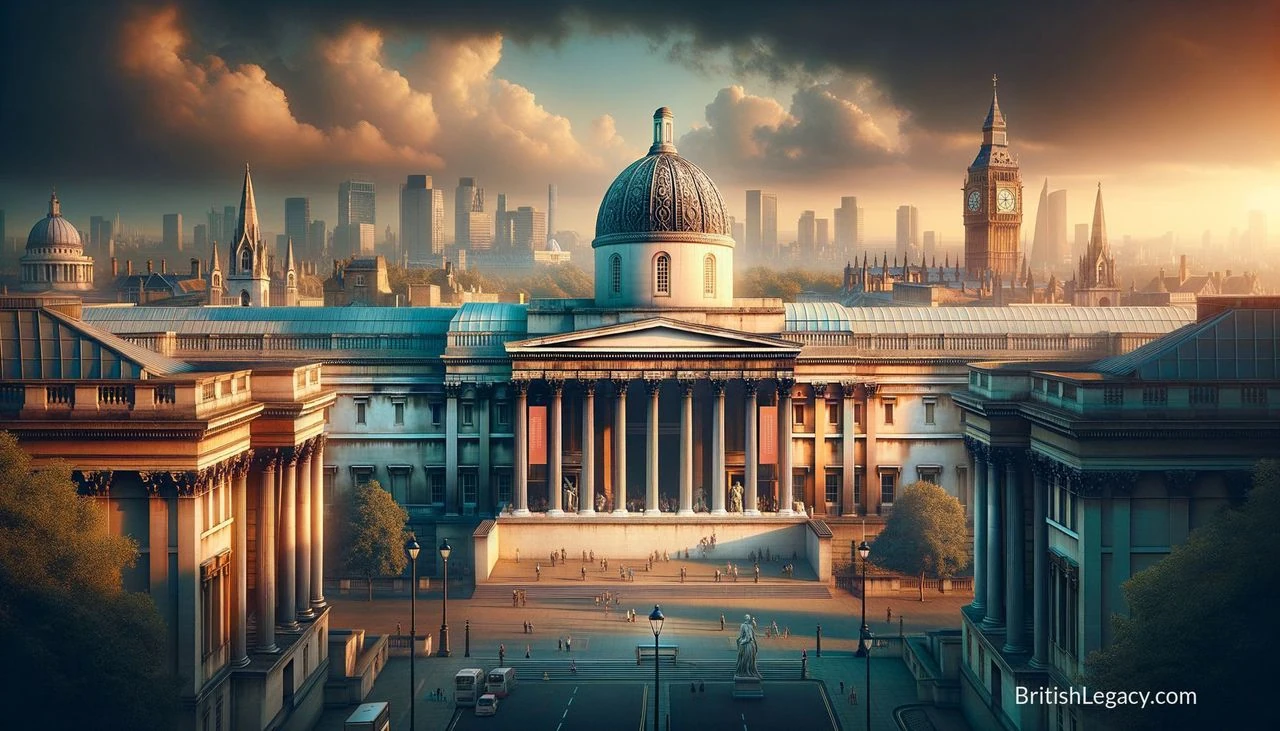
Wilkins’s building opened in 1838, but its design and limited space drew criticism. The site was narrow, and a workhouse and barracks stood immediately behind it. The building was only one room deep; the Royal Academy occupied its eastern half until 1868, further limiting Gallery space. Some elements, including columns and sculptures, were reused from earlier projects. Later additions changed the building substantially, while the Trafalgar Square façade remains its most recognisable face.
Expansion brought new architectural chapters. Edward Middleton Barry’s rooms, built between 1872 and 1876, supplied a more formal sequence of galleries. The Sainsbury Wing, designed by Robert Venturi and Denise Scott Brown, opened in 1991 to house Renaissance paintings. Its postmodern design contrasts with the older building while creating additional public gallery space. The extension was made possible by a donation from Lord Sainsbury and his brothers, following a renewed design competition and a change that allowed the project to be devoted entirely to gallery use.
Plans announced in 2025 propose a further wing at St Vincent House, behind the Sainsbury Wing, with room to display 250 additional paintings. The £375 million project is expected to open in the early 2030s. In April 2026, the Gallery announced Kengo Kuma and Associates, working with BDP and MICA, as the winning design team, subject to the stated ratification process. The proposal continues a long-running institutional problem and opportunity: how to house a growing collection without losing sight of the building’s public purpose.
War, conservation and public life
During the Second World War, the paintings were evacuated to Wales. In 1940, they were moved to a slate quarry at Manod, near Blaenau Ffestiniog. The pictures remained away from London until 1945, while the Gallery building hosted other forms of public activity. Pianist Myra Hess and fellow musicians gave lunchtime recitals there during the war. The Gallery also organised exhibitions, including displays of British painting and work by artists serving the wartime effort. In 1941, a monthly scheme brought one painting back from the quarry for public display in Trafalgar Square.
The move to Manod helped establish the importance of keeping paintings in stable temperature and humidity. Conservation itself has often been disputed. Cleaning campaigns in the 19th century provoked press criticism, and the restoration of paintings after their return from Manod prompted another public controversy in 1946. A 1947 commission concluded that the recent cleaning had caused no damage. Such episodes reveal that preserving art involves judgement and debate, not merely protecting objects from physical harm.
Public engagement has also included artists working in response to the collection. The Gallery began its Artist’s Eye exhibitions in 1977, inviting living artists to select and interpret works. A residency programme followed in 1980; later initiatives included an Associate Artist Scheme and a renewed Artist in Residence programme established in 2020. This continuing exchange gives the collection a place in contemporary practice as well as art history.
Why the National Gallery deserves a place in British Legacy
The National Gallery belongs in British Legacy because its history connects national collecting with a specific public promise. Established through a government purchase rather than the transfer of a royal collection, it developed in a central London location intended to make art accessible across social boundaries. Its free main collection and public trust status keep that founding purpose visible. The Gallery’s paintings also bring works from many European traditions into a shared setting, where visitors can encounter individual artists and follow wider changes in painting across centuries.
Its legacy is equally evident in the difficult choices behind maintaining and sharing a collection. Gifts and public appeals have enabled major acquisitions; successive buildings have made room for works and audiences; wartime evacuation and conservation debates have tested the institution’s responsibility to preserve what it holds. Recitals and exhibitions kept the Gallery in public use during the war, while artist programmes have invited new interpretations of familiar paintings. Its ongoing expansion plans show that this work is unfinished. The National Gallery’s British significance lies not in claiming ownership of Europe’s artistic history, but in the way a British public institution has assembled, cared for and opened a major collection to the people it serves.
Sources
National Gallery (revision 1378402389)
Adapted in part from National Gallery by Wikipedia contributors, under CC BY-SA 4.0. Text has been edited and combined with the existing article; this adapted text is shared under the same licence. Contributor history.