In South Kensington, the Natural History Museum makes the natural world its subject at several scales: from the detail of a specimen to the long story of life and the changing planet. Its galleries include fossils, minerals, plants and animals, while its collections also support scientific research. The museum’s public face is familiar to generations of visitors, but its work extends beyond the displays, into education, research and the documentation of biodiversity.
From Sloane’s collection to South Kensington
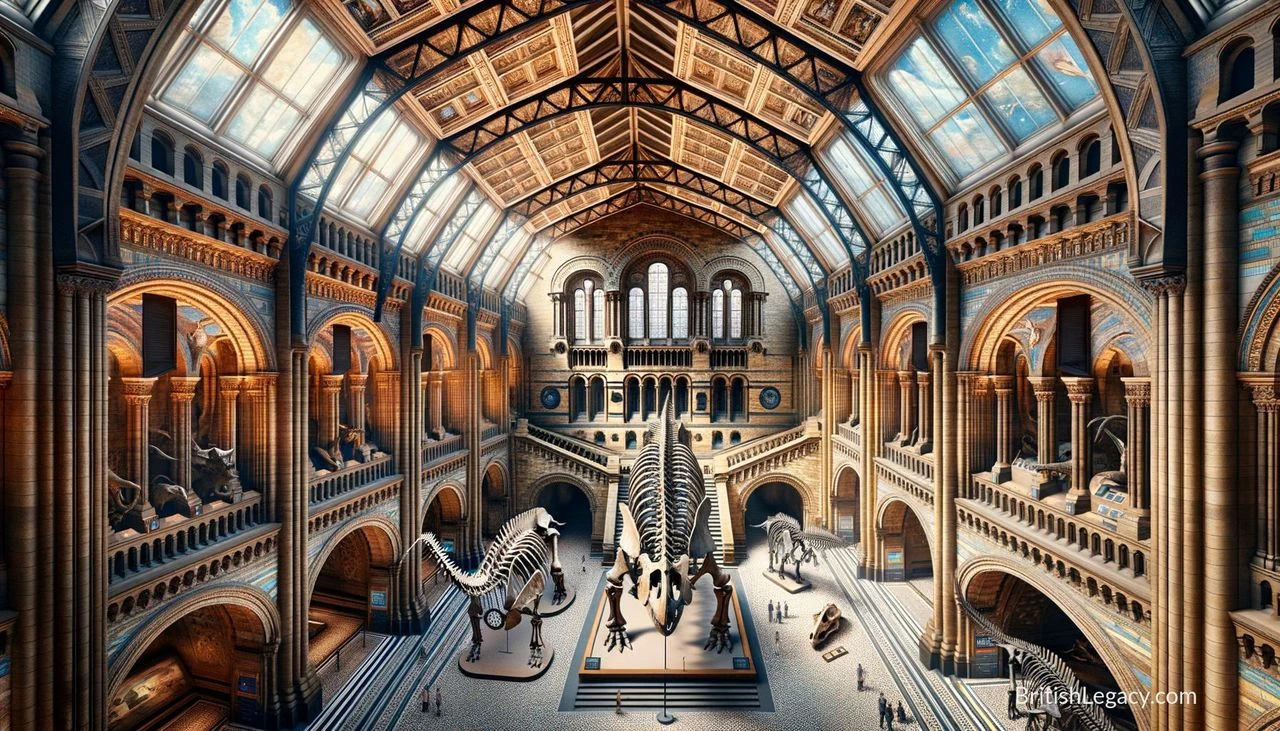
The museum’s history reaches back to 1753, when the collection of Sir Hans Sloane was acquired. The objects were initially displayed at the British Museum, as part of collections covering several fields of knowledge. As the natural-history holdings grew, a dedicated home became necessary. The Natural History Museum was established in 1881 in a Romanesque building in South Kensington designed by Alfred Waterhouse.
The building gives the institution a distinctive public presence, but the collections are its foundation. The museum holds more than 80 million items, according to the existing account, covering an immense span of natural history. Its holdings include botany, entomology, mineralogy, palaeontology and zoology. Together, these subjects offer visitors and researchers different ways to investigate the diversity of life and the history of the Earth.
Fossils, minerals and the living world
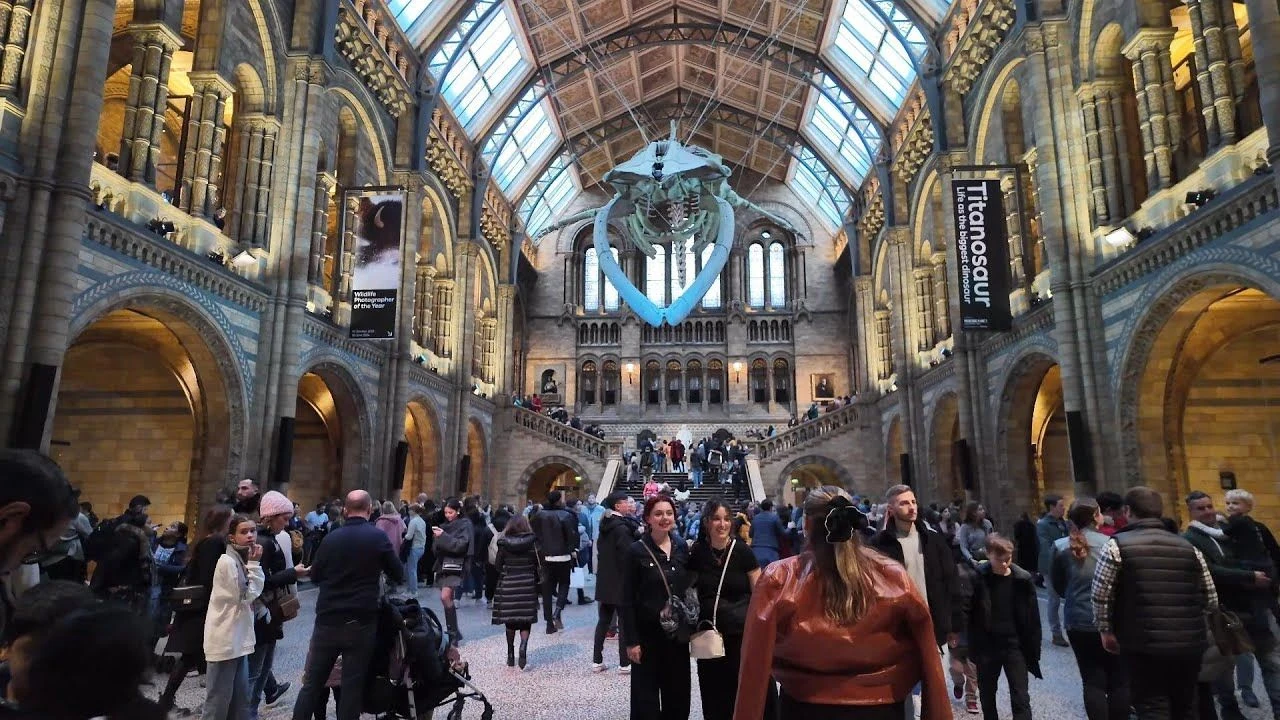
Fossils make deep time tangible in the galleries. For more than a century, a cast of a Diplodocus skeleton known as Dippy greeted visitors. In 2017, a blue whale skeleton named Hope took its place in Hintze Hall, suspended above the space. The change brought a different animal to the museum’s central display and, in the existing account, was intended to prompt reflection on humanity’s responsibility towards the environment.
The collections extend well beyond these large-scale encounters. Mineral and gem specimens reveal the variety of materials that make up the planet and invite attention to its geological past. In the zoological and botanical holdings, the range runs from tiny insects to the broad patterns of evolution and life’s diversity. Interactive displays and dioramas help present those subjects to a general audience, making relationships among living things part of the visitor experience.
That breadth is important: the museum is not simply a collection of striking objects. A specimen can be encountered as an individual example, but it also belongs to a wider record of natural forms and change. The different departments make it possible to move between close observation and larger questions about how life has developed and how the planet has been shaped.
Research, conservation and public learning
Behind the galleries, the museum’s collections support research in areas including taxonomy, ecology and climate change. The existing account describes the institution as a centre for work on biodiversity and environmental stewardship. Its collections also contribute to documenting the natural world, a role with particular relevance where species and habitats face pressure. The account refers to the museum’s work on conserving endangered species, though it does not specify particular projects or outcomes.
Public engagement connects this research and collecting work with visitors. The Wildlife Photographer of the Year competition uses images of the natural world to draw attention to its variety and to environmental challenges. The museum’s education programme includes workshops, lectures and activities for families and learners of different ages. Online exhibits and resources extend that offer beyond the building, allowing people to encounter museum material without visiting South Kensington.
The institution’s audience is not confined to London. The existing account describes it as attracting millions of visitors from around the world, as well as reaching a wider audience through digital resources. Its galleries, educational activities and research give different groups distinct reasons to engage: a first encounter with a fossil, a lesson in natural history or sustained scientific study of the collections.
Why The Natural History Museum deserves a place in British Legacy
The Natural History Museum deserves a place in British Legacy because its story connects public access to natural history with the preservation and study of an extensive collection. From the growth of Sir Hans Sloane’s collection and its early display at the British Museum to the institution established in South Kensington in 1881, it represents a long-standing commitment to collecting and presenting knowledge about the natural world. Waterhouse’s building provides a memorable setting, while the collections give that setting substance: fossils, minerals, plants and animals make the history and diversity of life available for close attention.
Its significance also lies in the relationship between what visitors see and the work carried out beyond the galleries. Research in taxonomy, ecology and climate change, educational activities, online resources and the Wildlife Photographer of the Year competition each offer routes into natural history. These activities help connect specimens and scientific questions with learners and wider audiences. The museum’s British legacy is therefore not only architectural or a matter of visitor appeal. It is the continuing public and scientific use of collections assembled to study the natural world, and the effort to make that knowledge accessible to people in Britain and beyond.