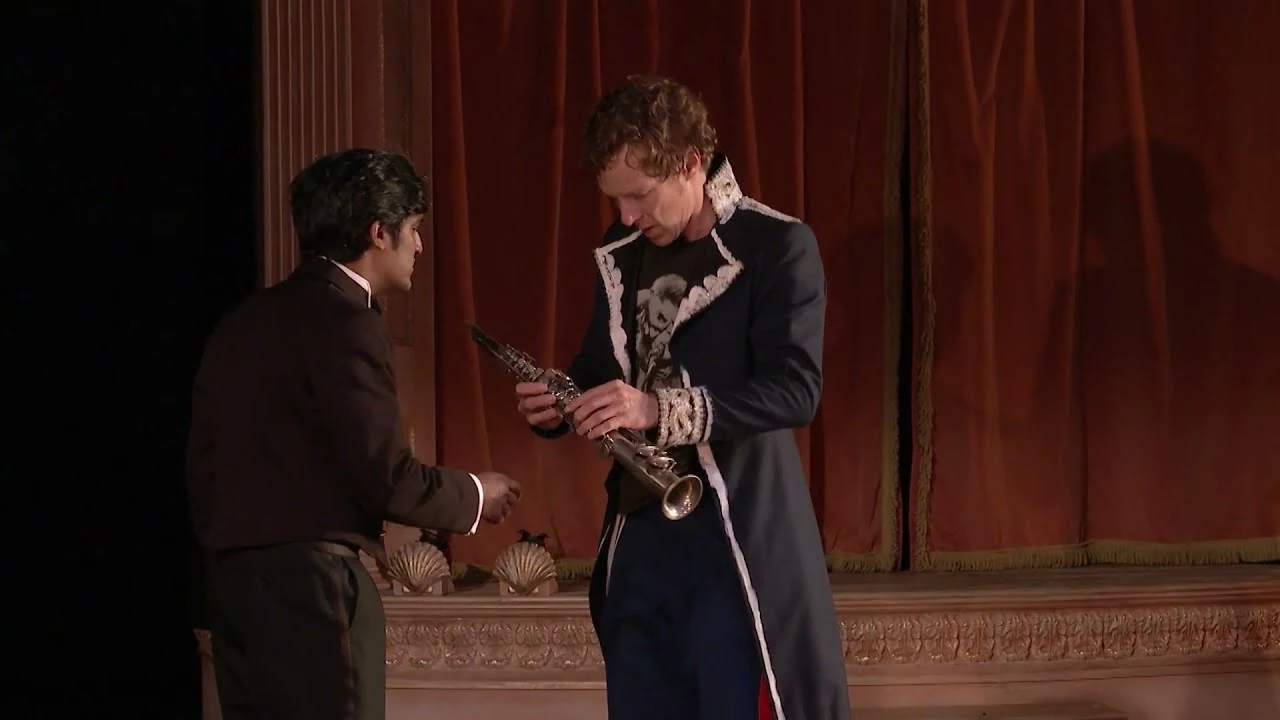
Hamlet: A Cornerstone of British Literary Heritage
Authorship and Production History
"Hamlet," one of the most illustrious works in the pantheon of English literature, was penned by the legendary playwright William Shakespeare. Shakespeare, often hailed as the Bard of Avon, composed this masterwork around 1599 to 1601. The play debuted at the Globe Theatre in London, where it captivated audiences with its profound exploration of existential themes and its intricate narrative structure. The exact duration of its initial run is unclear, but it has been a staple of theatrical repertoires for over four centuries, continually challenging and thrilling actors, directors, and audiences alike.
Summary of the Story
Set in the Kingdom of Denmark, "Hamlet" is a tale of political intrigue, moral corruption, and existential despair. The narrative unfolds with the appearance of the ghost of the late King Hamlet, who reveals to his son, Prince Hamlet, that he was murdered by his own brother, Claudius. Claudius, having seized the throne, has married the widowed Queen Gertrude, Hamlet's mother.
Prince Hamlet vows to avenge his father's death, but he is plagued by doubt and hesitation. The paradox of action versus inaction becomes a central motif as Hamlet feigns madness to conceal his motives and to observe the new king's guilt. The infamous "To be, or not to be" soliloquy captures Hamlet's introspective struggle and his meditation on life, death, and the human condition.
As Hamlet grapples with his fate, his relationships with Ophelia, his lover, and Laertes, her brother, evolve into tragic dimensions. Ophelia's descent into madness and subsequent death intensifies the play's atmosphere of despair. The climax culminates in a tragic fencing match that results in the deaths of Hamlet, Laertes, Queen Gertrude, and King Claudius, thereby restoring the kingdom’s moral order but leaving a trail of devastation.
Historical and Cultural Context
"Hamlet" was composed during the Elizabethan era, a time when England was flourishing culturally and politically. Shakespeare, inspired by earlier tales and possibly the works of Danish historian Saxo Grammaticus, created a narrative that resonated deeply with contemporary audiences. The play's themes of power, betrayal, and mortality mirrored the uncertainties and ambitions of Elizabethan society. Moreover, Shakespeare’s mastery of the English language and his ability to convey the complexities of the human psyche played a crucial role in establishing "Hamlet" as a timeless piece of literary art.
Contribution to British Legacy and Global Theatre
"Hamlet" has significantly enriched British literary and cultural heritage. It is a cornerstone of the Western canon and exemplifies the pinnacle of Shakespeare’s artistic brilliance. The play’s complex characters, particularly the introspective and multifaceted protagonist Hamlet, have become archetypal figures in literature. The themes explored in the play—grief, revenge, moral corruption, and the search for truth—continue to resonate across centuries and cultures.
The influence of "Hamlet" extends far beyond the boundaries of British shores. It has been translated into numerous languages and adapted into countless performances, films, and literary works worldwide. The play’s exploration of the human condition has inspired a diverse array of interpretations, each shedding new light on its intricate narrative.
In the realm of theatre, "Hamlet" has pushed the boundaries of performance and direction. It has been a touchstone for actors aspiring to portray the brooding Prince of Denmark and a benchmark for theatrical innovation. Renowned actors like Laurence Olivier, John Gielgud, and more recently, David Tennant and Benedict Cumberbatch, have delivered iconic renditions of Hamlet, each bringing their distinct nuances to the role.
Conclusion
"Hamlet" is more than just a play; it is a profound exploration of the human experience and a testament to the enduring power of Shakespearean drama. Its contributions to British legacy and worldwide theatre are immeasurable. By delving into the depths of revenge, moral decay, and existential angst, Shakespeare created a work that transcends time and continues to inspire and challenge audiences and performers alike. As a cornerstone of British literary heritage, "Hamlet" remains a vital and vibrant part of the global cultural landscape.