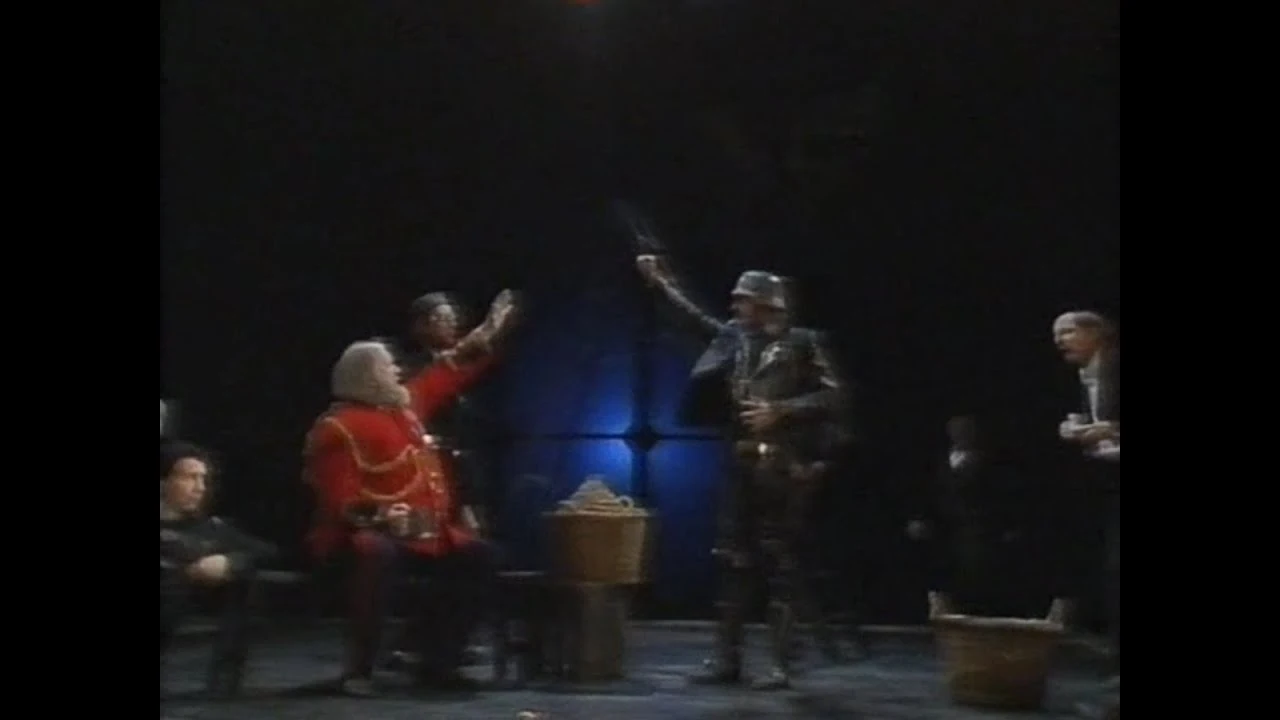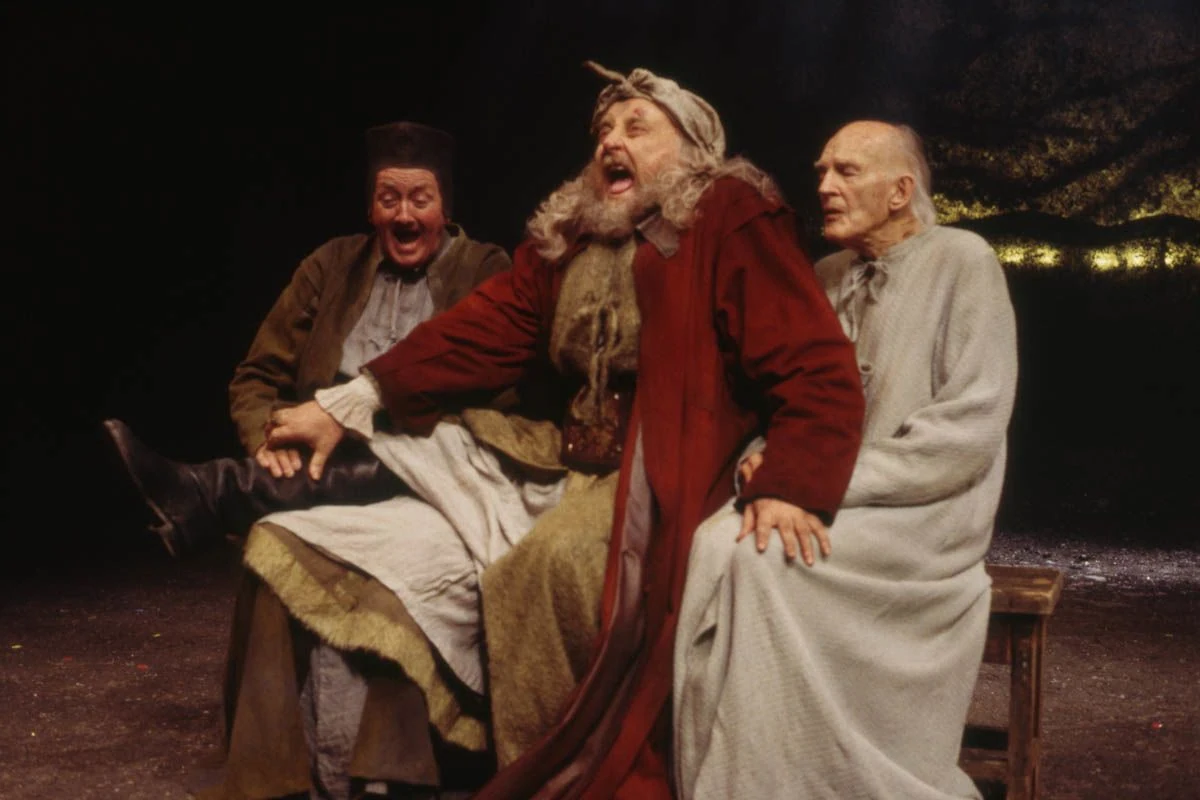
In Henry IV, Part 2, the crown is never far from view, but it is not the only world on stage. Shakespeare sets the strain of kingship and rebellion alongside Prince Hal’s ties to Falstaff and his companions. The result is a play in which the heir’s approach to power unfolds against both the king’s illness and the comic disorder of life beyond the court.
A continuation shaped by contrast
The play continues the story begun in Henry IV, Part 1. King Henry IV faces a rebellion led by discontented nobles while illness and age weigh on him. His position makes political legitimacy more than an abstract question: the authority of the crown is tested while the king himself is physically failing. Shakespeare places that pressure beside a markedly different kind of drama, in which Falstaff and his companions pursue comic misadventures.
These strands give the play its changing scale. The king’s difficulties belong to the business of governing a kingdom; Falstaff’s escapades belong to a world of companions and social disorder. Their juxtaposition lets the play move between serious questions of rule and comedy without treating either as incidental. The contrast also broadens its view of England: the monarchy and its troubles are part of the picture, but not the whole of it.
Hal between friendship and the crown
Prince Hal stands between these worlds. He is the heir to the throne, yet he remains associated with Falstaff and his circle. The tension is not simply between a responsible prince and a disreputable companion. It is also between Hal’s existing attachments and the role that awaits him. His movement towards kingship gives the play a personal course to follow within the wider political story.
His relationship with his father develops alongside that change. The play brings father and son towards reconciliation, while the king’s failing health makes their family conflict inseparable from the question of succession. Hal’s eventual acceptance of his royal future therefore carries both personal and public consequences: he must leave behind his former way of life as he takes up the duties attached to the crown.
Falstaff’s presence sharpens the significance of that break. His comic company offers a continuing alternative to the discipline of royal responsibility, and its appeal helps make Hal’s eventual choice legible. The comedy does not cancel the political stakes; it gives the audience another measure of what Hal must relinquish. The play’s movement between these registers is central to its account of the heir’s transformation.
From Henry IV to Henry V
The story reaches its turning point when Henry IV dies. Hal renounces his former waywardness, takes on his royal role and becomes Henry V. That ending joins the family story to the history of the crown: the son’s change is also a change of ruler. Shakespeare presents succession not only as the transfer of authority but as a test of character and an assumption of responsibility.
Power, legitimacy and reconciliation run through this transition. Henry IV’s illness exposes the vulnerability of an ageing ruler; the rebellion makes the kingdom’s political divisions visible; and Hal’s new position promises a different phase of rule. The play’s treatment of these matters is not separate from its comedy. By placing the king’s anxieties alongside Falstaff’s misadventures, Shakespeare lets the audience see different kinds of life within the same realm and the sharply different demands placed on those who inhabit it.
Why Henry IV, Part 2 deserves a place in British Legacy
Henry IV, Part 2 belongs in British Legacy because it is a work of Shakespearean theatre rooted in the history of England’s monarchy and in the English-language dramatic tradition. Its story connects the troubles of Henry IV’s reign to Hal’s assumption of the crown, but it does not confine its attention to rulers. Falstaff and his companions bring comedy and social contrast into a play otherwise shaped by rebellion, illness and succession. That combination gives the work a distinctive way of examining how political power touches different parts of the world on stage.
The play’s legacy also lies in the dramatic shape of Hal’s change. His movement from a life associated with Falstaff towards the responsibilities of Henry V makes the cost and meaning of succession personal as well as political. The reconciliation with his father and the death of the king bring family relations into the same story as the future of the realm. Together, these elements make the play a substantial contribution to Britain’s theatrical heritage: it stages questions of authority and duty through a mixture of serious political conflict, family drama and comedy, rather than reducing kingship to ceremony alone.