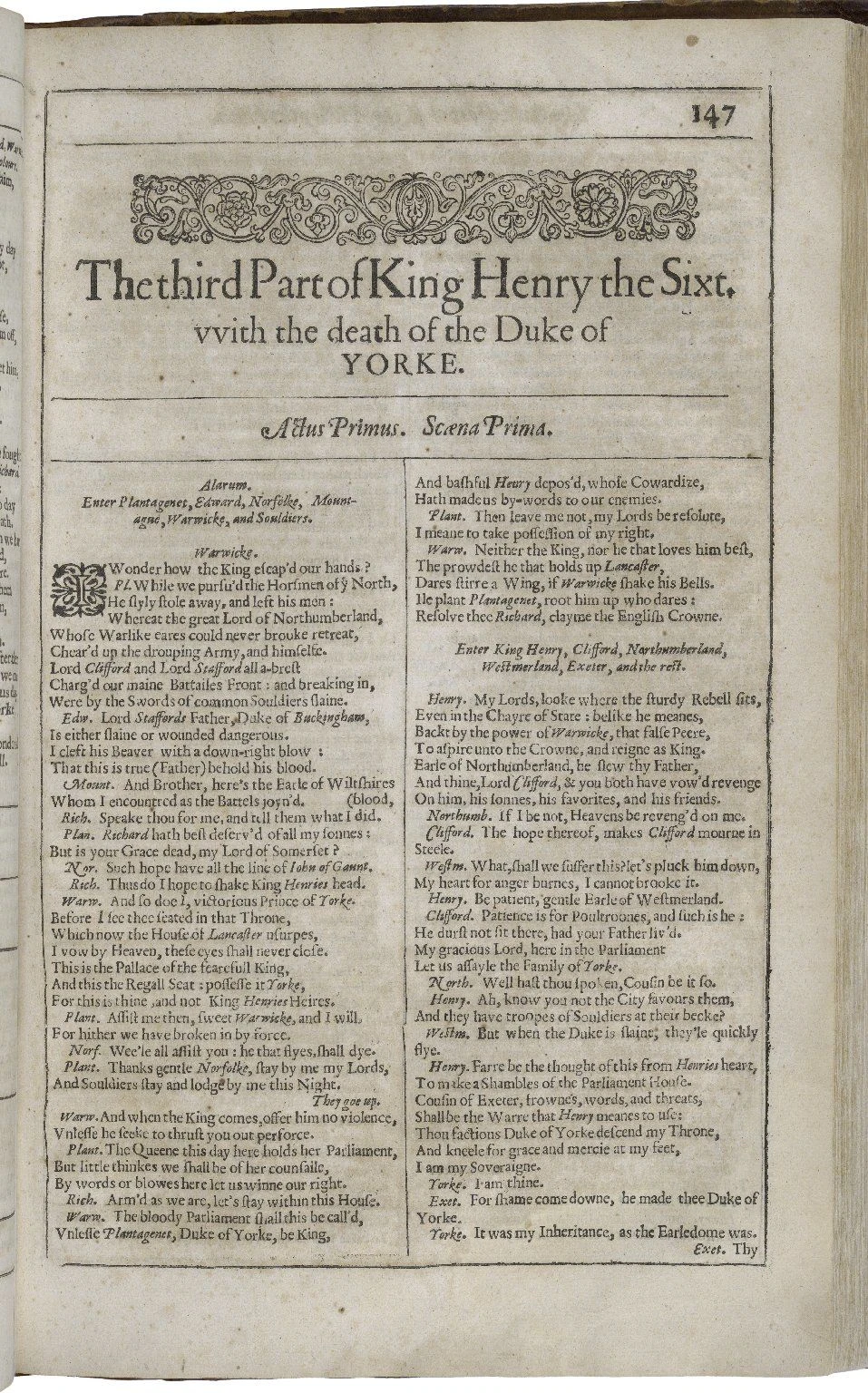
In Henry VI, Part 3, a settlement meant to end a struggle for the English crown instead makes the conflict more dangerous. King Henry is allowed to remain on the throne during his lifetime, but his son, Prince Edward, is displaced from the succession. The agreement satisfies neither side. As Yorkists and Lancastrians return to battle, Shakespeare follows a kingdom in which political claims, family loyalties and personal ambition repeatedly collide.
A crown contested
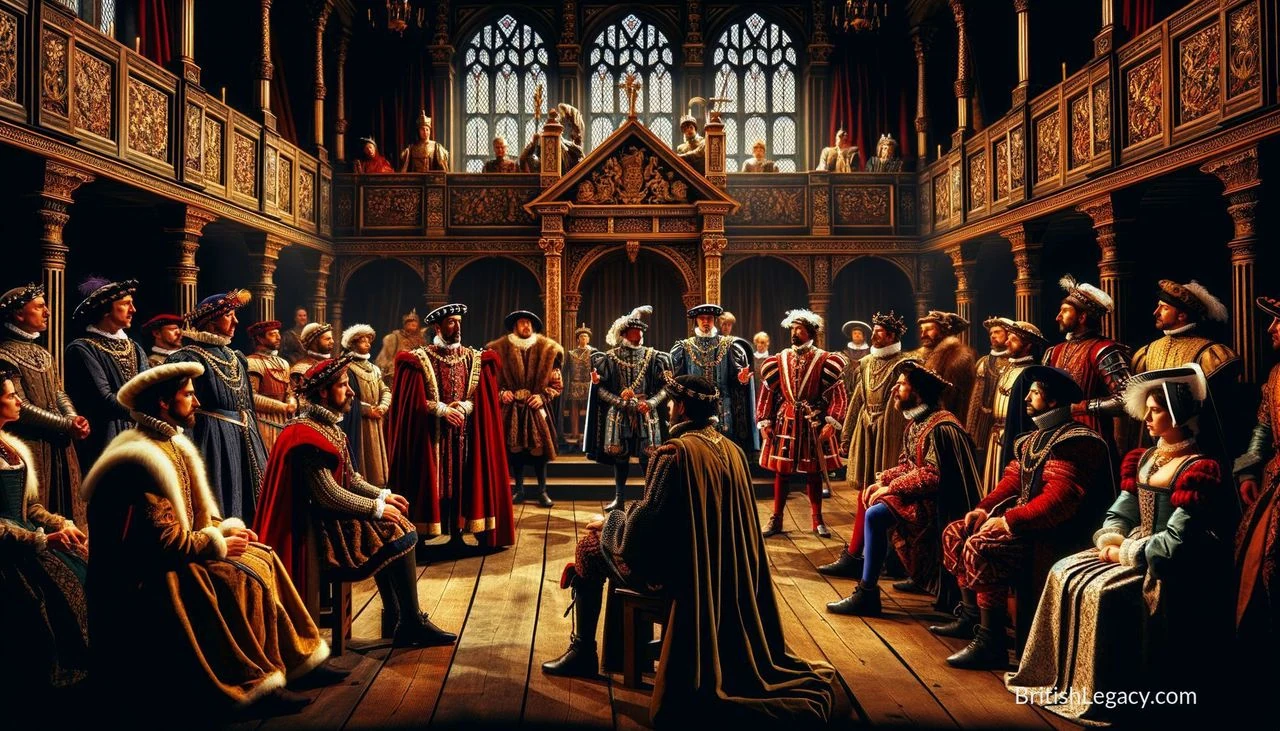
The play continues the story of the Wars of the Roses, the dynastic conflict between the houses of Lancaster and York. It opens after a Yorkist victory at St Albans. Richard, Duke of York, presses his claim to the throne, and the resulting compact preserves Henry’s kingship for his lifetime while denying his son the inheritance. What appears to offer a way out of war is therefore also a source of renewed grievance.
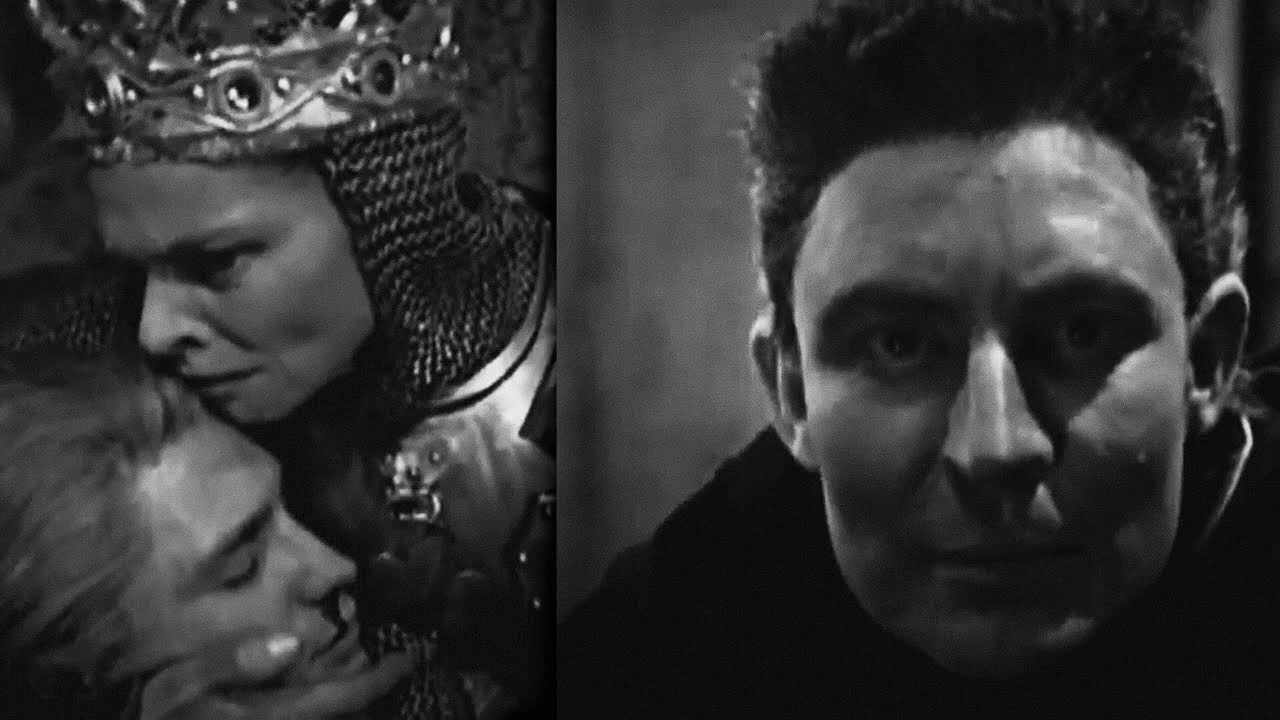
Queen Margaret contests the arrangement in defence of her son’s future. Her opposition helps drive the play’s movement between political negotiation and armed conflict. Shakespeare does not present the settlement as a stable answer: its terms expose how difficult it is to separate a ruler’s position from the claims of the family expected to succeed him. The crisis is at once a struggle over lawful authority and a conflict within the royal household.
From battlefield to captivity
As alliances shift, the contest for power reaches beyond the question of who should reign. Richard, Duke of York, is captured and taunted before Queen Margaret has him killed. The scene makes the cost of political defeat starkly personal. Henry, meanwhile, moves from king towards captive, reflecting on events even as control of the kingdom slips away from him.
The violence culminates at Tewkesbury, where Prince Edward is killed and the Lancastrian cause is brought close to ruin. Henry is later killed in the Tower of London by Richard, the man who would become Richard III. The play ends with the old struggle’s apparent resolution giving way to a foreboding prospect: Richard’s rise points towards another period of danger rather than a settled peace.
These events give the play its close connection to Richard III. It carries the history forward from Henry VI, Part 2 and shows the political and familial turmoil from which the next play’s central figure emerges. Richard’s ascent is not an isolated turn in the story; it is part of a succession crisis in which victory repeatedly fails to bring lasting security.
History, power and the cost of succession
Written in the early 1590s, the play looks back to England’s fifteenth-century dynastic wars. Its subject is historical, but its dramatic focus is not simply a sequence of battles. Shakespeare puts the instability of succession on stage: a compromise can be treated as a betrayal, a family claim can become a political cause, and the defeat of one faction can leave the kingdom exposed to another struggle.
That emphasis also shapes the portrayal of Henry. As his position changes from king to captive, moments of introspection place a human presence within the political collapse. The play’s rulers and rivals are not separated from the consequences of their claims. Their decisions and defeats unfold through imprisonment, loss and death, giving the story of the crown a personal as well as a national scale.
Why Henry VI, Part 3 deserves a place in British Legacy
Henry VI, Part 3 belongs in British Legacy as a work of English drama built around a defining period of English history. Its account of the Wars of the Roses gives audiences a way into the contest between Lancaster and York, but its force comes from connecting that contest to the people caught within it. The disinheritance of Prince Edward, Margaret’s defence of her son, Henry’s decline into captivity and Richard’s rise show how a dispute over succession can unsettle a whole kingdom. The play makes political instability legible through character and action rather than treating history as a list of rulers and battles.
Its place between Henry VI, Part 2 and Richard III also matters. It carries a continuing story across several plays, showing how one apparent ending can prepare the ground for a new crisis. That dramatic structure gives audiences a sustained view of the consequences of ambition, contested legitimacy and failed settlement. By turning English dynastic history into theatre, Shakespeare created a work that continues to offer material for performance and reflection. Its legacy rests not on unsupported claims of universal influence, but on the specific achievement of making the cost and uncertainty of political power the subject of a compelling English history play.