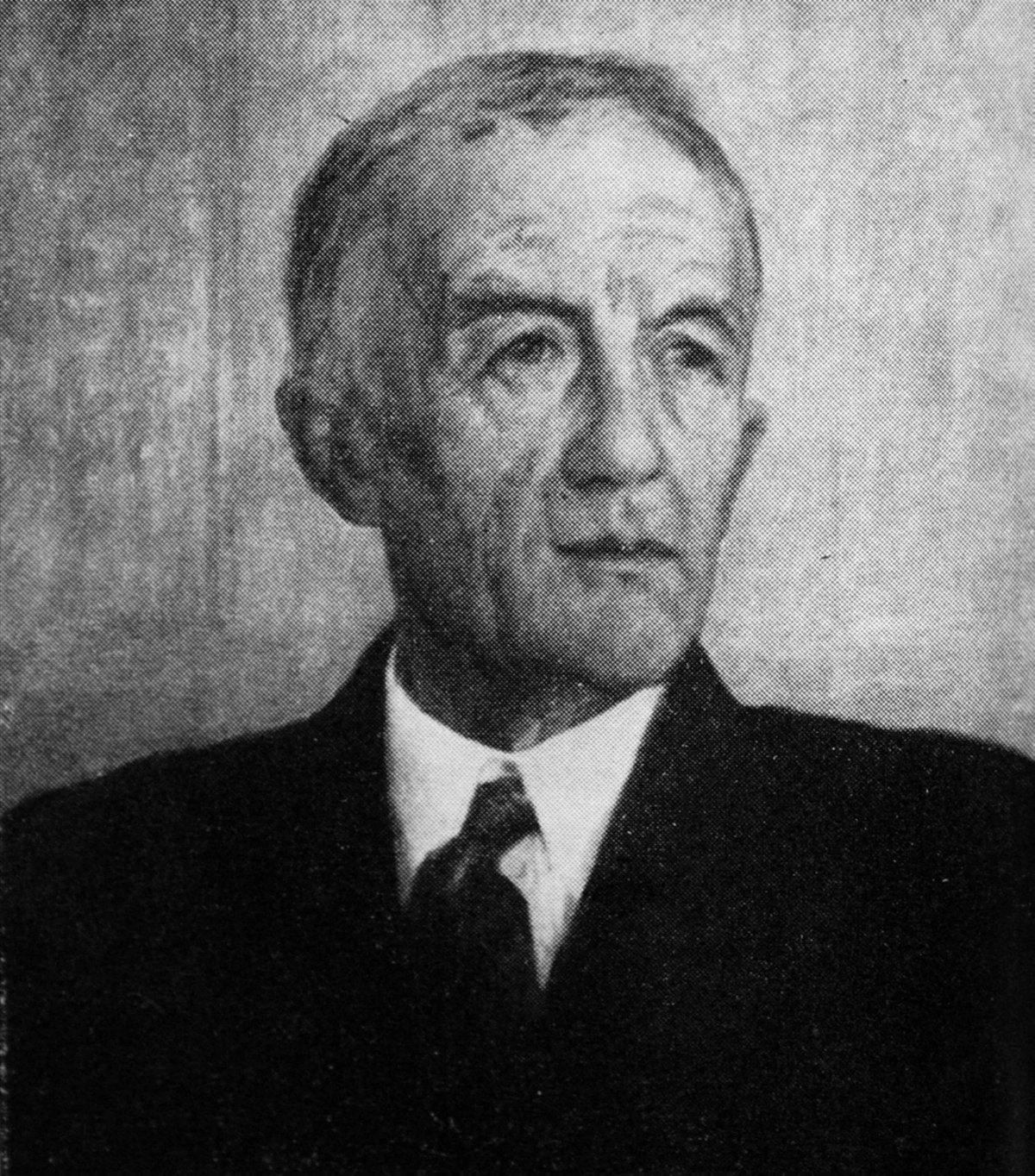
Herbert Baker’s buildings gave visible form to power: in South Africa, the new Union government; in Delhi, the administration of British India; and in London, the Bank of England. His career also reached beyond monumental government architecture. He designed churches, schools and houses, helped shape Nairobi, and served as one of the principal architects responsible for Commonwealth war cemeteries and memorials after the First World War. The variety of that work, and the arguments it provoked, make his legacy more complicated than a story of imposing façades alone.
Training in Kent and a move to South Africa
Baker was born on 9 June 1862 at Owletts, the family home in Cobham, Kent. One of nine children, he grew up among the county’s Norman cathedrals and Anglo-Saxon churches, whose stonework left a lasting impression on him. After Tonbridge School, he was articled to his cousin, the architect Arthur Baker, in 1879. He studied at the Architectural Association School and the Royal Academy Schools, where Edwin Lutyens was a fellow student, and later worked in the offices of Ernest George and Harold Peto. In 1890, he passed the examination for associateship of the Royal Institute of British Architects, having won the Ashpitel Prize the previous year.
In 1891 Baker travelled to South Africa to help his brother Lionel establish a fruit farm in a property connected with Cecil Rhodes. Rhodes’s Cape Town home, Groote Schuur, had been damaged by fire, and he asked Baker to rebuild it. The commission brought the young architect into Rhodes’s circle and helped establish his reputation. Baker adopted features of Cape vernacular building, while Rhodes also wanted him to develop a formal architectural language for public projects. In 1900, Rhodes sent him on a tour of archaeological sites in Italy, Egypt and Greece, a journey that influenced his approach to design.
Baker became diocesan architect for Cape Town in 1893 and designed several churches. He formed successive partnerships as his practice grew, first with Francis Edward Masey and later with other architects. The changing partnerships matter: buildings from this period that are attributed to Baker were not all his work alone. In 1902, after Rhodes’s death and as the South African War was ending, High Commissioner Alfred Milner asked Baker to move to Johannesburg to assist with post-war construction. Baker’s public commissions and houses were part of a wider programme of British colonial development, not simply a sequence of individual architectural experiments.
Pretoria and the new capital of India
In 1909, Baker was commissioned to design the Government Building in Pretoria, the administrative centre of the new Union of South Africa. The resulting Union Buildings occupy a prominent site on Meintjieskop. Their long, symmetrical composition and position in the landscape made them a major public statement as well as a working government complex. Baker left South Africa in 1912, after which he continued to design buildings and approve designs from abroad. The sources give different dates in their accounts of the buildings’ completion, so a single completion year is not necessary to describe the commission.
His South African work ranged widely beyond Pretoria. It included Groote Schuur, churches, schools and public buildings, as well as the Rhodes Memorial in Cape Town. He also established the Baker Travelling Scholarship in 1911 to enable promising South African architects to study in Greece and Italy. That educational initiative extended his influence beyond the buildings he designed, though the broader colonial setting of his career remains essential to understanding who commissioned and benefited from its public architecture.
When King George V announced in 1911 that India’s capital would move from Calcutta to Delhi, Lutyens was appointed to design the principal government buildings and residences. Baker joined the project as his collaborator, but the division of work is important. Lutyens designed the city layout, the Viceroy’s House and India Gate. Baker designed the Secretariat buildings and members’ bungalows; the two architects worked together on the Parliament Building. The Viceroy’s House, now Rashtrapati Bhavan, should not be described as Baker’s design.
The partnership became strained over the siting of the Secretariat buildings, which obstructed the view of the Viceroy’s House. The disagreement became public after the architects returned to England in 1915, and criticism of Baker’s work in Delhi was severe. Despite their falling-out, Baker later praised Lutyens, comparing his talents with those of Christopher Wren. Their collaboration produced some of the most recognisable government architecture of the period, but it also reveals the limits of easy claims that their work represented a unified vision.
Memorials, cities and buildings at home
In 1918, Baker, Lutyens and Reginald Blomfield were appointed principal architects to the Imperial War Graves Commission. They faced the immense task of planning cemeteries and memorials for Commonwealth dead, chiefly in France and Belgium. Baker’s contribution included 112 cemeteries, extensions and memorial structures in France, one cemetery in Belgium and 24 memorials in England. Among the works associated with the commission are the Loos Memorial to the Missing, the Neuve-Chapelle Indian Memorial, the Delville Wood South African National Memorial and Tyne Cot, a cemetery and memorial site in Belgium.
These works belong to a different register from the grand government buildings. Their design had to serve remembrance and burial as well as convey a public meaning, across many sites and under pressure to complete the work quickly. Baker assembled and worked with a team of architects, including William Harrison Cowlishaw, Arthur Hutton, Noel Rew and Gordon Leith. The scale of the commission makes his memorial work a substantial part of his career, not an incidental addition to his better-known civic projects.
Baker’s later commissions included work in Kenya. In 1925, Governor Edward Grigg brought him into the planning of Nairobi, whose earlier growth had centred on the Uganda Railway. Baker worked there for five years, assisted by South African architect Jan Hoogterp. The planning was controversial: it set out racial segregation at a time of mounting tensions between African, Indian and European communities. Baker’s scheme placed dominant imperial buildings on high ground. Known projects include the Prince of Wales School, Government House, the Supreme Court and Nairobi City Hall, although the surviving record of his work there is incomplete.
In Britain, Baker designed Rhodes House in Oxford, India House and South Africa House in London, and the Grace Gates and grandstands at Lord’s. His final major commission was the rebuilding of the Bank of England. The bank needed more space and a more organised layout as its staff numbers grew. Baker retained the outer walls and reused elements of John Soane’s earlier design, while introducing steel framing and changes intended to improve circulation and public access. The rebuilding was completed in 1938. Baker’s efforts to acknowledge Soane did not prevent a hostile response: critics objected to the loss of the earlier building, and architectural historian Nikolaus Pevsner called its demolition a major architectural crime. The reception of the project shows how professional standing and technical ambition could not settle a debate about what should be preserved.
Family, honours and final years
In 1904, Baker married his cousin Florence Edmeades; they had four children. He was deeply religious, and his interest in symbolism has also been associated with his Freemasonry. He inherited his father’s estate and later retired to Owletts, where he wrote Architecture & Personalities, published in 1944. He bequeathed the house to the National Trust and lived there until his death.
Baker was knighted in 1926, elected to the Royal Academy and awarded the Royal Institute of British Architects’ Royal Gold Medal in 1927. He also received honorary degrees from the University of the Witwatersrand and the University of Oxford. He died on 4 February 1946, aged 83. The Dean of Westminster offered him burial in the Abbey, and Baker was interred in its nave in an ashes casket made from a cherry tree in his garden.
Why Herbert Baker deserves a place in British Legacy
Baker’s place in British architectural history rests on work that can still be encountered across several countries and in sharply different settings. The Union Buildings were designed for the government of the new Union of South Africa; the Delhi commissions formed part of the transfer of India’s capital; and his work for the Imperial War Graves Commission contributed to the commemoration of Commonwealth dead. In Britain, Rhodes House, South Africa House and the Bank of England show the reach of his practice at home. Taken together, these projects offer a concrete account of how an English-trained architect worked through public commissions, local partnerships and the institutions of empire.
That legacy should not be reduced to admiration for scale or style. Baker’s role in Nairobi’s segregated planning and the political purpose of colonial government buildings are part of the record, as are the disputes over his Delhi work and the demolition of Soane’s Bank of England. His churches, schools, memorials and travelling scholarship also show the breadth of his practice and its effects beyond government headquarters. For British Legacy, Baker matters because his career links architectural design to questions of power, memory, education and preservation. His buildings remain prominent, but understanding them means examining both the craft that produced them and the historical systems they served.
Sources
Herbert Baker — Wikipedia revision 1376017930
Adapted in part from Herbert Baker by Wikipedia contributors, under CC BY-SA 4.0. Text has been edited and combined with the existing article; this adapted text is shared under the same licence. Contributor history.