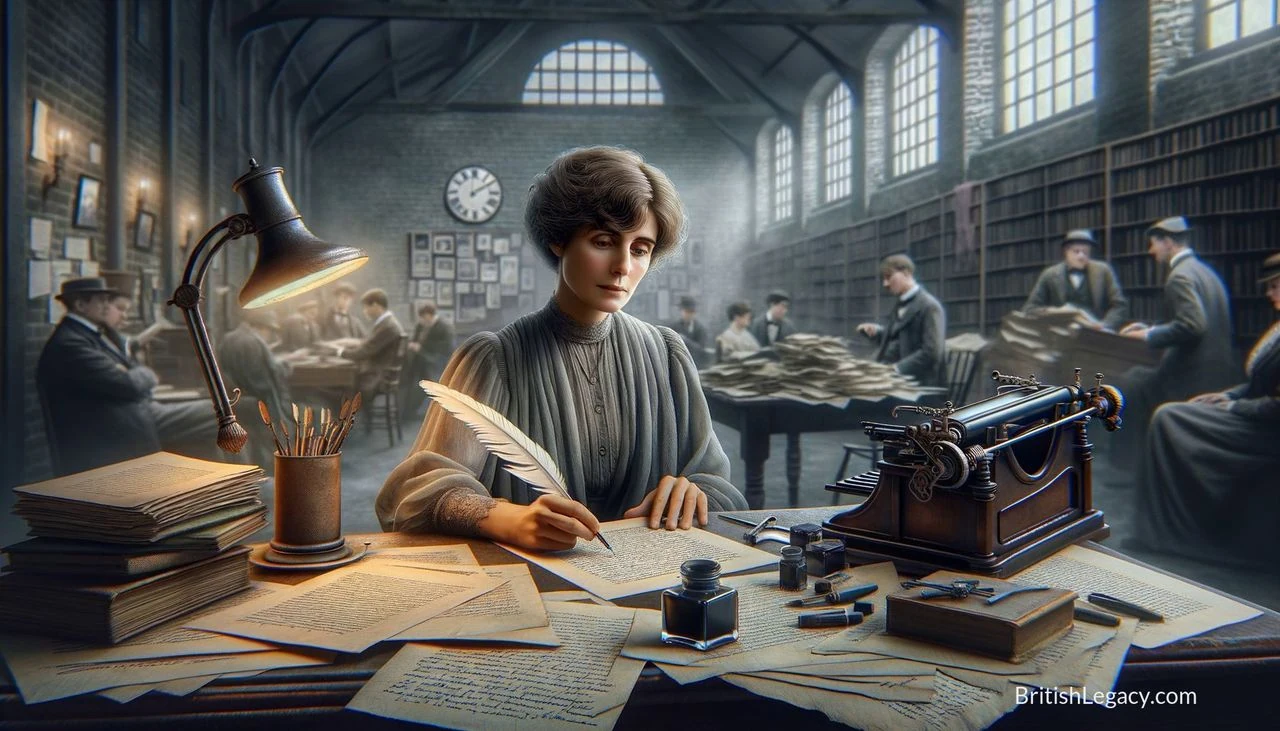
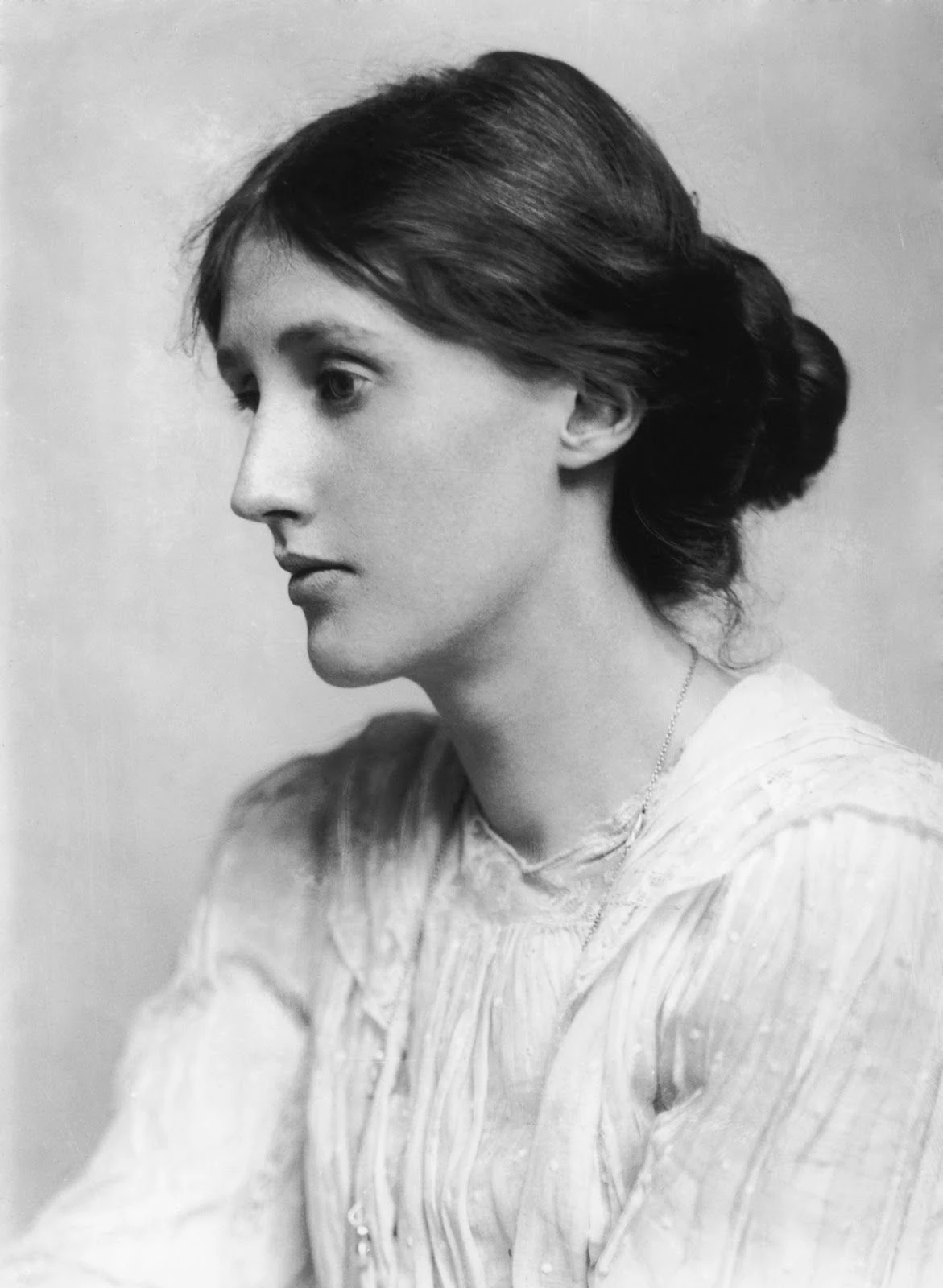
Virginia Woolf made the ordinary events of a day carry the pressure of memory, history and private thought. In novels such as Mrs Dalloway and To the Lighthouse, she loosened the grip of conventional plot, following consciousness as it moves between present experience and the past. She was also an essayist, critic and publisher: through A Room of One’s Own and the Hogarth Press, she argued for women’s intellectual freedom and helped bring experimental writing before readers.
Growing up in a literary household
Woolf was born Adeline Virginia Stephen on 25 January 1882 in South Kensington, London. Her parents, Julia Prinsep Jackson and Leslie Stephen, were part of an affluent, intellectually engaged family. Virginia grew up among eight children in a blended household that included her sister Vanessa, later the painter Vanessa Bell. Her education was largely at home, where her father’s library gave her access to a wide range of literature. She also received private tuition and attended lectures at King’s College London’s Ladies’ Department, studying classics and history.
Writing began early. As a child she made a family newspaper, the Hyde Park Gate News, and kept a diary. Her mother’s death in 1895, followed by the deaths of her half-sister Stella and her father, Leslie, in 1897 and 1904, brought periods of severe mental distress. The family’s circumstances changed after Leslie’s death: Virginia and several siblings left their South Kensington home for Bloomsbury. Their new address became a meeting place for the circle of writers, artists and thinkers that developed into the Bloomsbury Group.
The group included people such as Lytton Strachey, E. M. Forster, John Maynard Keynes and Roger Fry. Its gatherings brought together ideas about literature and art, and formed part of the social world in which Woolf developed as a writer. She began professional journalism in 1904, writing reviews and essays, and continued to publish criticism alongside fiction. In 1912 she married Leonard Woolf, a member of the same circle. They divided their time between London and Sussex, where country houses offered a quieter setting for work.
Finding new forms for fiction
Woolf’s first novel, The Voyage Out, appeared in 1915 after a difficult period of revision and illness. She continued to test the possibilities of fiction in Night and Day (1919) and Jacob’s Room (1922). Rather than relying on a single, steadily advancing sequence of events, she explored how impressions, recollections and shifts of attention shape a person’s experience. Her use of stream-of-consciousness narration helped make that movement a defining feature of her modernist writing.
Mrs Dalloway (1925) follows Clarissa Dalloway as she prepares for a party over the course of a day in post-war London. Its movement between characters’ thoughts connects the city’s public life with individual memory and the consequences of war. Septimus Warren Smith, a former soldier suffering from what the novel presents as shell shock, gives the story a disturbing counterpoint to Clarissa’s social world. Woolf’s close attention to changing consciousness lets personal experience and wider social pressures meet within the same narrative.
In To the Lighthouse (1927), the Ramsay family’s visits to a summer house frame a meditation on family, artistic work and time. Orlando (1928), inspired by Woolf’s friend Vita Sackville-West, plays with biography and the conventions of a life story. The Waves (1931) pushes formal experimentation further through the voices of six characters. Together, these books show a writer revisiting the novel’s basic materials—character, time and narrative perspective—rather than treating inherited forms as fixed.
A room, a press and a public argument
Woolf’s writing about women’s opportunities grew from her work as a novelist and critic. In 1928 she gave lectures on women and fiction at Cambridge; these became the basis of A Room of One’s Own (1929). Its argument links the ability to write with material conditions, including money and a private space. Woolf looked at the way women had been denied education, resources and authority, and considered what those exclusions meant for literature. Three Guineas (1938) extended her inquiry into women’s position in society and the relationship between patriarchy, power and war.
The essay’s directness is part of its force: questions about literary achievement become questions about who has access to time, education and independence. Woolf did not confine herself to advocacy in her essays; her fiction also examined class, gender and the effects of war. Her writing can be read both for its formal invention and for the social pressures it brings into view.
In 1917 Virginia and Leonard Woolf set up the Hogarth Press at their home, using a hand-operated printing press. Its first publication, Two Stories, contained work by both of them. The small press allowed Woolf to publish her own writing and to choose other work for publication. It went on to issue books by writers including Katherine Mansfield, T. S. Eliot and E. M. Forster, as well as translations of Russian literature and the first translation of Sigmund Freud’s complete works. Its programme gave experimental and politically engaged writing a route to readers. The Woolfs’ venture was not the sole cause of modern publishing’s development, but it provided a practical platform for work that larger publishing houses might not have taken on.
War, illness and the last years
The Woolfs’ London homes were damaged or destroyed during the Blitz, and they made Sussex their permanent home. Woolf completed her final novel, Between the Acts, in 1941, amid worsening depression and the strains of wartime life. She died on 28 March 1941, aged 59, after drowning herself in the River Ouse near Rodmell. Her body was found in April; Leonard buried her cremated remains beneath an elm in the garden of Monk’s House.
Woolf’s recurrent illness formed part of the circumstances in which she worked, but it should not be reduced to a key that supposedly explains her fiction. Her writing continued across periods of difficulty, and her work engages with experience through its own literary choices: shifts of voice, patterns of memory and attention to how social expectations press on individual lives. Later commentators have approached her mental health in different ways; retrospective diagnoses remain interpretations rather than facts that can be established with certainty here.
Why Virginia Woolf deserves a place in British Legacy
Woolf’s place in British literary history rests on more than the renown of a few novels. Her experiments changed what a novel could ask readers to follow: not only what happens, but how an event is felt and remembered by different people. In Mrs Dalloway, a single day in London opens on to the after-effects of war and the pressures of social life. In To the Lighthouse, family experience and the passage of time become the structure of the book itself. These are specific artistic achievements, and they remain central to how modernist fiction is read and discussed.
Her contribution also joined writing to the conditions that make writing possible. A Room of One’s Own made financial independence and private space part of a sustained argument about women’s creative freedom. The Hogarth Press put that interest into practice by publishing Woolf’s work and offering a home to writers and ideas beyond her own. Its list included experimental fiction, translations and political writing, extending the reach of a small independent press. Woolf’s British legacy is therefore both literary and institutional: she altered the form of the novel, argued for women’s access to intellectual life and helped create a publishing outlet for unconventional work. Her achievement is not a generic emblem of national culture but a documented body of writing and action that continues to shape British reading and literary debate.
Sources
Virginia Woolf — Wikipedia revision 1379643445
Adapted in part from Virginia Woolf by Wikipedia contributors, under CC BY-SA 4.0. Text has been edited and combined with the existing article; this adapted text is shared under the same licence. Contributor history.