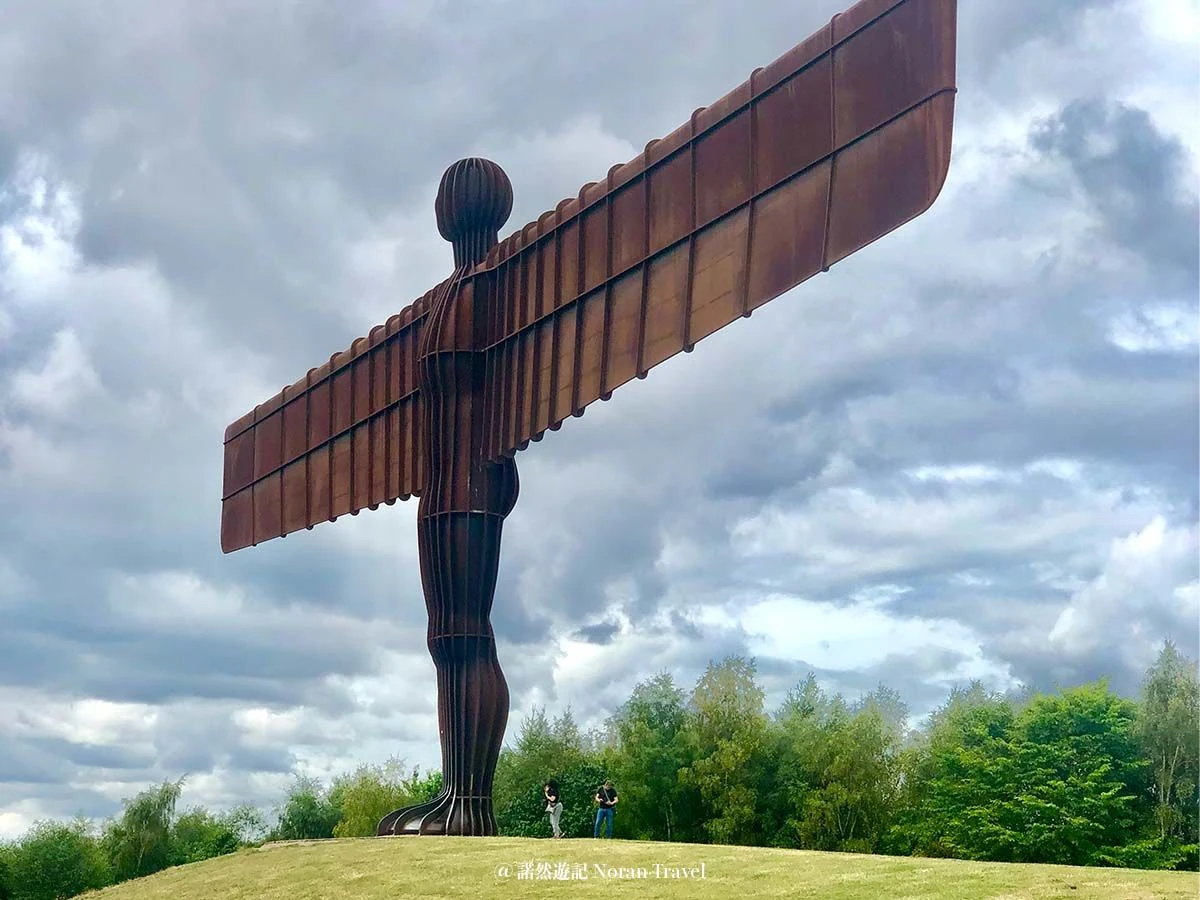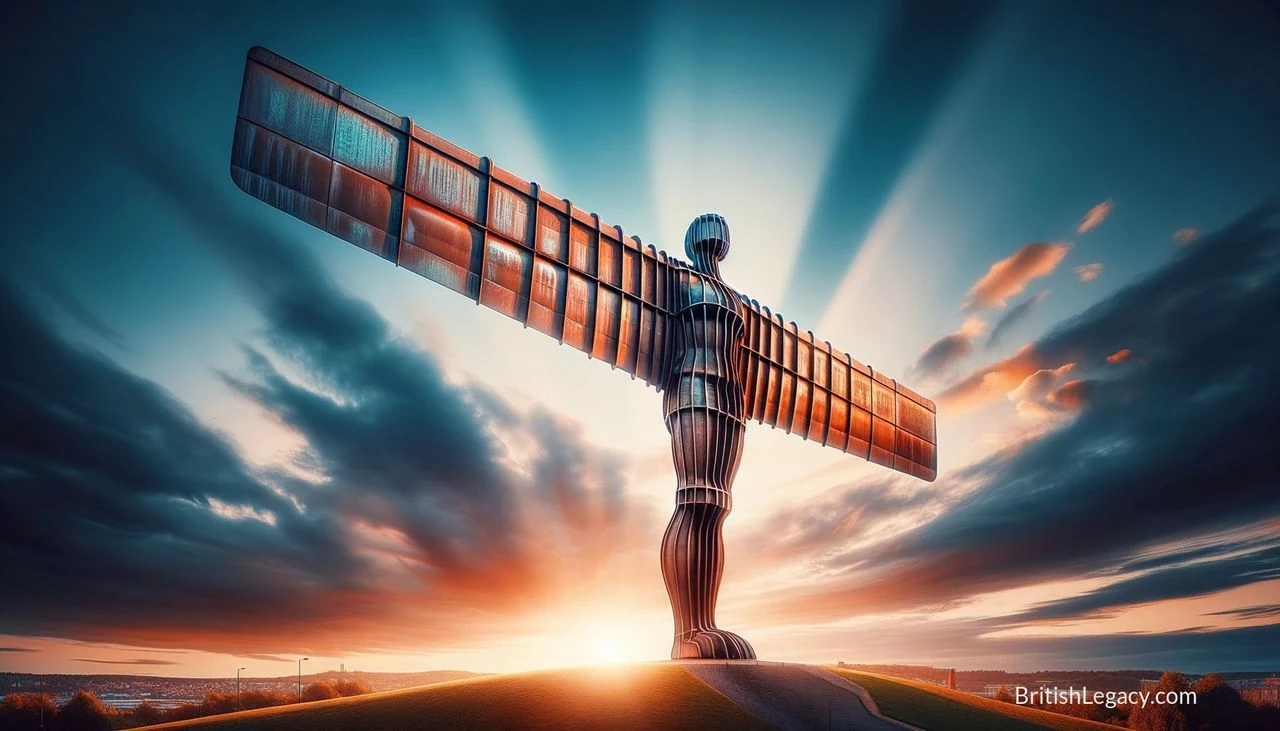
At 20 metres high, with wings extending 54 metres across, the Angel of the North is built to be seen from a distance. Antony Gormley’s steel sculpture stands in Gateshead, Tyne and Wear, on a site associated with the region’s mining past. Unveiled in 1998, it places a contemporary work of art in an industrial landscape and gives a familiar, monumental form to the North of England’s history and identity.
A sculpture on an industrial site
The Angel is made from weather-resistant steel, whose rust-coloured surface gives it an earthy presence against the surrounding landscape. The original account describes this colour as the result of oxidation. Its material and scale make the sculpture an imposing feature, while its location on a former colliery site connects the work to an industrial past rather than setting it apart from that history.
Gormley’s design is described as addressing three themes: the change from an industrial age to an information age, the connection between earth and sky, and the shared experience of a community shaped by labour. These ideas bring together the Angel’s physical setting and its broad, human form. The sculpture does not depict an individual miner or a particular historical event; instead, it stands above a site associated with mining and gives that landscape a new public landmark.
The wings angle slightly forwards. Their unusual position gives the figure a distinctive outline and has been read as suggestive of an embrace. That interpretation sits alongside the work’s more direct visual effect: a large steel figure, fixed in place, visible against the open surroundings. Its scale makes it legible to people encountering it from roads and railways as well as to those who visit the site.
A landmark in the landscape
The Angel is visible to travellers on the A1 and the East Coast Main Line. This position gives the sculpture a public presence beyond the immediate site: many people encounter it as part of a journey through Gateshead and the North East. Its form and size make it recognisable at a glance, while its location keeps the relationship between the artwork and the surrounding landscape in view.
The work has become a landmark associated with Gateshead and the North of England. Its prominence brings contemporary sculpture into everyday surroundings, rather than limiting it to a gallery or museum. It also offers a point of recognition for a region whose industrial history forms part of the meaning attached to the site. The Angel’s visibility has helped make it a widely recognised image of the North, though claims about its specific economic effects or influence on other regeneration projects are not necessary to understand its importance.
Its character depends on the meeting of several elements: the human figure, the broad wings, weathering steel and the former colliery setting. Together they make the sculpture both a work of contemporary art and a marker of place. Its symbolism is open enough to accommodate different readings, but its physical situation gives those readings a firm connection to Gateshead’s landscape and industrial history.
Why the Angel of the North deserves a place in British Legacy
The Angel of the North deserves a place in British Legacy because it joins a distinctive contemporary artwork to a specific British place and history. Gormley’s 20-metre steel figure is not simply an object placed in the landscape: its former colliery setting links its presence to the North East’s mining past. The sculpture’s scale, material and position make that connection visible to residents and travellers alike. It offers a way to encounter industrial history through public art, without presenting the site as belonging only to the past.
Its British significance also lies in how clearly it has become associated with Gateshead and the North of England. Visible from major road and rail routes, the Angel reaches people beyond those who seek out contemporary sculpture, and gives the region a recognisable landmark. The work combines a modern artistic form with a place shaped by labour and industry; that combination is more specific and lasting than generic claims about national character. By making art part of an everyday landscape, and by keeping local history in view, the Angel has secured a prominent place in the cultural story of the North.