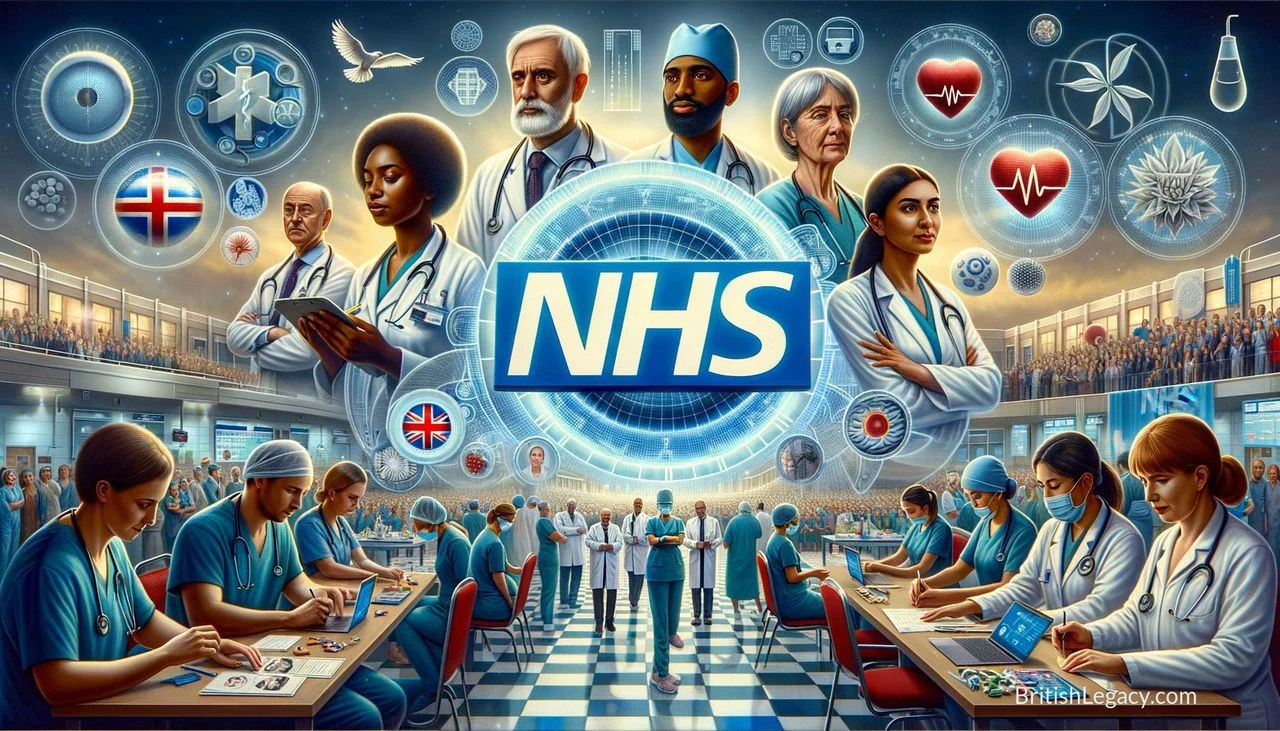
The National Health Service began on 5 July 1948 with an ambitious promise: access to healthcare should not depend on personal wealth. Introduced by health minister Aneurin Bevan as part of the post-war Labour government’s welfare reforms, it established a publicly funded system built around care available without payment at the point of use. The NHS has since become both a vast provider of services and a lasting expression of the British commitment to collective responsibility.
A post-war promise takes shape
The NHS was created to address inequalities in access to medical care. Its founding vision was comprehensive healthcare for people throughout their lives, supported by taxation rather than by each patient’s ability to pay when treatment was needed. Britain was among the first countries to establish a system offering free healthcare at the point of use. That principle, rather than any single service or building, became central to the institution’s public meaning.
The service covers a wide range of care, including general practice, hospitals, mental health services, vaccinations and emergency treatment. Dental care is also part of the system. The broad ambition was to provide care across people’s lives, rather than confining provision to emergencies or a narrow set of treatments. The breadth of services gives practical form to that ambition, from everyday contact with general practice to hospital and emergency care.
That ambition has never meant that the NHS operates without pressure. Funding, growing demand and staff shortages are among the challenges associated with a system of this scale. Its workforce numbers more than 1.3 million people, working across the many services on which patients rely. The institution’s size makes its practical task demanding; its public promise makes decisions about access, capacity and care matters of national importance.
Care, discovery and changing practice
The NHS is not only a provider of treatment. Its hospitals and services are also involved in medical research and clinical trials, while developments in clinical practice and surgery have contributed to wider medical knowledge. Louise Brown was born in 1978 as the world’s first test-tube baby, a milestone that heralded a new era in fertility treatment and brought attention to the possibilities of reproductive medicine.
The service’s work has continued alongside changes in technology and clinical practice. Digital tools now include the NHS App, telehealth services and digital records; research and clinical trials also continue across NHS hospitals. These developments sit alongside the established work of general practice, hospitals and emergency services. Technology does not replace the human work at the heart of healthcare, but changes some of the ways patients and services can connect.
The NHS’s response to the COVID-19 pandemic brought its workforce into particular public focus. Healthcare workers provided care during a period of intense pressure, and public applause for carers became one visible expression of the bond between the service and the people it serves. Recognition does not remove the system’s difficulties, but it helps explain why debate about the NHS often carries significance beyond questions of administration or funding.
An institution with influence beyond Britain
The NHS has become a reference point in international discussions about healthcare. Its publicly funded, broadly accessible model has influenced debate and inspired countries considering elements of universal healthcare. This is not a claim that other countries have adopted the same system. Rather, the NHS has become part of wider discussion about whether public institutions can organise care around need rather than individual wealth.
At home, the NHS is often treated as more than a collection of hospitals and services. It expresses solidarity and shared responsibility: people contribute to a system through public funding and may rely on it when they need care. The idea of a national institution captures that attachment, while the institution’s significance also rests on the practical work of general practice, hospitals, emergency treatment, mental health care, vaccination and research.
Why the National Health Service deserves a place in British Legacy
The NHS deserves a place in British Legacy because its creation turned a principle of social provision into a national institution. Launched in 1948 under Aneurin Bevan, it sought to make healthcare available without payment at the point of use and to provide care across a wide range of needs. Its work in general practice, hospitals, mental health services, vaccination and emergency treatment gives that founding ambition practical form. The service’s reach also makes its difficulties—funding pressures, rising demand and staffing shortages—part of an enduring public conversation about what people should be able to expect from collective provision.
Its legacy includes contributions to research and clinical practice, as well as digital services and involvement in clinical trials. Louise Brown’s birth in 1978, identified as the world’s first test-tube baby, illustrates a milestone in fertility treatment associated with the NHS. Beyond Britain, the service has informed discussion of publicly funded universal care. These are specific reasons to remember it: a post-war promise made institutional, a broad range of care delivered by a large workforce, and a model that continues to shape debate about how societies organise healthcare. The hope that the NHS will continue to thrive, innovate and serve future generations is part of that legacy: an expression of the continuing value placed on care as a shared public responsibility.