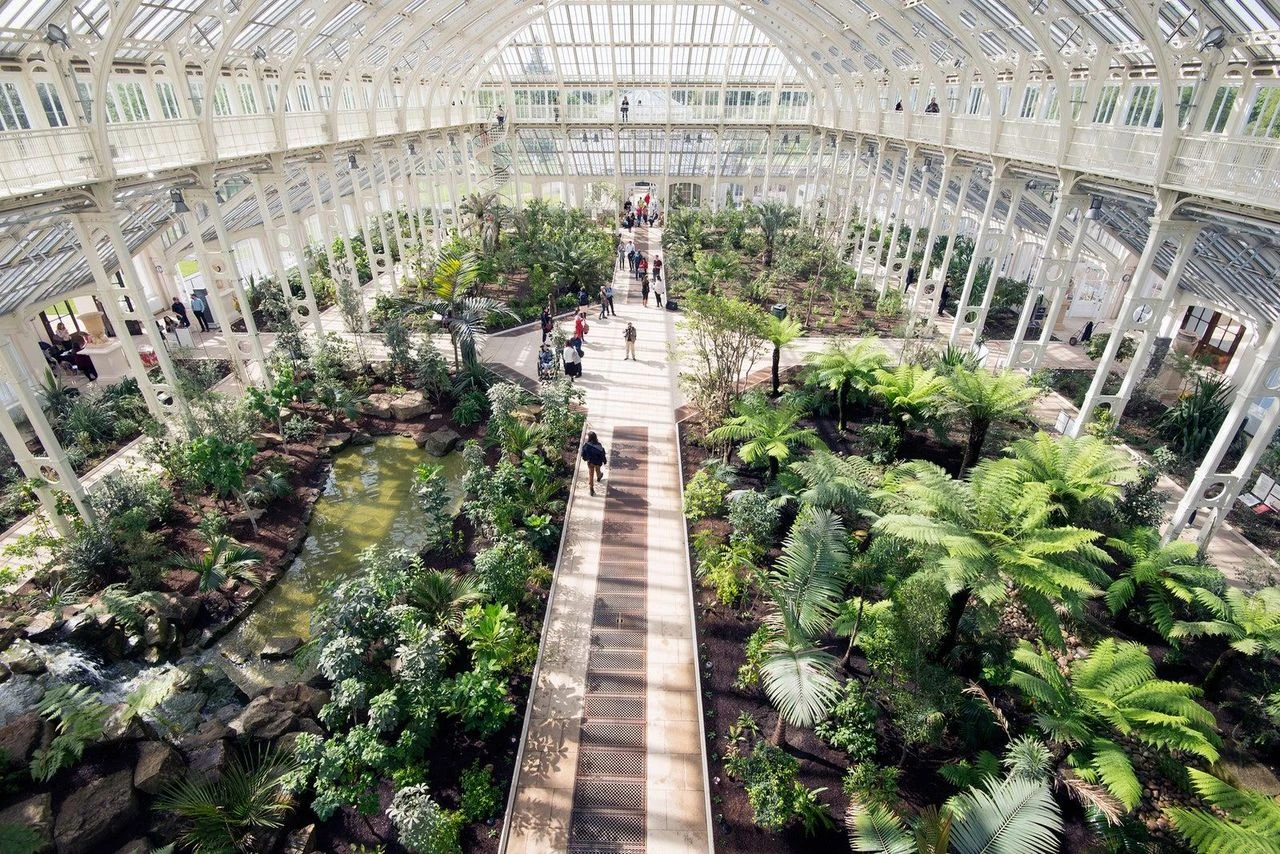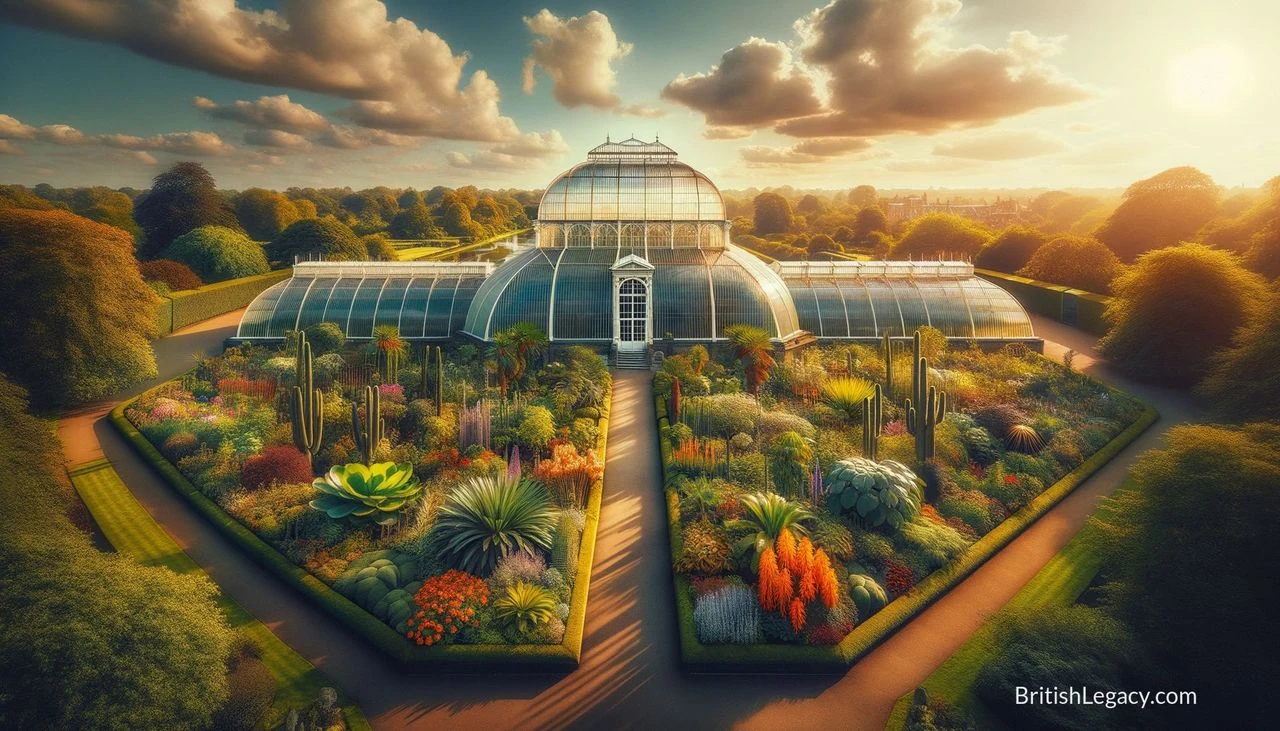
At Kew Gardens in London, the Temperate House brings together a historic iron-and-glass building and a living collection of plants from temperate regions around the world. Designed by Decimus Burton, it is described as the world’s largest Victorian glasshouse. Its scale is striking, but its purpose is practical too: to provide a home for a varied botanical collection and a setting for Kew’s work with plants.
A Victorian glasshouse built for scale
Construction began in 1863. Covering about 4,880 square metres, the Temperate House is a substantial work of Victorian glasshouse design. Its iron framework and extensive glazing create the setting in which the collection is cultivated. The combination of architectural presence and horticultural use has made it a prominent part of Kew Gardens.
The house is devoted to plants from temperate regions, which experience considerable seasonal variation. More than 1,500 species are represented, ranging from familiar forms to less commonly encountered examples. The collection’s breadth gives visitors the opportunity to see plants from different parts of the world together, while the structure provides the space and conditions needed to grow them.
A collection with a conservation dimension
Among the plants named in accounts of the collection are the Chilean wine palm and Encephalartos woodii, a South African cycad described as one of the rarest plants in the world. Their presence gives the Temperate House a conservation dimension alongside its architectural and horticultural interest. It is more than a display of greenery: the care of rare plants is part of the role assigned to the collection.
The glasshouse is also presented as a place of learning. Its plants offer visitors a way to encounter species from temperate regions across the globe, and the collection connects the building’s public appeal with botanical interest. The Temperate House’s history is therefore not solely a story of design; it also depends on the continuing care of the plants that make the structure a working glasshouse.
Restoring iron, glass and growing conditions
A five-year restoration project began in 2013. It involved removing and replacing more than 15,000 panes of glass, restoring the ironwork and modernising the building. The number of panes gives a sense of the practical demands of maintaining a glasshouse of this size. The project addressed the historic fabric while preparing the building to continue housing its collection.
The Temperate House reopened in 2018. The restored building includes climate-control systems intended to provide suitable growing conditions for its plants, while retaining its Victorian iron-and-glass structure. The restoration thus returned the building to use as a home for the collection, rather than preserving it as an empty architectural shell.
Conclusion
The Temperate House’s story joins a major Victorian structure with the ongoing work of growing and caring for plants. Its scale, its collection and the restoration required to keep it in use each contribute to its importance at Kew. The building’s appeal lies not only in its glass and iron, but in the living purpose those materials continue to serve.
Why the Temperate House deserves a place in British Legacy
The Temperate House deserves a place in British Legacy because it connects a notable work of Victorian design with a living botanical collection. Designed by Decimus Burton and begun in 1863, it is distinguished by its scale: about 4,880 square metres containing more than 1,500 plant species. Its iron-and-glass structure makes the relationship between architecture and horticulture tangible, while the plants bring together species from temperate regions around the world, including the Chilean wine palm and the rare South African cycad Encephalartos woodii.
Its restoration shows what is required to keep historic architecture useful. Replacing more than 15,000 panes, restoring the ironwork and adding climate-control systems enabled the Temperate House to reopen in 2018 as a working home for its collection. At Kew, the building supports public access to plants and a continuing interest in botanical learning and conservation. Its British connection is specific: a Victorian glasshouse in London remains in horticultural use, joining architectural heritage with the practical care of plants from across the globe.