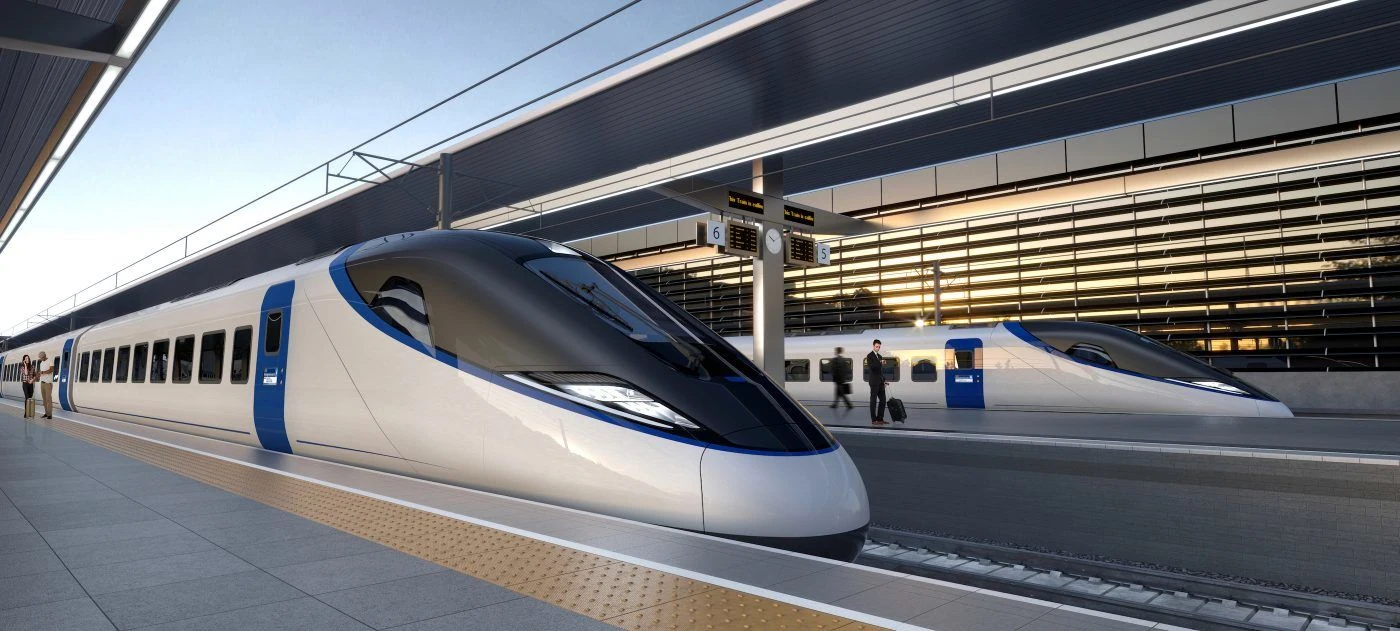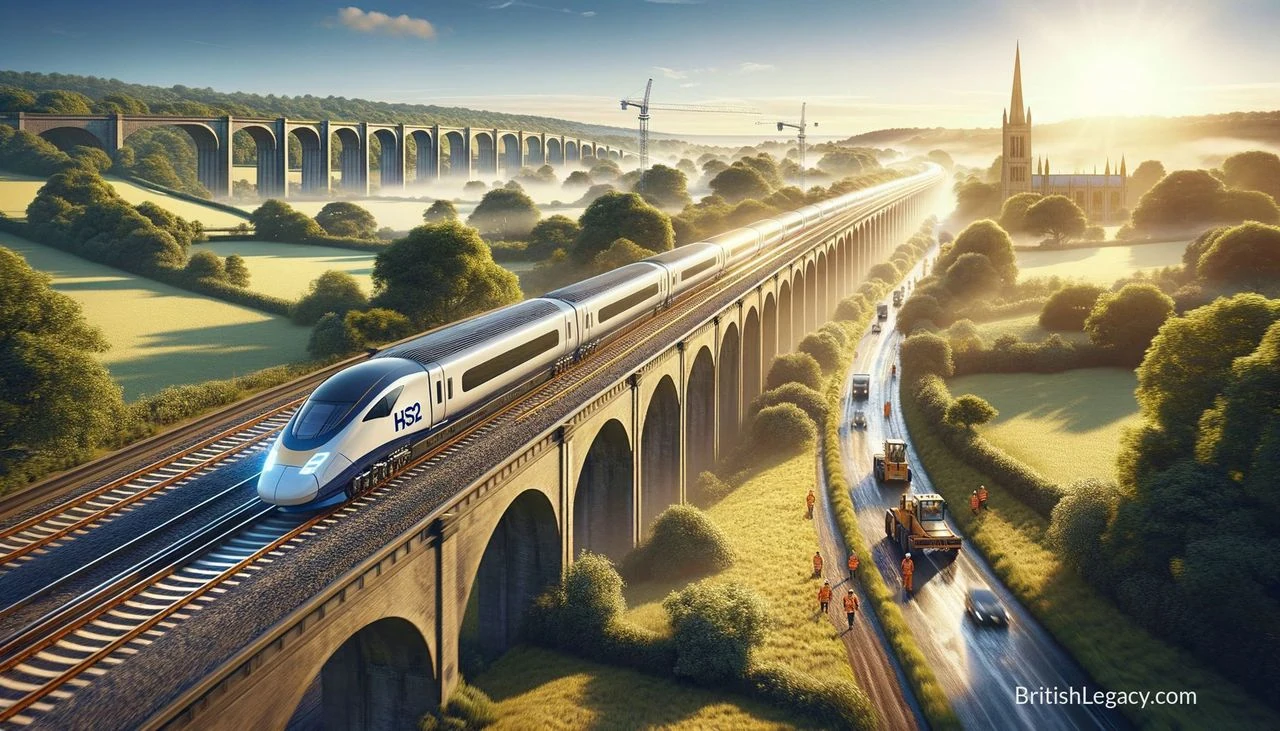
HS2 was conceived as a new high-speed railway linking London with Birmingham and, in its wider plans, Manchester and Leeds. Its advocates presented it as a way to add capacity to Britain’s rail network, shorten intercity journeys and improve connections beyond the capital. But the project also prompted arguments over public spending and the environmental effects of construction. Those competing claims are central to understanding HS2: it was not simply a railway proposal, but a debate about what large-scale infrastructure should deliver and what it might cost.
From proposal to construction
High Speed 2 emerged from proposals and government evaluations in the early 2000s. The account of the project records formal approval in 2012, followed by construction beginning in 2017. Its first phase was described as a route between London and Birmingham, with further extensions towards Manchester and Leeds envisioned in the wider plan. The distinction matters: those northern connections were proposed extensions, not evidence that the whole planned network had been completed.
The project was intended to modernise rail infrastructure and relieve congestion on the existing network. Supporters argued that adding a high-speed line could improve connectivity and encourage economic growth in regions they considered overshadowed by London. The stated ambition was to draw more economic activity towards the Midlands and North and to address imbalances between the capital and other parts of the country. These were aims for the project, rather than demonstrated outcomes.
Speed, stations and projected gains
The plans described trains reaching speeds of up to 250 mph (400 km/h). A London-to-Birmingham journey time of 49 minutes was presented as an expectation, compared with a journey of more than an hour in the account’s point of reference. The railway was also expected to carry more than 300,000 passengers each day. These figures express the case made for the scheme; they should be understood as projections, not as a record of achieved performance.
Birmingham’s Curzon Street and Manchester’s Piccadilly were identified as proposed station hubs. The expectation was that new stations could encourage urban regeneration and prompt further infrastructure and commercial development. More broadly, supporters anticipated that construction and associated investment would create thousands of jobs and attract activity to regional economies. The scale of those anticipated benefits was part of HS2’s appeal, but the project description offers them as forecasts rather than measured results.
Advocates also argued that moving journeys from roads to rail could reduce dependence on road travel and, in turn, carbon emissions. That environmental case sat alongside concerns about the railway’s possible effects on natural habitats and ancient woodlands. The two arguments were not interchangeable: the claimed emissions benefit concerned a possible shift in travel, while the objections concerned the direct impact of building the line. Both formed part of the debate over the scheme.
Cost and competing priorities
The project account put the estimated budget at £100 billion, a figure critics used to question whether the money might be better spent on other priorities, including healthcare or affordable housing. The estimate was presented as a point of dispute, not as a final account of costs. The criticism went to the heart of the choices involved in a major public work: whether expected transport capacity and regional investment justified a commitment on that scale.
In this argument, speed was only one measure of success. Supporters emphasised more rail capacity, shorter journeys and the prospect of stronger connections between London, Birmingham and northern cities. Critics focused on cost and the potential disruption of habitats and ancient woodland. The competing positions made HS2 a subject of public disagreement as well as an engineering undertaking. Its broader significance lies partly in how clearly it brought questions of transport, regional development, environmental impact and public spending together.
Why HS2 deserves a place in British Legacy
HS2 deserves a place in British Legacy as a major attempt to rethink domestic rail connections. Its proposed route between London and Birmingham, and the wider plan for links towards Manchester and Leeds, put capacity and access between regions at the centre of a national infrastructure debate. The project’s stated aims—shorter journeys, less pressure on the existing network and improved connections beyond the capital—show what its advocates believed a new railway could achieve. Its proposed stations and projected regional investment also reflected an ambition to connect transport planning with wider urban and economic development.
That ambition must be considered alongside the objections. A large estimated budget, concerns about competing public priorities and the potential effects on habitats and ancient woodland formed part of HS2’s story from the outset. The scheme is therefore a useful British public-works case study not because every promised benefit is established, but because its aims and trade-offs are explicit. It invites attention to how infrastructure proposals are judged: by their intended usefulness, the costs of pursuing them, and the consequences for the places they cross.