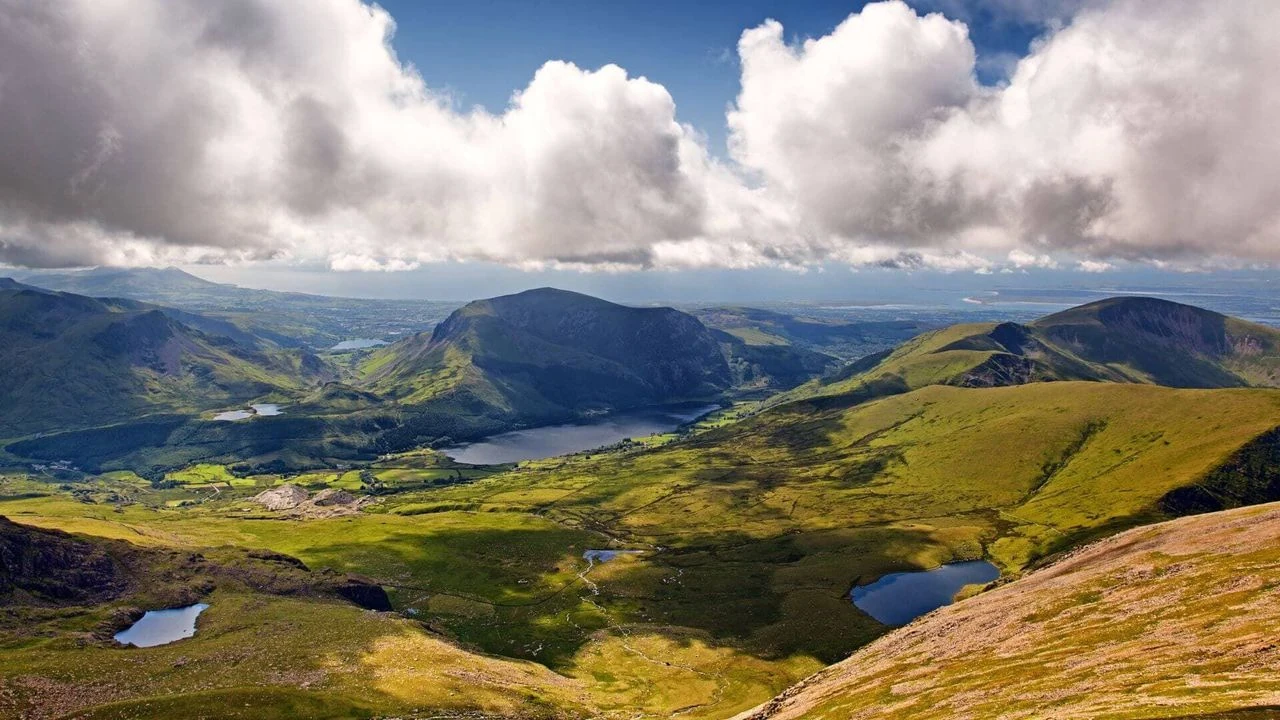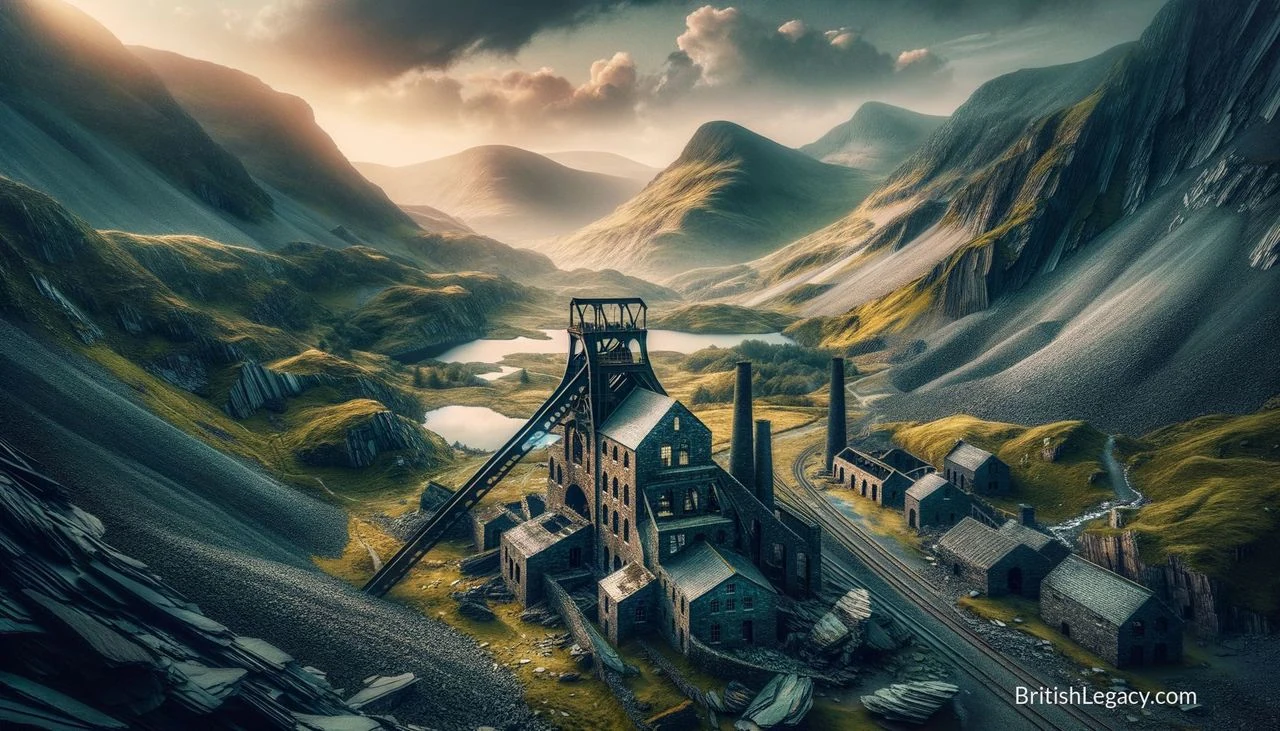
In north-west Wales, slate quarrying transformed mountainsides and shaped the places where quarry workers and their families lived. During the 19th century, the region’s industry grew to include major workings such as Dinorwic and Penrhyn. Their roofing slate travelled to towns and cities across Britain and, by sea, to markets as far away as North America and Australia. The legacy is still legible in the landscape: in former workings, workers’ housing and railways built to carry slate towards the coast.
Quarries connected to distant markets
Dinorwic and Penrhyn were among the largest and most productive quarries in the region. Their output supplied roofing for buildings at home and abroad, making Snowdonia slate part of a trade that reached well beyond Wales. Slate travelled from the mountains to growing British cities and was shipped overseas. The movement of the material linked quarry work to the buildings and markets it served, while the scale of production made quarrying a defining industry in the region.
The landscape’s industrial story is therefore about more than the extraction of stone. It encompasses the quarries themselves and the routes that carried their products away. Narrow-gauge railways were built to take slate towards the coast, connecting inland workings with onward transport. Those lines, like the quarry sites, remain part of the physical record of an industry organised around moving a heavy building material from mountain to market.
Work, homes and Welsh culture
Communities grew around the quarries, and the industry shaped daily life as well as the local economy. Welsh language and customs formed part of community life. The built environment preserves traces of the relationship between work and home: slate buildings and rows of tightly packed workers’ houses, described as barracks, are among the features associated with quarry settlements.
The cultural record extends beyond buildings and transport. Local folklore and songs are also linked to the slate industry. Together, these elements give the landscape a human history: its story includes the people who worked the quarries, the households and settlements that grew around them, and the traditions of the communities shaped by quarrying. The railways and housing are not isolated remnants; they help show how the industry organised movement and settlement across the region.
Decline and new uses
The slate industry declined in the late 20th century. As quarries fell silent, communities faced economic difficulty. Some former industrial sites and transport routes later became visitor attractions, giving new uses to parts of the landscape associated with quarrying. Llechwedd Slate Caverns offers visitors an encounter with quarrying history; the Ffestiniog Railway, restored as a visitor attraction, recalls the transport network associated with the slate trade.
In 2021, the Snowdonia Slate Landscape was inscribed as a UNESCO World Heritage Site. The recognition draws attention to the area’s industrial and cultural significance. Its history can be read across a connected landscape: from quarry workings and routes for carrying slate, to workers’ housing and the communities whose lives and culture were shaped by the industry.
Why the Snowdonia Slate Landscape deserves a place in British Legacy
The Snowdonia slate landscape deserves a place in British Legacy because its history connects a particular Welsh region to a trade that reached across Britain and overseas. Quarries including Dinorwic and Penrhyn supplied roofing slate for buildings in British cities and for markets as distant as North America and Australia. That reach depended on the physical transformation of the mountains and on transport routes built to move slate towards the coast. The workings and narrow-gauge railways record different parts of that industrial system, from extraction to onward shipment.
Its legacy is equally rooted in the communities formed around quarry work. Slate buildings, workers’ housing, Welsh language and customs, and local songs and folklore all reflect the industry’s place in regional life. The decline of quarrying brought economic difficulty, while the later use of sites and railway routes as visitor attractions has kept parts of this history accessible. The 2021 World Heritage inscription recognises the landscape’s industrial and cultural significance. Remembering it means recognising not just a product exported from Wales, but also the workers, settlements and infrastructure that made the industry possible.