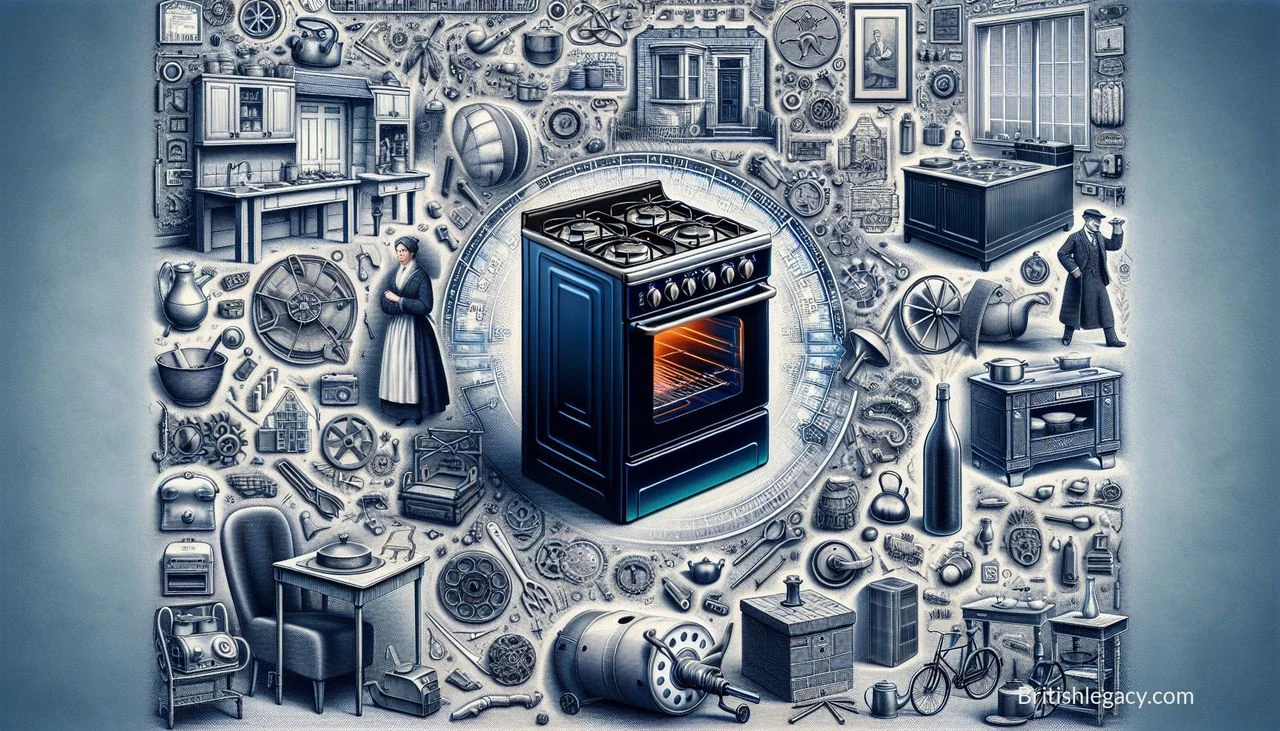
The modern kitchen rests on an idea so familiar that it is easy to miss its importance: heat should be controllable. Cooking becomes more reliable, less wasteful and less burdensome when an oven can be managed with confidence rather than wrestled into obedience. Before James Sharp’s intervention, the supplied account tells a simpler and harsher story. Domestic cooking depended largely on wood or coal-fired ovens that were cumbersome, less efficient and difficult to regulate.
Sharp, identified here as an English inventor, is remembered for patenting the first gas oven in 1826. That achievement deserves attention because it was not a decorative novelty or a small refinement. It addressed one of the most routine and important tasks in daily life: preparing food. By bringing gas into the oven, Sharp made steadier heat and better control part of the cooking process, and in doing so helped to change the working life of the home.
His name is not among the most famous in the usual parade of inventors, yet that is precisely why he suits British Legacy so well. Some inventions announce themselves with spectacle. Others quietly alter everyday life until it becomes hard to imagine the old inconvenience. Sharp’s gas oven belongs to the second kind: practical, transformative and woven into ordinary experience.
A domestic problem worth solving
Cooking technology can seem humble beside railways, engines or great scientific theories, but it shapes life at its most intimate level. Meals have to be made every day. If the equipment is inefficient and awkward, that difficulty is repeated daily in household after household. The importance of Sharp’s work begins there. He was not solving an abstract puzzle. He was improving one of the central routines of domestic life.
The older dependence on wood and coal-fired ovens meant dealing with heat that was harder to regulate. In plain terms, that made cooking more uncertain. Too much heat or too little could spoil the result; inconsistent heat made repeatable success harder to achieve. An oven that offered more dependable control therefore promised more than convenience. It offered a better chance of cooking food properly, consistently and with less struggle.
The supplied material says little about Sharp’s early life, and that absence is worth respecting rather than decorating with guesswork. What survives clearly is the scale of the problem he helped to solve. His reputation rests not on an elaborate personal legend but on a practical intervention whose value could be measured every day at the hearth and in the kitchen.
The 1826 gas-oven patent
In 1826, Sharp patented what this account describes as the first gas oven. That date matters because it places his work in an age of industrial and scientific change, when new forms of energy and new systems of infrastructure were beginning to alter British life. Yet the significance of Sharp’s patent is most easily understood in ordinary terms. He found a better way to deliver heat where families needed it.
The key improvement was the use of gas as a fuel source. According to the surviving text, this gave the oven more consistent and controllable heat than the wood or coal-fired alternatives then common in domestic cooking. That is the heart of the invention. Good cooking depends on judgement, but judgement is far more useful when the heat itself behaves predictably.
Sharp’s oven therefore represented a change in both method and expectation. It suggested that cooking need not be a matter of tolerating stubborn equipment. Heat could be regulated; results could become more precise; the kitchen could benefit from the same inventive intelligence that was changing other parts of life. The gas oven was not merely a new object. It embodied a new standard for what a household appliance ought to do.
Why controllable heat changed the kitchen
The original account rightly emphasises temperature control, because that is where Sharp’s contribution becomes most concrete. A more consistent heat meant more precise cooking. In practical terms, that meant meals that were better prepared and more reliably repeated. The difference may sound modest until one remembers how often cooking had to be done, and how much household effort depended on it.
Once an oven becomes easier to regulate, the entire rhythm of domestic work begins to change. Less energy is spent compensating for an awkward fuel source. Less guesswork is required. Cooking times and effort can be reduced. The source text goes further, arguing that this freed time and resources for families. That point deserves emphasis. Technological improvement in the home is not trivial simply because it occurs indoors. It can reshape the use of time, labour and attention in everyday life.
That is why Sharp’s achievement belongs to the history of domestic life as much as to the history of invention. The gas oven did not only improve a machine; it improved a recurring human task. It made the preparation of meals more manageable and, by the source’s own account, more delightful. Innovations of this kind rarely arrive with fanfare, but they have a habit of becoming indispensable.
From one invention to wider change
The supplied material presents Sharp’s oven as more than an isolated novelty, and that judgement is persuasive. It describes the invention as a pivotal moment that encouraged further development in domestic and industrial contexts. Even without adding details from elsewhere, the line of influence is clear enough. A successful improvement in cooking technology changes expectations. Once a household experiences greater control and efficiency, those qualities begin to look less like luxuries and more like necessities.
In that sense, Sharp’s work helped to pave the way for the modern kitchen. The source explicitly connects his oven to later design and functionality in cooking appliances. That is a strong legacy, because it means his contribution lived on not just in a single patent but in a broader idea: that kitchen technology should serve people with precision, efficiency and practical ease.
The invention also had significance beyond the kitchen itself. The account links Sharp’s gas oven to the growth of the gas industry and to the wider adoption of gas as an important energy source in everyday life. That places the oven at an interesting meeting point between household need and industrial development. A domestic appliance could help encourage infrastructure, and infrastructure in turn could support new habits of living. Sharp’s contribution therefore belongs to a larger British story in which invention, industry and ordinary life constantly influenced one another.
Recognition beyond fame
One of the striking things about James Sharp is that his importance does not depend on celebrity. The source openly concedes that he is not as widely known as some contemporaries, yet it insists that his effect on technology and daily life is undeniable. That feels exactly right. Public memory often favours inventions that look dramatic from a distance. Sharp’s achievement asks to be judged another way: by usefulness, repetition and endurance.
Everyday technologies are easy to take for granted once they begin working well. Their success lies partly in becoming ordinary. That can hide the originality that made them possible. Sharp’s gas oven deserves to be remembered because it turned a major household task into something more efficient and more controllable. It laid down part of the foundation for modern culinary practice and domestic convenience, not through glamour but through disciplined practicality.
That sort of achievement has a distinct dignity. It recognises that progress is not only measured by speed, scale or noise. It is also measured by the quiet improvement of common life: the better meal, the simpler routine, the piece of equipment that saves effort again and again over generations.
Why James Sharp deserves a place in British Legacy
James Sharp deserves a place in British Legacy because his contribution sits at the meeting point of invention and ordinary life, which is often where a nation’s character is most clearly seen. He is identified here as an English inventor, and his achievement belongs naturally within Britain’s tradition of practical ingenuity. The value of his 1826 gas-oven patent lies not in ceremony but in use. He improved the daily business of preparing food by making heat more consistent and more controllable, and that meant better cooking, greater efficiency and a more manageable domestic routine.
There is something especially worth preserving in that kind of legacy. Sharp’s work reminds us that the history of progress is not only the story of spectacular machines or famous names. It is also the story of people who solved persistent, intimate problems and thereby improved the texture of everyday living. A kitchen made easier to use is not a small matter when multiplied across homes, meals and years. It affects time, effort, comfort and confidence.
What future generations can appreciate in Sharp’s story is the intelligence of useful invention. He helped push the home towards the modern world, showing that technology could serve domestic life with precision rather than force households to endure inconvenience. That is a lasting contribution to British life and beyond. His legacy survives whenever we recognise that civilised progress often begins not with grandeur, but with making ordinary life work better.