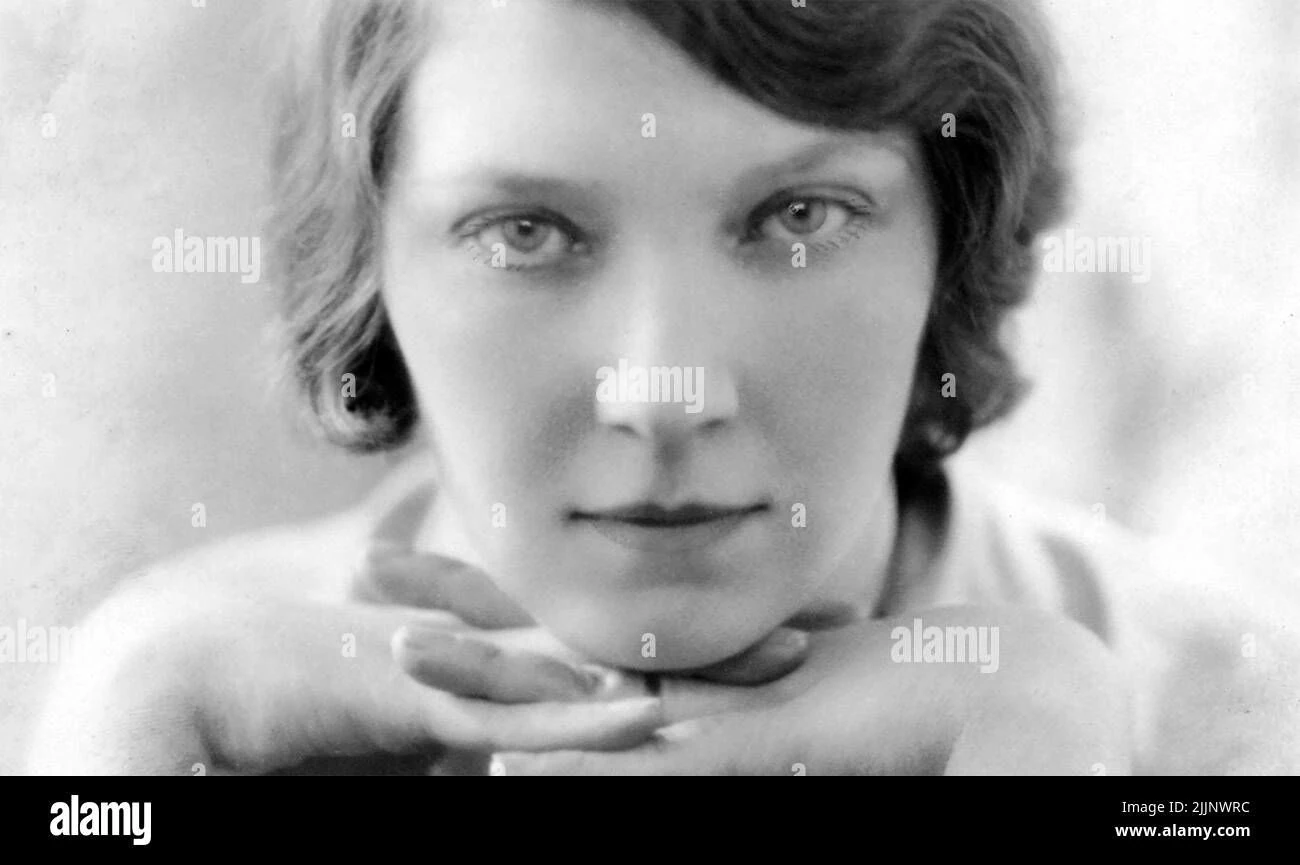
Jean Rhys spent much of her writing life attending to women who were lonely, financially precarious and treated as outsiders. Her own route to recognition was uncertain: after four novels brought little success, she largely withdrew from public life. Then, in 1966, Wide Sargasso Sea gave a history and a voice to the woman Charlotte Brontë’s Jane Eyre leaves confined to the attic. The novel brought Rhys back to readers and made her Caribbean perspective central to a new reading of a British literary classic.
A Caribbean childhood, an English education
Rhys was born Ella Gwendoline Rees Williams on 24 August 1890 in Dominica, then part of the British Leeward Islands. Her father, William Rees Williams, was a Welsh doctor; her mother, Minna, came from a white Dominican Creole family of Scottish ancestry. Rhys grew up in a colonial society shaped by race, class and the history of slavery. Those circumstances form important context for her fiction, though her novels are not simply records of her life.
At 16, she was sent to England to live with an aunt and attend school. At the Perse School for Girls in Cambridge, she was mocked as an outsider and for her accent. In London she studied for two terms at the Royal Academy of Dramatic Art. Her instructors doubted that she would learn to speak what they regarded as “proper English”, and she left the academy. She worked as a chorus girl under several names, including Vivienne, Emma and Ella Gray, and lived in boarding houses in London. Her early experience of moving between places and social worlds would recur in the dislocated figures of her fiction.
During the First World War, Rhys volunteered in a soldiers’ canteen. In 1918 she worked in a pension office helping the families of dead or wounded servicemen. In 1919 she married Jean Lenglet, a French-Dutch journalist. They lived in Paris and elsewhere in Europe. Their baby son died; their daughter, Maryvonne, was born in Belgium in 1922. Rhys was separated from her daughter for a period, and the family was reunited in 1927.
Writing women on the margins
Rhys began writing intermittently around 1914. In Paris she met Ford Madox Ford, who encouraged her work and suggested the name Jean Rhys. Her first collection, The Left Bank and Other Stories, appeared in 1927. Ford praised her distinctive perspective as a writer from the West Indies observing life in Europe; the collection helped establish the close, attentive style that would shape her fiction.
Her first novel, Postures, appeared in 1928 and was published in the United States as Quartet. Its protagonist, Marya Zelli, is left vulnerable when her husband is imprisoned in Paris. After Leaving Mr Mackenzie (1931) follows Julia Martin through cheap hotels, cafés and streets after a relationship ends. In Voyage in the Dark (1934), Anna, a young chorus girl raised in the West Indies, feels alien in England. Across these books, Rhys gives sustained attention to money, dependence, desire and social judgement, showing how little room their protagonists have to manoeuvre.
Good Morning, Midnight (1939) follows Sasha Jansen, an ageing woman adrift in Paris. Rhys uses a modified stream-of-consciousness style to convey Sasha’s thoughts and unease. The novel appeared as the Second World War began, when its bleakness did not meet readers’ demand for optimism. It failed to bring Rhys significant success, and she felt that her writing career had stalled. In the 1940s she largely withdrew from public life. From 1955 to 1960 she lived in Bude, Cornwall, before settling in Cheriton Fitzpaine, Devon.
Rediscovery and the return to Jane Eyre
Rhys’s return to writing began with an advertisement. In 1949, Selma Vaz Dias placed a notice in the New Statesman seeking Rhys, hoping to obtain radio adaptation rights to Good Morning, Midnight. Rhys replied, and their friendship and Vaz Dias’s encouragement helped bring her back to her work.
Rhys had begun Wide Sargasso Sea before settling in Bude. Published in 1966, it imagines the past of the Creole woman who becomes Bertha Mason, Rochester’s wife in Jane Eyre. Rhys names her Antoinette Cosway and sets much of the novel in Jamaica. Rather than accept the confined role Bertha has in Brontë’s story, Rhys follows Antoinette’s experiences in a society divided by colonial history and racial distinctions, tracing how marriage and coercion narrow her choices.
The novel’s relationship with Jane Eyre is more than a matter of chronology. By giving Antoinette a past, a name and a point of view, Rhys asks readers to reconsider who gets to tell a story and how power shapes the identities assigned to women. Its treatment of colonialism, belonging, race and gender has made it an enduring subject of literary discussion. Wide Sargasso Sea won the WH Smith Literary Award in 1967.
The novel’s success brought renewed attention to Rhys’s earlier work. Diana Athill, editor at André Deutsch, published Wide Sargasso Sea and helped reissue the earlier books; the writer Francis Wyndham also contributed to the revival of interest. Rhys published two further story collections: Tigers Are Better-Looking (1968), which brought together new and previously published work, and Sleep It Off Lady (1976). Wide Sargasso Sea also reached audiences through film, stage, opera and radio adaptations.
Later life, recognition and debate
Rhys remained in Cheriton Fitzpaine from 1960 until her death. She was unimpressed by the literary attention that arrived late in life, remarking that it had “come too late”. In 1978 she was appointed a Commander of the Order of the British Empire for her writing. She died in Exeter on 14 May 1979, aged 88, before completing her autobiography. The unfinished work was published posthumously as Smile Please: An Unfinished Autobiography.
Her writing continues to prompt debate about its politics. Rhys’s fiction depicts women exposed to economic and sexual vulnerability, but critics have differed over whether this makes her work feminist and over how fully its characters identify the social structures behind their suffering. That disagreement is part of the books’ continuing critical life: their characters’ isolation and constrained choices invite interpretation rather than a single, settled account.
Rhys’s place in British literary history is also marked in London. English Heritage placed a blue plaque on her former flat at Paulton House in Paultons Square, Chelsea, in 2012. The British Library holds selected papers, including drafts of novels and stories and material connected with adaptations of her work. These records connect her to British literary and publishing history while her fiction keeps its Caribbean settings and colonial histories in view.
Why Jean Rhys deserves a place in British Legacy
Jean Rhys deserves a place in British Legacy not because her story can be reduced to a British label, but because her life and writing illuminate the connections between Britain and the Caribbean. Born in Dominica under British rule and sent to England as a teenager, she wrote from the tensions of belonging to neither place in a simple way. Her novels give close attention to women exposed to economic dependence, social judgement and unequal relationships. That focus widened the range of lives represented in twentieth-century fiction, especially the lives of women whose stories had often been treated as marginal.
Wide Sargasso Sea is her clearest contribution to British literary inheritance. Rhys returned to Jane Eyre and changed the terms on which readers could understand Bertha Mason. Antoinette is not merely an obstacle in another character’s story: she has a history shaped by the Caribbean, colonial power and marriage. This retelling keeps the two novels in conversation and gives readers a way to examine how familiar stories distribute sympathy and authority. The WH Smith Literary Award, her CBE, the Chelsea plaque and the preservation of her papers at the British Library mark distinct forms of recognition for her work. More than a change of viewpoint, Rhys’s novel makes the origins and consequences of that viewpoint part of the story. Her legacy lies in making the margins of a familiar narrative impossible to ignore.
Sources
Jean Rhys — Wikipedia revision · Jean Rhys — Wikipedia
Adapted in part from Jean Rhys by Wikipedia contributors, under CC BY-SA 4.0. Text has been edited and combined with the existing article; this adapted text is shared under the same licence. Contributor history.