
Johan Kobborg’s career connected two national ballet companies. Trained in Denmark, he became a principal dancer with the Royal Danish Ballet before joining the Royal Ballet in London in 1999. There he took leading roles across the repertory and formed a celebrated stage partnership with Alina Cojocaru. His work later widened into choreography and artistic direction, taking him from the Royal Ballet to the Romanian National Ballet Company and, as a choreographer, to an outdoor production in Verona.
Training and an early rise in Denmark
Kobborg was born in Odense on 5 June 1972. He trained at the Royal Danish Ballet School and joined the Royal Danish Ballet after graduating. His promotion to principal dancer came in 1994, following his debut as James in La Sylphide. That early connection with the ballet would prove more than a first professional role: it was a work he later choreographed, as well as a production for which he received a Laurence Olivier Award nomination.
Accounts of Kobborg’s early education and training differ in their detail. One version names the Rudolf Steiner School in Odense and the National Ballet School in Denmark, and says he began formal ballet training at 16; the biographical account used here identifies the Royal Danish Ballet School but does not give an age at which he began. The clearest career sequence is that he trained in Denmark, joined the Royal Danish Ballet after graduating and became a principal in 1994.
A principal at the Royal Ballet
Kobborg joined the Royal Ballet in 1999. During his time with the London company, he danced leading roles in a wide range of works. These included the Prince in The Nutcracker and Cinderella, Siegfried, Romeo, Onegin, Albrecht, Oberon, Rudolf, Des Grieux, Désiré and Prince Florimund. The breadth of that repertory gives a more concrete measure of his work in Britain than general praise of his technique or dramatic gifts.
His career was not confined to London. Guest appearances took him to companies including the Mariinsky Ballet, Bolshoi Ballet, La Scala Ballet, National Ballet of Canada, Hamburg Ballet, Stuttgart Ballet, Vienna State Opera Ballet and Teatro San Carlo in Naples. Such engagements placed a dancer formed in the Danish tradition before audiences across a range of major international companies, while his Royal Ballet years made London a central part of his professional life.
Partnership with Alina Cojocaru
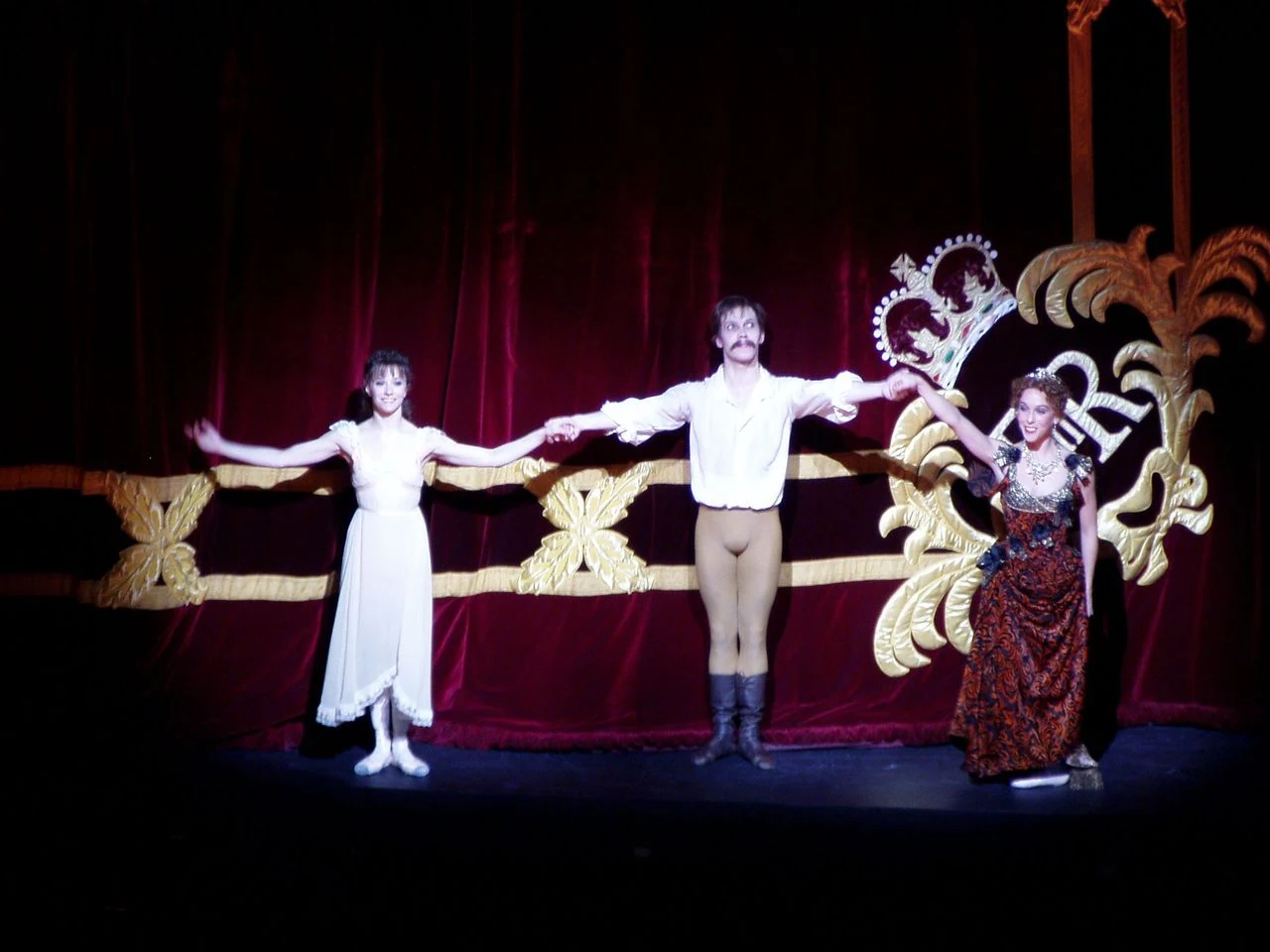
Kobborg’s partnership with Romanian dancer Alina Cojocaru became one of the defining features of his Royal Ballet years. They performed leading roles together in works including Giselle, Romeo and Juliet and La Sylphide. Their collaboration joined two artists who would also work together after leaving the London company: Cojocaru joined Kobborg at the Romanian National Ballet Company as a principal dancer.
Their performance in Giselle was recorded in 2006, with Cojocaru in the title role and Kobborg as Albrecht. The recording was shown in England on Boxing Day and released on DVD the following year. Their professional partnership also became a personal one; they have two children together. These details belong to the story of a sustained artistic collaboration, rather than serving as a substitute for its record on stage.
From the stage to artistic direction
When discussion arose in 2012 about who might succeed Dame Monica Mason as artistic director of the Royal Ballet, Kobborg was the subject of press speculation. Kevin O’Hare was appointed instead. Kobborg had earlier declined an invitation to seek the directorship of the Royal Danish Ballet; in a Daily Telegraph article, however, he said he would accept an invitation to run the Royal Ballet. In June 2013, he announced that he and Cojocaru would leave the company at the end of the 2012–13 season. Their final London performance was in Mayerling on 5 June, his birthday, and they were scheduled to dance with the company in Tokyo in July.
In December 2013, Kobborg became artistic director of the Romanian National Ballet Company in Bucharest on a four-year contract. Cojocaru joined as a principal dancer. Their time there ended in 2016, when they resigned after changes under new leadership at the Bucharest National Opera House; dancers protested. The episode marked a shift from performing in London to leading a company, while also showing that artistic direction depends on relationships with an institution’s management as well as on work in the studio.
Choreography, awards and screen work
Kobborg’s work as a choreographer includes Les Lutins and Salute. His production of La Sylphide earned a Laurence Olivier Award nomination in 2006. In 2019, his Romeo and Juliet premiered at the Arena di Verona, with music by Sergei Prokofiev. He also choreographed the dance scene in The White Crow, the 2018 film about Rudolf Nureyev directed by Ralph Fiennes. These projects show a career extending beyond his own performances, into the shaping of productions for the stage and screen.
His awards include the Grand Prix at the Nureyev International Competition in 1994 and the Grand Prix at the USA International Competition in Jackson that year. He also received recognition at the Erik Bruhn Competition in 1993. Alongside the Olivier nomination, these honours locate his achievements in both the competitive dance world and Britain’s theatre awards, without needing to turn them into claims about a universal standing.
Why Johan Kobborg deserves a place in British Legacy
Kobborg’s place in British cultural history rests most securely on a substantial period with the Royal Ballet. Joining in 1999, he performed leading roles across its repertory, from princes in The Nutcracker and Cinderella to Siegfried, Romeo, Onegin and Albrecht. This was not simply a visiting engagement: the Royal Ballet was one of the two companies with which he held principal status. His work with Cojocaru, including their recorded Giselle, also formed part of the company’s performance history and reached audiences beyond the theatre through a broadcast and DVD release.
His British connection continued beyond dancing. Kobborg received an Olivier nomination for La Sylphide, and his wider career demonstrates how a dancer’s contribution can move between performance, choreography and leadership. After leaving London, he took an artistic director’s role in Bucharest; he also continued to make productions, including his Verona Romeo and Juliet and choreography for a film about Nureyev. The significance for British Legacy is specific: a Danish-born artist became a principal in a major British company, helped bring its repertory to life and carried experience gained in that setting into work elsewhere. His story also reflects the international character of British ballet, whose companies can be shaped by artists trained abroad and whose work travels well beyond their home stage.
Sources
Johan Kobborg — Wikipedia revision 1344800198
Adapted in part from Johan Kobborg by Wikipedia contributors, under CC BY-SA 4.0. Text has been edited and combined with the existing article; this adapted text is shared under the same licence. Contributor history.
.JPG)