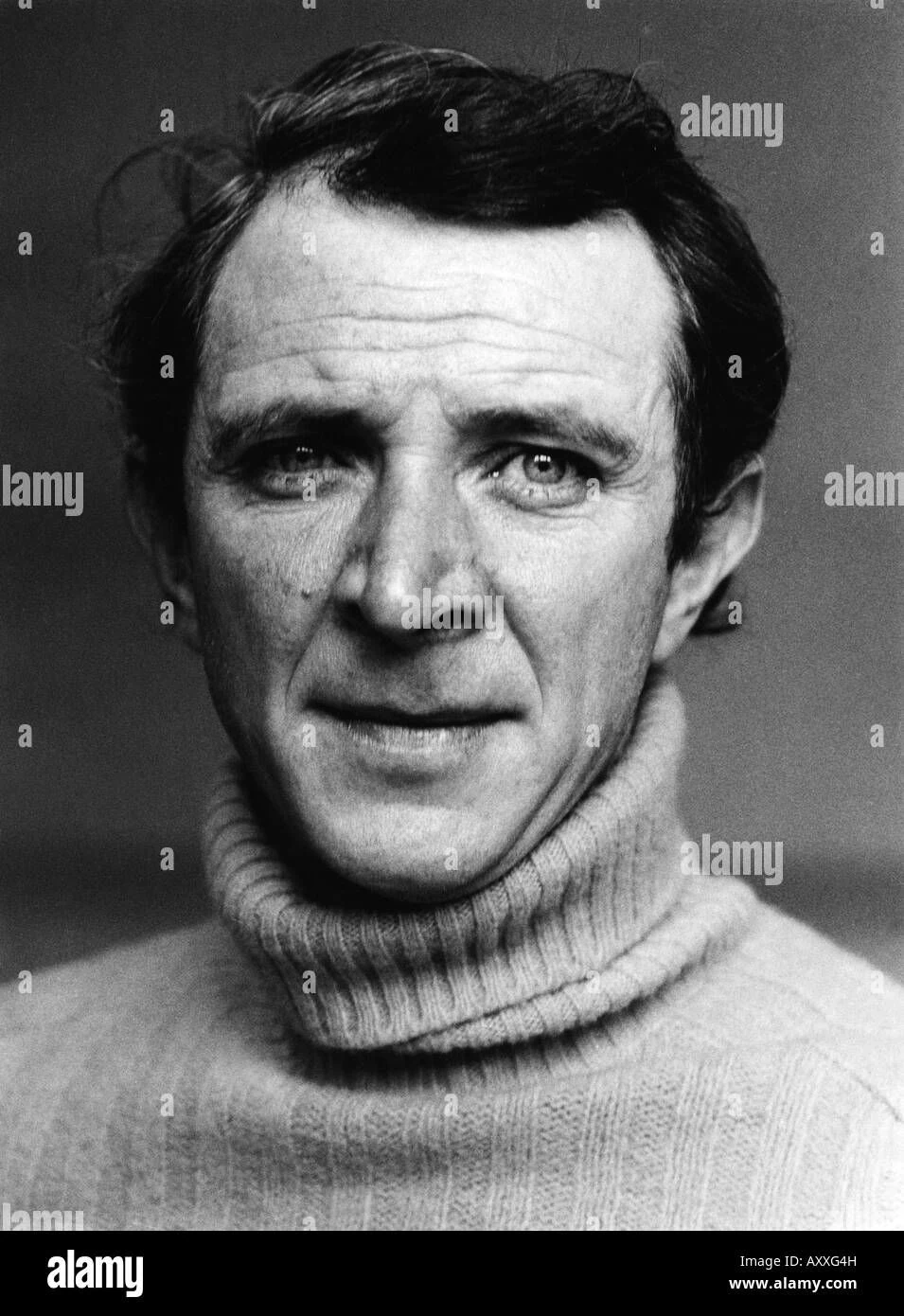
John Cranko’s career linked British ballet to a remarkable period of artistic change in Germany. Trained in London and first established as a choreographer in Britain, he made works for Sadler’s Wells before leaving for Stuttgart in 1961. There he built a company around ambitious narrative ballets, including Romeo and Juliet and Onegin, and helped create an environment in which performers and choreographers could develop. His life was cut short at 45, but the company, school and works associated with his name give his story an enduring place in ballet history.
From Cape Town to Sadler’s Wells
John Cyril Cranko was born on 15 August 1927 in Rustenburg, in the former Transvaal province of the Union of South Africa. His parents were Herbert and Grace Cranko. He began ballet training in Cape Town with Dulcie Howes, a leading South African teacher and director, at the University of Cape Town Ballet School. As a child, he also put on puppet shows. In 1945, he choreographed his first work for the Cape Town Ballet Club, using music from Stravinsky’s Suite from L’Histoire du soldat.
Cranko moved to London in 1946 to study at the Sadler’s Wells Ballet School. He danced his first role with the Sadler’s Wells Ballet in November 1947. His early work brought him into contact with designers and composers who would be important to British theatre and ballet. In 1949, he collaborated with designer John Piper on Sea Change, performed at Dublin’s Gaiety Theatre. They worked together again on a ballet season at the Kenton Theatre in Henley in 1952, and on The Shadow, which opened for Sadler’s Wells in March 1953.
Cranko’s career shifted decisively towards choreography around this time. His final performance with the Sadler’s Wells Ballet was in April 1950; at 23, he was appointed resident choreographer for the Sadler’s Wells Theatre Ballet’s 1950–51 season. For the Festival of Britain in 1951, he choreographed Harlequin, a pantomime with divertissements set to music by Richard Arnell, and Pineapple Poll, to music by Arthur Sullivan arranged by Charles Mackerras. He and Mackerras worked together again on The Lady and the Fool in 1954, using music by Verdi.
In 1954, Sadler’s Wells announced that Cranko was collaborating with Benjamin Britten on a ballet. Cranko devised a scenario first called The Green Serpent, drawing on King Lear, Beauty and the Beast and Madame d’Aulnoy’s tale Serpentin Vert. He supplied Britten with a sequence of dances and descriptions of the action; the project became The Prince of the Pagodas.
Choreography beyond the ballet stage
Cranko’s work in London was not confined to ballet. He wrote and developed the musical revue Cranks, which opened in December 1955, transferred to the West End the following March and ran for 223 performances. With music by John Addison, its four performers included singers Anthony Newley, Annie Ross and Hugh Bryant, alongside dancer Gilbert Vernon. The production later transferred to Broadway. A second revue, New Cranks, opened at the Lyric Theatre Hammersmith in April 1960. With music by David Lee and a cast including Gillian Lynne, Carole Shelley and Bernard Cribbins, it did not achieve the same impact.
In 1960, Cranko directed the first production of Britten’s opera A Midsummer Night’s Dream at the Aldeburgh Festival. When the opera had its London premiere at Covent Garden the following year, Cranko was not invited to direct; Sir John Gielgud took the role instead. His British career thus encompassed choreography, theatre and opera, as well as performance, before he moved to Germany.
Building a company in Stuttgart
Cranko left the United Kingdom in 1961 after being appointed director of the Stuttgart Ballet. He gathered a group of dancers that included Marcia Haydée, Egon Madsen, Richard Cragun, Birgit Keil and Susanne Hanke. Under his direction, the company developed an international profile, with a significant milestone in a guest performance at New York’s Metropolitan Opera in 1969. The phrase “Stuttgart Ballet Miracle” became associated with the company’s rise, though Cranko’s achievement can be seen more concretely in the artists he assembled, the ballets he made and the opportunities he created for others.
His best-known narrative works for Stuttgart included Romeo and Juliet in 1962, set to music by Prokofiev, and Onegin in 1965. The latter drew on Alexander Pushkin’s verse novel Eugene Onegin and used music by Tchaikovsky, including piano pieces orchestrated by Kurt-Heinz Stolze. Cranko continued to range across stories, musical sources and choreographic forms. His later Stuttgart works included Shakespeare’s The Taming of the Shrew (1969), set to keyboard music by Domenico Scarlatti; Brouillards (1970); Carmen (1971), with music by Wolfgang Fortner and Wilfried Steinbrenner; Initials R.B.M.E. (1972), to Brahms; and Spuren (1973), to Mahler.
Cranko also invited British choreographer Kenneth MacMillan to work with the company. MacMillan created four ballets there during Cranko’s lifetime and later made Requiem as a tribute to him. At Cranko’s instigation, Stuttgart Ballet established its own school in 1971. His assistant and choreologist Georgette Tsinguirides preserved his works in Benesh Movement Notation, a method that records choreography through a written system of movement. These activities extended his contribution beyond the creation of individual productions: they helped sustain a company, train dancers and preserve choreography.
An abrupt end and a continuing institution
Cranko died on 26 June 1973, aged 45, during a transatlantic charter flight from Philadelphia to Stuttgart. The Stuttgart Ballet had completed a successful United States tour at Philadelphia’s Academy of Music two days earlier. During the flight, Cranko choked after an allergic reaction to a sleeping pill. The aircraft made an emergency landing in Dublin, where he was pronounced dead on arrival at hospital. He was buried in a small cemetery near Stuttgart’s Solitude Palace.
His death did not end the work of the institutions he had helped shape. The Stuttgart Ballet marked what would have been his 80th birthday with a festival in 2007, and Glen Tetley created the ballet Voluntaries in his memory. The John Cranko Society, founded in Stuttgart in 1975, promotes knowledge of ballet and Cranko’s work, supports performances and talented dancers, and presents the John Cranko Award each year. The ballet school established during his tenure was renamed the John Cranko Schule in his honour in 1974.
Why John Cranko deserves a place in British Legacy
Cranko’s British connection is specific and substantial: London was where he pursued advanced ballet training, danced with Sadler’s Wells and became a professional choreographer. His work for the Festival of Britain, his collaborations with John Piper and Charles Mackerras, and his creative partnership with Benjamin Britten place him within the country’s post-war performing-arts history. He also worked across forms, moving between ballet, revue and opera rather than confining his imagination to a single stage tradition. Those years help explain how a South African-born artist became part of British cultural life before his later achievements in Germany.
His legacy also shows how artistic influence can travel beyond the place where it began. Cranko’s work at Sadler’s Wells preceded his direction of Stuttgart Ballet, where he created major narrative ballets and built a company that gave performers and visiting choreographers room to work. His invitation to MacMillan strengthened the exchange between British and German ballet, while the school and notation work supported training and the preservation of choreography. The Stuttgart institutions that bear his name continue to connect his achievements to dancers and audiences. Remembering Cranko in British Legacy recognises not a claim of exclusively British identity, but the formative British chapter of an international career and the creative relationships that carried its influence onwards.
Sources
John Cranko (revision 1368577872)
Adapted in part from John Cranko by Wikipedia contributors, under CC BY-SA 4.0. Text has been edited and combined with the existing article; this adapted text is shared under the same licence. Contributor history.