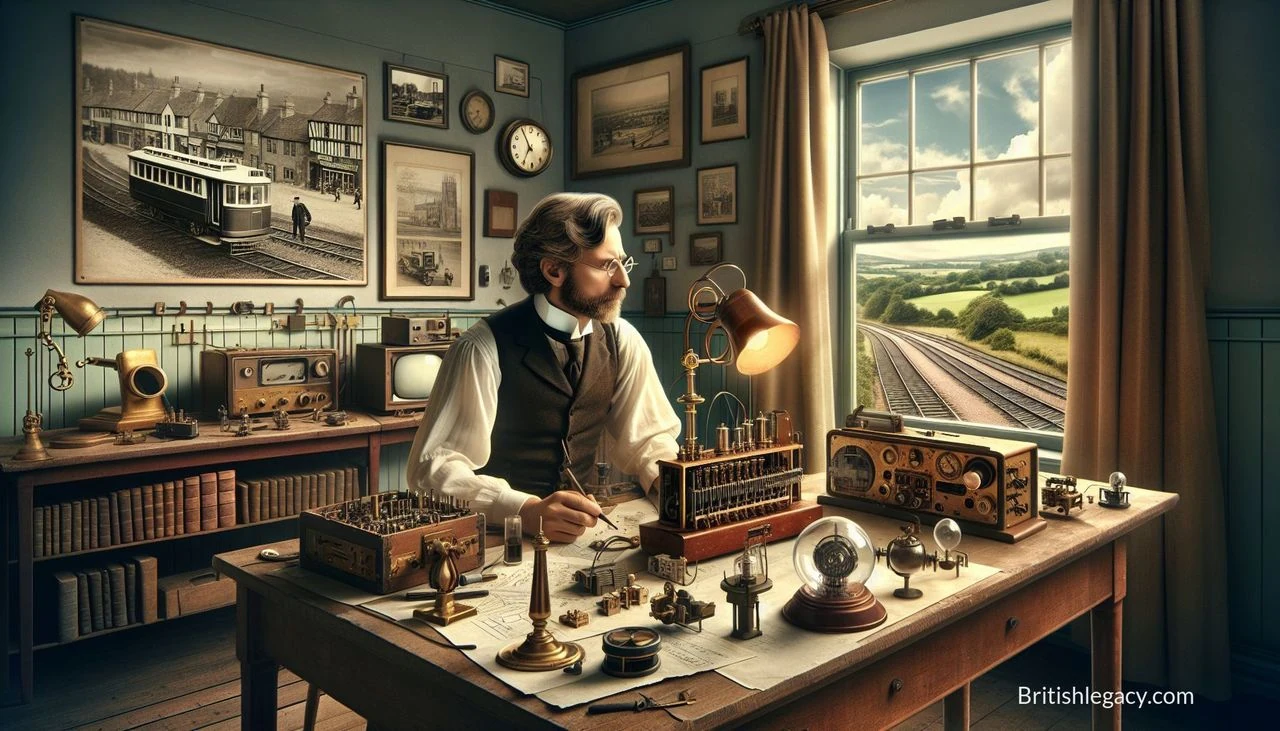
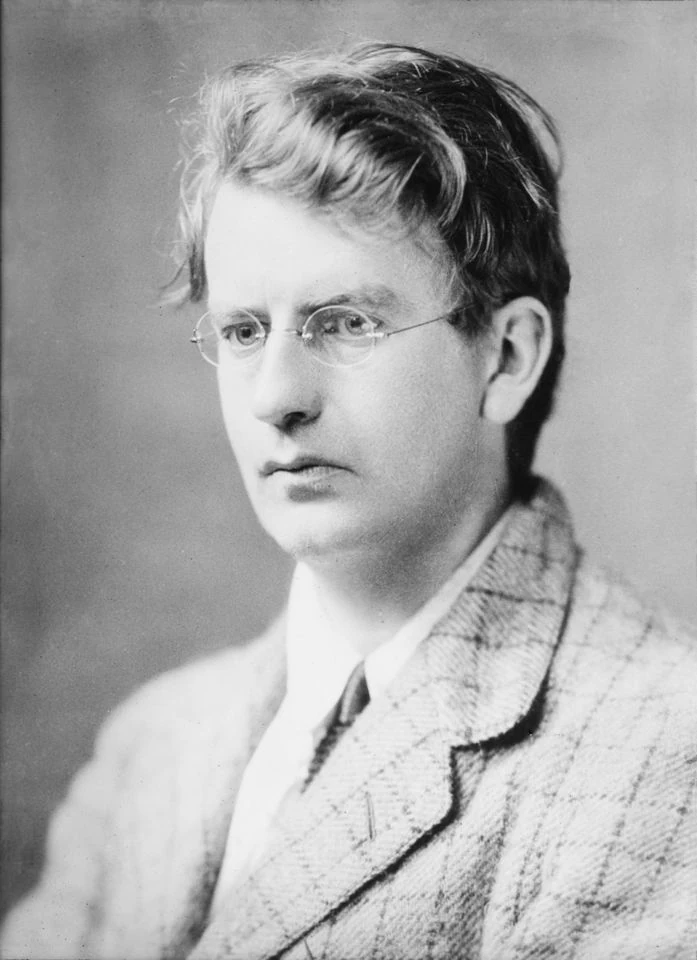
On 26 January 1926, a small, flickering image in a Soho laboratory made television harder to dismiss. The picture was technically fragile, but it showed live movement and tonal gradation: a recognisably human image transmitted and reproduced at a distance. The inventor behind the demonstration, John Logie Baird, had spent years trying to solve the problem with improvised mechanical equipment. His achievement was not the invention of television by one man working alone. It was to make a working system visible to the public, and then to keep exploring what the medium could do.
Baird’s television career ranged well beyond that first demonstration. He transmitted pictures over long distances, worked with the BBC as its early television service took shape, experimented with colour and large screens, and developed a fully electronic colour display. His mechanical system did not become the lasting broadcast standard. That outcome is part of the story: Baird helped make television credible before a rival technology displaced his own approach.
From Helensburgh to the workshop
Baird was born in Helensburgh, Scotland, on 13 August 1888, the youngest of four children. His father, the Reverend John Baird, was a Church of Scotland minister; his mother was Jessie Morrison Inglis. He attended Larchfield Academy in Helensburgh and studied at the Glasgow and West of Scotland Technical College and the University of Glasgow. His studies included engineering apprenticeships, but the First World War interrupted his degree and he never returned to graduate.
In 1915 he volunteered for the British Army and was judged unfit for active service. He instead took a job with the Clyde Valley Electrical Power Company, which was engaged in munitions work. His early life did not lead along a conventional professional path: ill health and interrupted study were recurring constraints. In 1923, still in poor health, he moved to Hastings on the south coast, where he rented a workshop in Queen’s Arcade. He later moved to London, seeking publicity for his television experiments.
Baird’s work was not confined to television, and his early inventions had mixed results. He tried to make diamonds by heating graphite, devised a glass razor that shattered, and designed pneumatic shoes whose semi-inflated balloons burst. An extra layer of cotton inside a sock, intended to keep his feet warm, became the more successful Baird undersock. These experiments offer a useful counterpoint to the story of the television pioneer: inventive ambition did not guarantee a workable product.
Making a moving image
Early television posed a problem of scanning as well as transmission. Baird used the Nipkow disc, a rotating disc pierced with holes that scanned an image line by line. At the transmitting end, a light-sensitive cell converted changes in brightness into an electrical signal. At the receiving end, a second disc and a lamp reconstructed the image. This mechanical system was an attempt to break a picture into a rapid sequence that could be sent and recognised as movement.
In February 1924 Baird showed that a semi-mechanical system could transmit moving silhouettes to the Radio Times. In March 1925 he demonstrated silhouettes at Selfridges in London during a three-week display. These early pictures were a beginning, not yet the tonal images that would make the system more convincing. On 2 October 1925, in his laboratory, he transmitted a greyscale image of a ventriloquist’s dummy known as Stooky Bill. He then brought in office worker William Edward Taynton, whose face became the first human image televised in a full tonal range.
That progression—from silhouette to shaded face—was central to the advance. A silhouette showed that a signal could carry an outline; a face with differences of light and shade made the result more recognisable. Baird had assembled working equipment from available components and continued improving the system, including its sensitivity. The technology remained rudimentary, but it demonstrated that the challenge was not simply to send a picture: the image had to be scanned, transmitted and reconstructed quickly enough to convey movement.
The Soho demonstration and the public
On 26 January 1926 Baird invited members of the Royal Institution and a reporter from The Times to his laboratory at 22 Frith Street, Soho. There he gave the first public demonstration of a television system able to scan and display live moving images with tonal gradation. The picture was small and imperfect by later standards. Its significance lay in what the witnesses could see: a moving image had crossed the distance between transmitter and receiver.
The demonstration mattered because it provided public evidence that television could work. It did not settle how the medium should be engineered, financed or organised, and Baird was not the only person working on the problem. But the practical result shifted the discussion. Television was no longer only a subject for patents and speculation; it had become a demonstrated capability that others could assess and try to improve.
Baird continued to stage demonstrations that tested the reach of the idea. In 1927 he transmitted pictures over 438 miles of telephone line between London and Glasgow. In 1928 his company achieved the first transatlantic television transmission, from London to Hartsdale, New York. The two milestones were distinct: the British long-distance transmission came first, followed the next year by the transatlantic one. Both took television beyond a single laboratory and demonstrated that images could travel across communications links.
From experiment to broadcasting
Television’s progress depended on more than inventors. In Britain, the BBC was an important institution in the emergence of regular broadcasting. Baird’s company made the first television programmes officially transmitted by the BBC in 1929. Programmes began to show the medium’s potential beyond technical demonstrations. The Man with the Flower in His Mouth, broadcast in 1930, was the first drama shown on UK television; in 1931 the BBC televised the Derby in its first live outside broadcast.
The BBC also produced programmes using Baird’s 30-line system, initially at Broadcasting House and later at 16 Portland Place. From 1933, Baird and his company also made a small number of programmes independently from their studios and transmitter at Crystal Palace. The work was still experimental, but it brought different kinds of content into television and tested how the medium might serve drama, sport and events beyond the studio.
Baird was also interested in enlarging the viewing experience. In 1930 he demonstrated a theatre television system with a screen measuring two feet by five feet at venues including the London Coliseum, Berlin, Paris and Stockholm. By 1939 he had developed theatre projection sufficiently to televise a boxing match on a much larger screen. Such work extended his interest from transmitting an image to the practical question of how audiences might watch it.
The limits of Baird’s system became clear when the BBC began its regular high-definition service from Alexandra Palace on 2 November 1936. The service alternated Baird’s 240-line transmissions with EMI’s electronic system, which had been improved to 405 lines. The Baird system still relied on an intermediate-film process: footage was recorded on cinefilm, rapidly developed and scanned. Its equipment was less mobile, and the BBC ended its Baird transmissions in February 1937. A fire at the Crystal Palace facilities also damaged the company’s ability to compete.
The changeover was not simply a verdict on Baird’s contribution. His system had helped bring television to public attention and had been used in the early development of broadcasting. But the comparison at Alexandra Palace showed that a pioneering system and a lasting standard were not necessarily the same thing. Electronic television proved better suited to the demands of a regular service. Baird’s method lost its place, while the medium he had helped demonstrate continued to develop.
Colour, recording and Telechrome
Baird’s interest in television did not end with mechanical black-and-white images. On 3 July 1928 he demonstrated a colour transmission using scanning discs at both ends, with filters for the primary colours and light sources at the receiver. He also demonstrated stereoscopic television that year. These experiments treated colour and depth as technical problems to be explored alongside the transmission of movement.
He pursued larger displays and recording as well. Between 1926 and 1928 he worked on Phonovision, an early attempt to record a 30-line television signal on disc using a scanning disc linked to a record-cutting lathe. Technical difficulties stopped further development, though some of the original discs have survived. Phonovision is a reminder that Baird was thinking not only about live pictures, but also about whether television images could be stored for later viewing.
His most notable later colour work was Telechrome. Baird began working on the fully electronic system around 1940 and demonstrated a practical colour display on 16 August 1944. The system used a cathode-ray tube and a specially patterned phosphor screen, with electron guns directed at different parts of the pattern. Earlier devices produced limited colour; the 1944 demonstration used a 600-line system with triple interlacing. Telechrome showed that Baird was willing to move beyond the mechanical approach with which he had first made his name.
The Hankey Committee, appointed to plan the resumption of television after the war, considered a proposed 1,000-line Telechrome system as a possible colour broadcast standard. The plan did not become reality. The challenges of post-war reconstruction contributed to its loss of momentum, and Britain resumed with monochrome television. Baird’s late work nevertheless marks an important change in direction: the inventor who had made a mechanical system publicly visible was also pursuing an electronic colour future.
A life of unfinished experiments
Other projects extended Baird’s interests into image recording, infra-red night viewing, fibre optics and radio direction finding. His Noctovision work used infra-red illumination for night viewing. Claims about his wartime contribution to radar remain disputed in the supplied account: a patent for a device forming images from reflected radio waves has been noted, but the precise relationship to radar is not established there. It is better to distinguish that uncertainty from the documented work on television than to present a disputed claim as settled fact.
Baird died in Bexhill, Sussex, on 14 June 1946, aged 57, after suffering a stroke earlier that year. He was buried beside his parents in Helensburgh Cemetery. His career had combined public demonstrations and technical invention with projects that did not reach practical success. The television system that bore his name was ultimately displaced, yet his work had helped make the medium a public and broadcasting reality.
His later recognition has taken several forms. A plaque commemorates him in Helensburgh, and a bronze street plaque was unveiled at 22 Frith Street in 2017. The Royal Mint issued a Baird 50p coin in 2021 to mark the 75th anniversary of his death. These memorials sit alongside the surviving Phonovision discs and museum objects associated with his work. They keep attention on both a celebrated demonstration and the longer record of experimentation that surrounded it.
Why John Logie Baird deserves a place in British Legacy
John Logie Baird deserves a place in British Legacy because his work helped turn television from a proposed technology into something people could witness. The Soho demonstration of 1926 was not the conclusion of a solitary inventor’s story or the sole origin of television. It was a decisive public proof: live movement and tonal gradation could be transmitted and reconstructed. Baird’s Scottish education and engineering experience, his workshops in Hastings and London, and his work with the BBC connect his achievement directly to the history of invention and broadcasting in Britain.
His British legacy also lies in the range of problems he tried to solve. He transmitted pictures between London and Glasgow and across the Atlantic, helped bring early television programmes to the BBC, and explored drama, sport and large-screen display. His colour experiments continued after his mechanical system had been overtaken, culminating in the electronic Telechrome demonstration. Phonovision, meanwhile, shows an early attempt to record television rather than simply transmit it live. These achievements matter even where a project did not become a commercial standard: they reveal a persistent effort to extend the medium’s reach and possibilities.
The eventual adoption of electronic television should not erase the earlier work that made a public service seem possible. Baird’s career offers a clear distinction between demonstrating a technology and winning the later contest to standardise it. His system was dropped, but the medium he helped establish continued to enter public life through broadcasting. Remembering him in British Legacy means recognising both the practical ingenuity of his experiments and the wider benefit of making television a credible form of communication, culture and shared experience.
Sources
John Logie Baird — Wikipedia, revision 1375520986
Adapted in part from John Logie Baird by Wikipedia contributors, under CC BY-SA 4.0. Text has been edited and combined with the existing article; this adapted text is shared under the same licence. Contributor history.