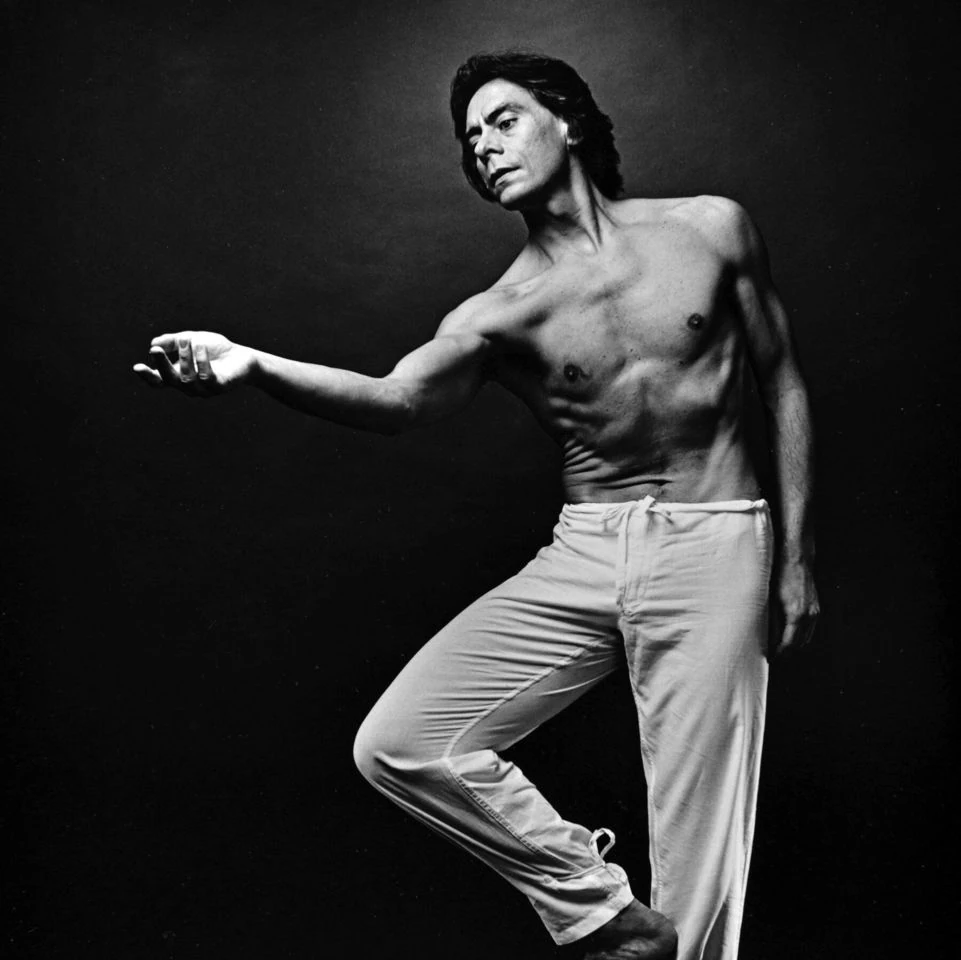
John Neumeier’s connection with British ballet began in the studio: after training in the United States and Copenhagen, he continued his studies at the Royal Ballet School in London. He later made work for the Royal Ballet, including a ballet to Mahler’s Fourth Symphony in 1977. Those links form a specific part of a career chiefly built in Germany, where his long leadership of the Hamburg Ballet gave him an international platform for choreographic storytelling.
Training across three cities
Neumeier was born in Milwaukee, Wisconsin, on 24 February 1939 and received his first ballet training there. He continued at the Stone-Camyrn School of Ballet in Chicago, and performed with Sybil Shearer and Ruth Page. In 1961 he graduated from Marquette University with a degree in English literature and theatre studies, an education that sits naturally alongside the literary and dramatic sources he would later draw on as a choreographer.
His training then took him to Copenhagen, where he studied with Vera Volkova, and to London’s Royal Ballet School. The international route continued in 1963, when he joined the Stuttgart Ballet under John Cranko and rose to the rank of soloist. Neumeier moved from performing into leadership in 1969, becoming director of the Frankfurt Ballet. In 1973 he became director and principal choreographer of the Hamburg Ballet, the company with which his name would be most closely associated.
Stories made for the stage
Neumeier’s repertory ranges widely across literature, theatre, religion, mythology and music. Rather than confining himself to one kind of narrative, he returned to established stories and figures, recasting them through ballet. His works include Don Juan, made for the Frankfurt Ballet in 1972, and Romeo and Juliet, created there in 1974. Shakespeare remained an important source: later adaptations included Othello, As You Like It and Hamlet.
Literary works also informed ballets such as The Lady of the Camellias, created for the Stuttgart Ballet in 1978, and A Streetcar Named Desire, made for Stuttgart in 1983. Other examples include Peer Gynt, The Seagull and Death in Venice. His approach extended to reworking canonical ballet stories: Illusions, like Swan Lake drew loosely on the life of Ludwig II of Bavaria, while his interpretations of The Nutcracker, The Sleeping Beauty and Giselle revisited nineteenth-century classics.
Music was not simply accompaniment in this body of work. Neumeier made ballets to several of Gustav Mahler’s symphonies, including his Fourth Symphony for the Royal Ballet in 1977. His other Mahler-related works included the Third, Fifth, Sixth and Ninth symphonies, as well as the Rückert-Lieder and Des Knaben Wunderhorn. Elsewhere he turned to sacred subjects, creating works including St Matthew Passion, Magnificat and Messiah, and to myth, with ballets such as Orpheus and Tristan.
Hamburg and the work of building a company
Neumeier’s most sustained institutional role was at the Hamburg Ballet. He directed the company and served as its principal choreographer from 1973 to 2024. From 1996 to 2024 he was also artistic director of the ballet at the Hamburg State Opera. Over that period, his work as a choreographer was accompanied by the responsibility of shaping a company’s repertoire and artistic life.
That commitment extended to training and younger performers. In 1978 he founded the School of the Hamburg Ballet, which includes a boarding school for 34 students. He also became general director and artistic supervisor of the German National Youth Ballet when it was founded in 2011. These roles show another dimension of his career: not only making ballets, but establishing structures in which dancers could train and a younger company could perform.
His work travelled beyond Hamburg. Neumeier served as a guest choreographer for the Royal Winnipeg Ballet from 1971 to 1974, providing repertoire and staging his version of The Nutcracker. He also created works for companies elsewhere in Europe and North America. In 2017, for example, he created and directed a production of Gluck’s Orfeo ed Euridice for Lyric Opera of Chicago, featuring the Joffrey Ballet. That same year, his full-length Anna Karenina premiered in Hamburg as a co-production with the Bolshoi Ballet and the National Ballet of Canada.
A substantial and varied repertory
The scale of Neumeier’s output reflects a career spent moving between forms and subjects. His works include ballets about Vaslav Nijinsky, among them Vaslav, Nijinsky and Le Pavillon d’Armide. He also made ballets from biblical narratives, adapted Shakespeare, returned to the classical repertory and created works shaped by Mahler’s music. The breadth is important: his storytelling was not confined to literary adaptation, but reached across music, history, theatre and religious tradition.
His work has been recognised through international awards, including the Deutscher Tanzpreis, Prix Benois de la Danse and Kyoto Prize. In 2006 he was made an honorary citizen of Hamburg. He presided over the jury of the Prix de Lausanne in 2001 and 2008, and in 2017 received the competition’s first Life Achievement Award. These honours reflect the reach of a career whose institutional centre was Hamburg but whose repertory and collaborations crossed national boundaries.
Why John Neumeier deserves a place in British Legacy
Neumeier’s place in British Legacy rests on documented artistic connections rather than a claim that he was a British choreographer. He trained at the Royal Ballet School in London after studying in the United States and Copenhagen, and later made a work for the Royal Ballet: his ballet to Mahler’s Fourth Symphony, in 1977. The London training and the Royal Ballet commission place British dance within the chronology of a wider international career.
His contribution also offers a useful perspective on how dance crosses borders. Neumeier’s career was rooted for decades in Hamburg, but his movement between companies, traditions and source material helped make ballet a conversation among performers, institutions and audiences in different countries. His literary adaptations, Shakespearean ballets and musical works show how choreography can interpret material beyond the dance world itself. His Royal Ballet work is a concrete British example of that practice: a choreographer trained in London bringing a distinctive body of work to a major British company. Remembering that connection gives British dance history a more international frame, while recognising the particular artistic and educational work that made his career influential.
Sources
John Neumeier — Wikipedia revision 1362187192 · John Neumeier — Wikipedia
Adapted in part from John Neumeier by Wikipedia contributors, under CC BY-SA 4.0. Text has been edited and combined with the existing article; this adapted text is shared under the same licence. Contributor history.