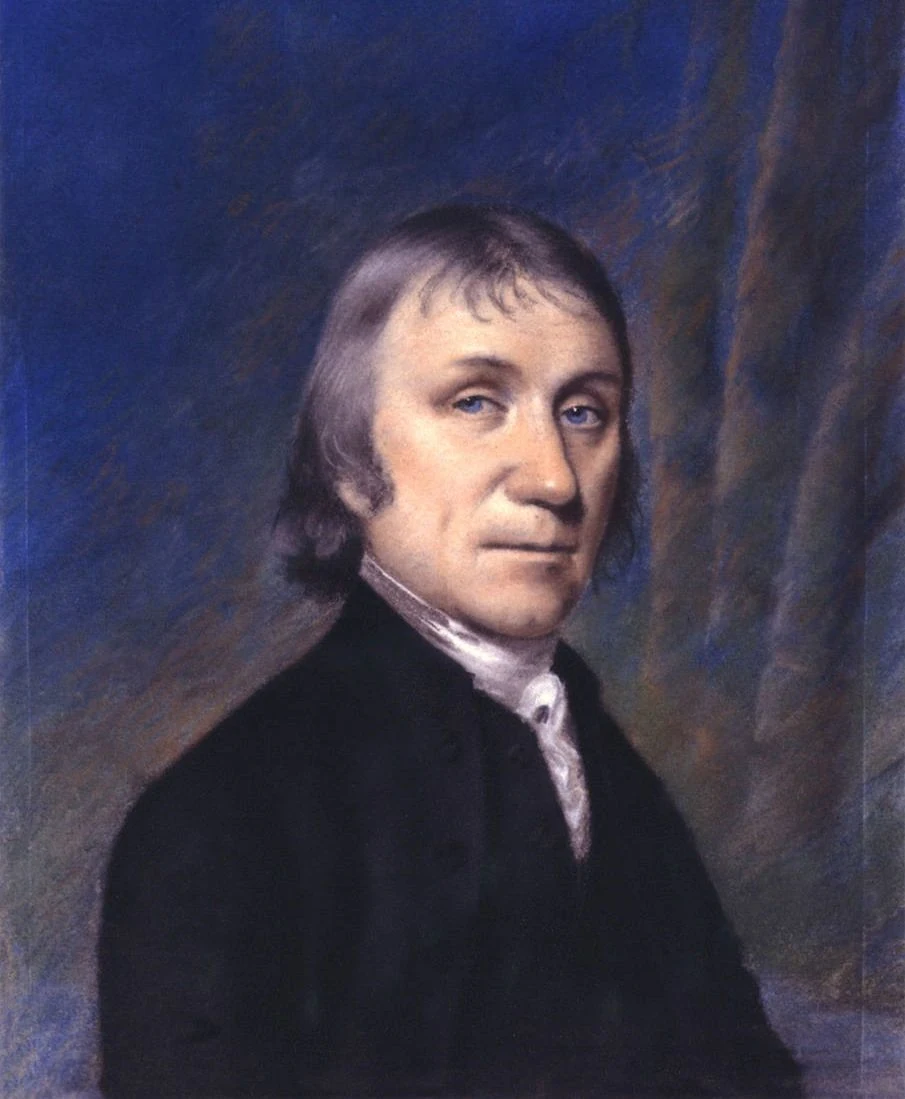
Joseph Priestley made air something that could be trapped, tested and compared. In the eighteenth century, this was a way into a new understanding of chemistry: what appeared to be one invisible substance proved to contain gases with different properties. Priestley’s experiments helped open the road to modern chemistry, although he did not accept the later theory that explained them. His work was part of a much wider life. A Yorkshire-born dissenting minister, teacher, grammarian, historian of electricity and political writer, he treated inquiry as a public good and carried it into the chapel, classroom, laboratory and printed page.
His story is not a smooth tale of discovery rewarded. Priestley’s investigations produced influential work on gases, electricity and carbonated water; his educational books gave readers new ways to see history; and his arguments for freedom of conscience challenged religious and political restrictions. In 1791, a Birmingham mob destroyed his home, library and laboratory. Three years later he left Britain for America, where he continued to write and experiment until his death. His British legacy includes both what he helped people understand and the price he paid for dissent.
A Yorkshire education and a practical classroom
Priestley was born in Birstall, Yorkshire, to an English Dissenting family outside the Church of England. His birth date appears in the supplied biographical evidence as 24 March 1733, with the older-style date given as 13 March 1732. He was the eldest of six children of Mary Swift and Jonas Priestley, a cloth finisher. After his mother died when he was young, he lived with relatives, including his aunt and uncle, Sarah and John Keighley. His early education included Greek, Latin and Hebrew, as well as French, Italian and German. He entered Daventry Academy, a Dissenting institution, in 1752 to study for the ministry.
Priestley’s early posts took him to Needham Market and Nantwich. In Nantwich, where he moved in 1758, he established a school and taught natural philosophy, buying scientific instruments for pupils. The available English grammar books dissatisfied him, so he wrote The Rudiments of English Grammar, published in 1761. Its treatment of English on its own terms challenged the habit of explaining the language chiefly through Latin. That same year Warrington Academy appointed him tutor in modern languages and rhetoric.
At Warrington, Priestley argued for an education suited to civil and active life. He favoured modern languages and recent history alongside classical learning, and believed that students should encounter science as well as literary subjects. In Essay on a Course of Liberal Education for Civil and Active Life, he set out the practical purpose of this approach. His teaching and writing were directed towards making knowledge usable, not simply displaying learning.
Priestley turned historical study into a visual exercise. His Chart of Biography and A New Chart of History arranged lives and events on timelines, so that readers could compare what happened in different places and periods. They helped make sequence and historical scale visible. The charts became influential, and his lectures on history were used by educational institutions in Britain and America. Priestley’s contribution to education was therefore not only a set of recommendations: he devised tools that changed how readers could organise information.
Electricity, gases and the making of evidence
Priestley’s interest in science grew alongside his work as a teacher. His The History and Present State of Electricity, published in 1767, began as an account of previous investigations, including work associated with Benjamin Franklin. Repeating earlier experiments led Priestley to questions of his own. He investigated the conductivity of charcoal and other materials and electrical effects, and presented his findings in a form intended to help others continue the inquiry. The book made a developing subject accessible to readers who had not performed every experiment themselves. The Royal Society elected him a Fellow in 1766; he later received its Copley Medal.
Priestley moved to Leeds in 1767 to become minister of Mill Hill Chapel. A brewery nearby supplied a steady source of what he called “fixed air”, released during fermentation. He worked out how to dissolve the gas in water and published directions for making carbonated water. He hoped the drink might help prevent scurvy, a belief not borne out by the evidence. The technique, however, proved useful beyond that mistaken medical hope and became the basis of a beverage made and enjoyed on a wide scale.
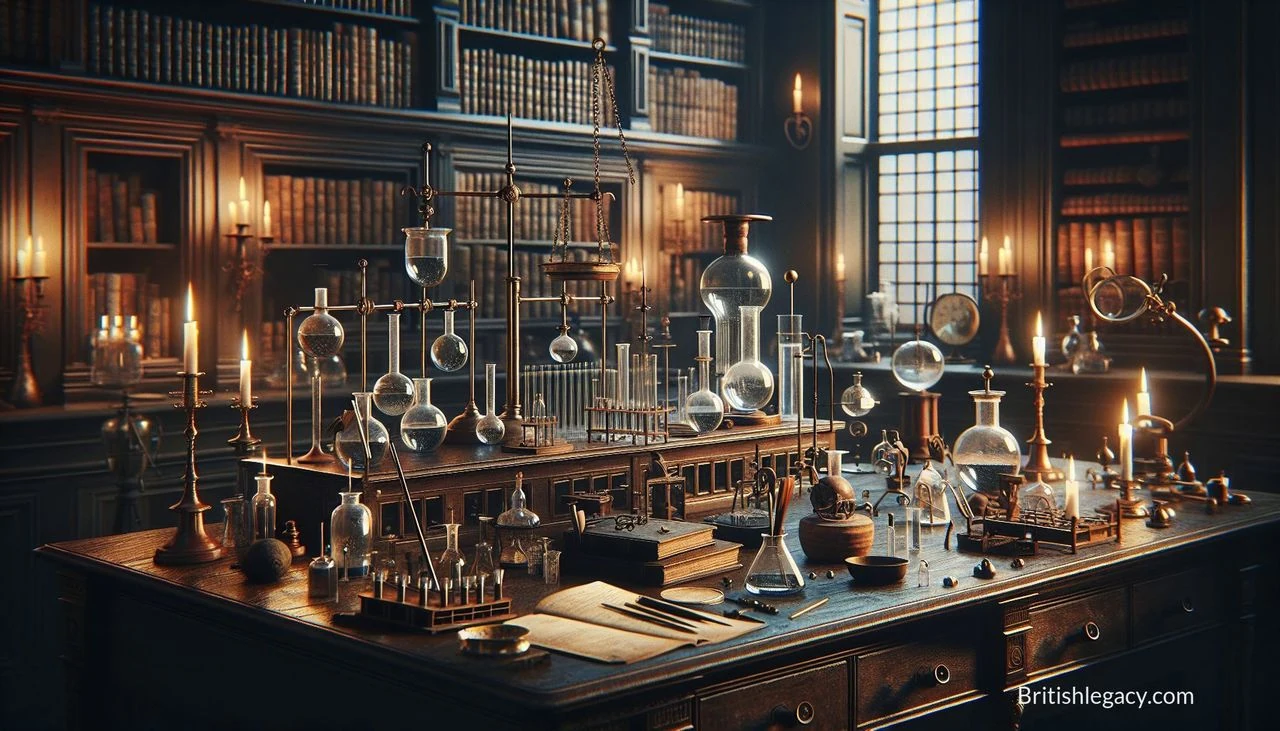
In Leeds, Priestley also served a Dissenting congregation and continued his scientific work. He was interested in how different kinds of air behaved: whether they supported flame or breathing, dissolved in water or changed when exposed to plants. Later, at Bowood House in Wiltshire, he had more time for investigation. With relatively simple equipment, including a pneumatic trough and a burning glass, he generated gases, collected them and tested them. His strength lay in experimental observation and in describing his methods and uncertainties so that other investigators could assess and repeat them.
That work distinguished several gases and ways of testing air. Priestley investigated nitric oxide, ammonia, sulphur dioxide and carbon monoxide, among others, and developed what he called the “nitrous air test” to compare the quality of air for breathing. He also found that plants could restore air affected by combustion or respiration. These observations contributed to later understanding of photosynthesis and the carbon cycle. They made the atmosphere a subject of experiment rather than an undifferentiated background to life.
The best-known experiment took place at Bowood on 1 August 1774. Priestley focused sunlight through a burning glass on mercuric oxide and obtained a gas in which a candle burned vigorously and mice survived longer than they did in ordinary air. He called it “dephlogisticated air”; in modern terms, he had isolated oxygen. Priestley did not provide the chemical explanation later developed by Antoine Lavoisier. He interpreted his results through phlogiston theory, which he continued to defend even as the new chemistry took hold. His isolation of oxygen was a major contribution, but the distinction matters: he supplied crucial experimental evidence, while Lavoisier helped explain it within a different chemical framework.
Priestley’s approach was open about false starts and unresolved questions. He favoured experiments that could be assembled and repeated, and recorded doubts as well as findings. This candour made his work available for scrutiny. It also meant that a later reader can see the difference between the significance of an observation and the theory an experimenter used to interpret it. Priestley was wrong to hold on to phlogiston, but that did not erase the value of his experimental work.
Faith, dissent and the rights of conscience
Science was never a separate compartment in Priestley’s life. He trained for the Dissenting ministry and served congregations in Needham Market, Nantwich, Leeds and Birmingham. At Mill Hill Chapel, where he was minister from 1767 to 1773, his influence helped move the congregation from Presbyterian roots towards Unitarianism. He rejected the doctrine of the Trinity and defended the use of reason in religious inquiry. In his view, claims about nature and scripture should withstand examination rather than be protected from it.
Priestley’s theological writing was extensive, and he regarded it as central to his work. In Institutes of Natural and Revealed Religion, he argued that religious truths must be compatible with experience of the natural world. His account of early Christianity challenged established doctrine and brought him into controversy. He helped support the development of organised English Unitarianism, including the work of his friend Theophilus Lindsey, who established a Unitarian congregation in London in 1774.
These convictions informed Priestley’s politics. Dissenters faced restrictions on holding public office and attending Oxford and Cambridge unless they conformed to the Church of England. Priestley argued against these exclusions in pamphlets and public writing. In Essay on the First Principles of Government, published in 1768, he distinguished civil rights from political rights and argued for extensive civil liberty. He maintained that government should not control private conscience, particularly in matters of education and religion. His case joined religious toleration to a broader argument about who could participate in public life.
Priestley could be uncompromising in controversy and did not readily change his mind. That certainty sometimes sharpened disagreement, but his defence of free inquiry was more than a personal preference. He considered the open exchange of ideas essential to intellectual progress and opposed the legal disadvantages imposed on Dissenters. His writing helped make the case that religious difference need not disqualify a person from civic standing.
Birmingham, the Lunar Society and the cost of controversy
In 1780 Priestley moved to Birmingham to serve as minister of New Meeting. The post allowed him time for writing and experiments, and the city brought him into a network of manufacturers, inventors and natural philosophers associated with the Lunar Society. Its members included Matthew Boulton, James Watt and William Withering. Their company linked practical industry with scientific discussion, a setting well suited to Priestley’s broad interests.
He continued his work on gases and published experiments that addressed the emerging chemical theories of Lavoisier. Priestley resisted the new system, in part because he trusted qualitative observations and regarded the French chemist’s approach as too theoretical and authoritative. His persistence became a scientific weakness: he did not accept the explanation that would underpin modern chemistry. Yet his insistence on testing claims and sharing evidence had helped make the debate possible. The same commitment to inquiry could lead him to challenge established ideas and to defend his own too long.
His religious and political writing also drew hostility. Priestley supported the French Revolution and campaigned for the rights of Dissenters. In a 1785 work on free inquiry, he used language comparing entrenched error to a building that could be brought down by a spark. The phrase became part of the controversy around him, and critics portrayed him as a threat to political order. Tensions grew amid fear of revolutionary ideas and opposition to religious reform.
In July 1791, a Birmingham mob attacked Dissenting meeting houses and the homes of reformers. Priestley’s home, library and laboratory were destroyed, along with his scientific equipment and possessions. The violence was not an abstract setback: it removed the place where he had worked and the materials on which further inquiry depended. He and his family escaped, and he eventually settled in Hackney, where he preached and lectured. He tried to obtain compensation for the losses but was not fully repaid.
Priestley left Britain for the United States in 1794. The move followed years of hostility and the destruction of his home; it also marked a new stage rather than an end to his working life. In Pennsylvania he continued to write, preach and experiment, although his scientific output was reduced and he was distant from developments in Europe. He helped establish an academy and gave his library to the institution. He died in Northumberland, Pennsylvania, on 6 February 1804, aged 70.
Why Joseph Priestley deserves a place in British Legacy
Joseph Priestley deserves a place in British Legacy because his achievements connect scientific practice with education and the rights of conscience. His experiments turned gases into objects of comparison: oxygen was not simply named, but isolated and tested, while work on other “airs” expanded understanding of combustion, respiration and the atmosphere. His observations about plants and air contributed to later investigations of photosynthesis. He did not establish the final theory of oxygen, and he continued to defend phlogiston after the chemical revolution had moved beyond it. Remembering both his achievement and his mistake gives a more useful account of science: evidence can outlast the explanation first attached to it.
His influence also travelled through classrooms, congregations and public argument. The grammar book and historical charts made language and chronology teachable in new ways; his history of electricity brought a developing field within reach of readers; and his method for carbonating water connected experiment with everyday life. As a Dissenting minister, he argued that government should not dictate religious belief and challenged the restrictions that kept Dissenters from full civic participation. The destruction of his Birmingham home and laboratory, followed by his departure for America, shows the real cost of those controversies. Priestley’s British story is therefore not only one of invention. It is also about making knowledge shareable and defending the freedom to pursue it.
Sources
Joseph Priestley — Wikipedia, revision 1375145083
Adapted in part from Joseph Priestley by Wikipedia contributors, under CC BY-SA 4.0. Text has been edited and combined with the existing article; this adapted text is shared under the same licence. Contributor history.