
Ken Shuttleworth’s career connects some of Britain’s most recognisable modern buildings with the teams and practices behind them. At Foster and Partners, he worked on projects including 30 St Mary Axe, now widely known as the Gherkin, and London’s Millennium Bridge. In 2004 he established Make Architects, whose projects include the Cube in Birmingham and the Copper Box, the handball arena built for the London 2012 Olympics.
Born in Birmingham in September 1952, Shuttleworth studied at the Leicester School of Architecture, then part of De Montfort University. His route into architecture took him from education in the East Midlands to a long spell at one of the world’s most prominent practices, work in Hong Kong and, eventually, the creation of his own firm. The result is a body of work rooted in British cities but extending well beyond them.
Learning the profession at Foster and Partners
Shuttleworth joined Foster and Partners in 1977. His fluid draftsmanship earned him the nickname “Ken the Pen”. In 1979, he moved to Hong Kong to oversee the design and construction of the Hongkong and Shanghai Banking Corporation’s headquarters. The assignment gave him experience of a major building project outside Britain and of the coordination involved in taking a design through to construction.
He returned to the UK in 1986 and went on to build a varied portfolio. Among the projects on which he worked were the Carré d’Art in Nîmes, the ITN building in London and Cranfield University Library. His work also included Hong Kong’s Chek Lap Kok airport and the Al Faisaliah development in Riyadh. The projects ranged across cultural, institutional, commercial and transport settings; they formed the professional background to his later independent practice.
In London, the Foster and Partners projects associated with Shuttleworth included the Millennium Bridge, City Hall and 30 St Mary Axe. He also worked on the Arch at Wembley Stadium, the Commerzbank Tower in Frankfurt and Citibank’s London headquarters. These buildings differ in scale and purpose, but together they show the breadth of the practice in which he developed his experience. The Gherkin, in particular, became a defining feature of the City’s changing skyline.
From the Gherkin to Make Architects
Shuttleworth left Foster and Partners in 2004 to establish Make Architects. The new practice gave him a platform to lead projects under his own name and to assemble teams around a broad range of building types. Rather than limiting its work to a single city or building category, Make’s completed projects have included offices, homes, cultural and educational buildings, and facilities for public institutions.
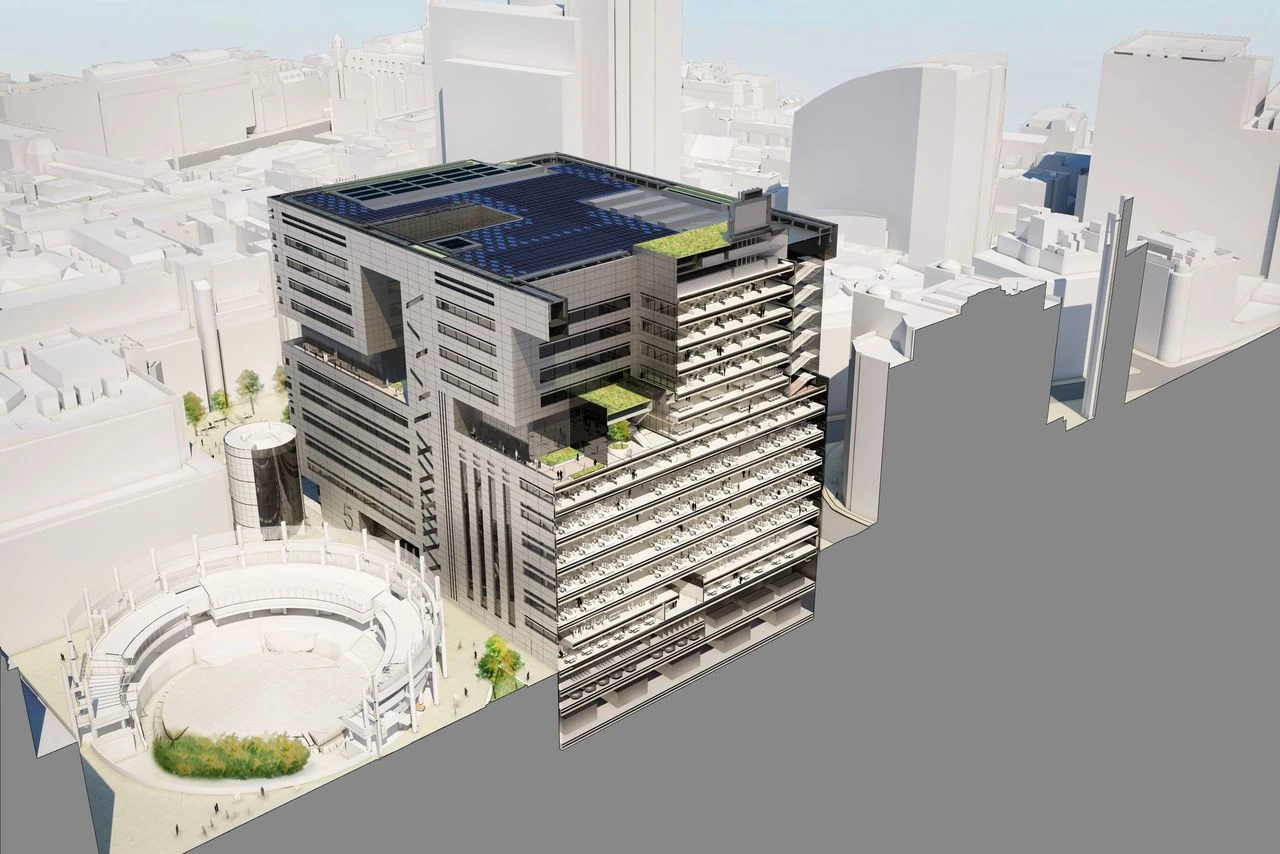
In central London, the practice completed the City of London Information Centre, the 55 Baker Street office development, Grosvenor Waterside and 10 Weymouth Street. Those projects place public-facing, commercial and residential work alongside one another. The list also shows that an architectural practice’s contribution to a city is not confined to its tallest or most photographed buildings: offices, housing and visitor facilities all shape how urban places function.
Among Make’s best-known projects outside the capital is the Cube in Birmingham, completed in 2010. The building brought a new landmark to Shuttleworth’s home city, with offices, residential apartments, a hotel and a rooftop restaurant gathered in one development. Its mixed uses make it more than a single-purpose tower: work, living and hospitality occupy the same building. The project is also a link between Shuttleworth’s Birmingham origins and his later role in the city’s contemporary built environment.
Make’s work has extended to university and cultural settings. Its completed projects include the Aspire sculpture and Gateway Building at the University of Nottingham, an extension to the university’s Jubilee Campus, and the Old Road Campus Research Building and Oxford Molecular Pathology Institute at the University of Oxford. In Cheltenham, the practice completed the Montpellier Chapter hotel. The projects show how the practice has worked across different institutions and uses rather than focusing solely on commercial architecture.
Buildings for public life
One of Make’s most visible public commissions was the London 2012 Olympic Handball Arena, subsequently known as the Copper Box. Designed for the Olympic Games, it represents a different kind of landmark from a central-city skyscraper: a venue created for sport and large audiences. The project also sits within Shuttleworth’s longer connection with London, which began with his work at Foster and Partners and continued through his own practice.
His career has included civic involvement as well as design work. From 2004 to 2011, Shuttleworth was a commissioner of the Commission for Architecture and the Built Environment, or CABE, a UK government non-departmental public body that promoted better design and design education. That role placed him within a wider conversation about the quality of the built environment and the teaching and practice that help shape it.
In 2007, Shuttleworth and members of his staff appeared in the final of the UK edition of The Apprentice. They advised the two remaining contestants on designing an iconic building for London’s South Bank. It was a television appearance rather than a building commission, but it brought the practice’s work and architectural thinking to a broader audience.
A practice with work beyond the UK
Make’s projects have included work beyond Britain, as well as a substantial portfolio at home. Projects described as under construction include Thomas Clarkson Community College in Cambridgeshire, student housing in Hammersmith, a children’s hospital in Kurdistan, a boutique hotel in China and a residential tower in Hong Kong. These projects represent distinct briefs and locations, and they underline the international reach of a practice founded in London.
The scale of Shuttleworth’s career can be read through the movement between these settings: from overseeing a headquarters project in Hong Kong, to contributing to major London developments, to establishing a firm that undertook work for universities, public bodies and clients overseas. The work is not a single stylistic statement. It is a record of involvement in buildings with different functions, audiences and contexts.
Why Ken Shuttleworth deserves a place in British Legacy
Ken Shuttleworth deserves a place in British Legacy because his career has contributed to the changing appearance and use of British cities. His work at Foster and Partners included 30 St Mary Axe, the Millennium Bridge and City Hall in London, while Make Architects brought projects such as the Cube to Birmingham and the Copper Box to the London 2012 Olympic Games. Together, these examples connect commercial development, civic architecture, housing, sport and public life. They offer a specific account of how architecture can become part of a city’s everyday identity, rather than relying on general claims of national distinction.
His contribution also extends beyond individual buildings. Establishing Make in 2004 created a practice that has delivered projects for universities, public institutions and private clients, in Britain and internationally. His years as a CABE commissioner connected his professional experience with a public body concerned with design quality and design education. The benefit of remembering Shuttleworth lies in that combination: visible buildings, work across a broad range of uses, and participation in the institutions and teams that shape the built environment. His Birmingham roots, London projects and British-led practice make his story particularly relevant to a record of contemporary architecture in Britain.
Sources
Ken Shuttleworth (architect), revision 1372614270
Adapted in part from Ken Shuttleworth (architect) by Wikipedia contributors, under CC BY-SA 4.0. Text has been edited and combined with the existing article; this adapted text is shared under the same licence. Contributor history.
.jpg)