In Love’s Labour’s Lost, a king and his companions promise to shut out love in the name of study. Their resolve lasts only until the women arrive. Shakespeare builds the comedy from the gap between the men’s grand intellectual ambitions and their very human susceptibility, using verbal ingenuity to expose the pretensions behind both. Then, just as convention seems to promise a comic resolution, news of a death postpones the marriages. The play’s wit is exuberant; its ending asks the audience to take time, loss and commitment seriously.
A play of the 1590s
Most scholars date the play to 1594–95, although it is not thought to have been written later than 1598. Its first known printed edition was a quarto published by Cuthbert Burby in 1598. The title page describes the text as “Newly corrected and augmented by W. Shakespere”, wording that has led some scholars to suggest an earlier version was revised. A manuscript held by the University of Edinburgh, also dated 1598, states that this was the version performed before Queen Elizabeth I the previous Christmas. The earliest recorded performance is at court at Christmas 1597.
The play’s plot has no established primary source. Possible influences include the early comedies of John Lyly, Robert Wilson’s The Cobbler’s Prophecy and Pierre de La Primaudaye’s L’Academie française. A proposed connection to a diplomatic visit to Henry of Navarre in 1578 remains conjecture, not a settled account of the play’s origin.
Its first audiences may also have recognised political and historical resonances in the names of the French characters. The men are loosely based on historical figures associated with the court of Navarre: Ferdinand with Henry of Navarre, later Henry IV of France; Berowne with the duc de Biron; Dumaine with the duc de Mayenne; and Longaville with the duc de Longueville. That topical dimension did not remain equally accessible to later audiences. The comedy’s demanding wordplay and literary allusions have also been suggested as reasons for its comparatively limited popularity.
Oaths undone by love
Ferdinand, King of Navarre, and the lords Berowne, Longaville and Dumaine swear to devote three years to study and fasting, avoiding the company of women. Berowne is less convinced than the others. The rule soon meets its test: the Princess of France arrives with Rosaline, Maria and Katharine to discuss the cession of Aquitaine. The women must camp outside the court, but their presence is enough to turn the men’s solemn vow into a source of comedy.
The King and his companions fall in love. Letters are written, one is delivered to the wrong recipient, and the men discover one another’s feelings while attempting to conceal their own. When the King rebukes his lords for breaking their oath, Berowne points out that the King has done the same. He argues that love, rather than abstinence, is a worthy subject of study. The men abandon their vow and plan to court the women in disguise as Muscovites. The women learn of the scheme and turn the disguise against them.
A parallel comic world gathers around Don Adriano de Armado, a fantastical Spaniard who pursues Jaquenetta, and his page Moth. The rustic Costard, the schoolmaster Holofernes and the curate Sir Nathaniel are among those who join a performance of the Nine Worthies. The pageant becomes another occasion for mockery, particularly as the courtly characters heckle its performers. When Jaquenetta reveals that she is pregnant by Armado, the Spaniard’s romantic pursuit acquires consequences beyond his own grand language.
Comedy interrupted
The play refuses the tidy marriage ending its wooing scenes appear to promise. A messenger, Marcadé, announces that the Princess’s father has died. She prepares to leave, and the women tell their suitors to wait a year and a day, proving that their love will endure before any marriage can take place. Armado, too, promises to keep a similar oath to Jaquenetta. The lovers’ futures are deferred rather than settled.
That interruption gives the comedy a harder edge. The men’s vows have already shown how readily an ideal can collapse when reality intrudes; now grief and time test the promises they make in love. The final songs, “Ver and Hiems” and “The Cuckoo and the Owl”, bring the seasons into the closing scene. Their meaning has been interpreted in different ways, but their presence is striking in a play where music has otherwise had little part. The movement from verbal games to the news of death and the passing seasons broadens the ending beyond a simple defeat of youthful pretension.
Language is central to that movement. Puns, rhetorical flourishes, pastiches of poetic styles and pedantic jokes supply much of the action. The play repeatedly tests what words can do: the men use language to make vows, disguise desire and praise the women, while the women expose the gap between polished courtship and sincere feeling. Its comedy makes learning and cleverness entertaining, but it also asks whether eloquence amounts to wisdom.
On stage and in new forms
After the 1597 court performance, a second performance is recorded in 1605. The first known production after Shakespeare’s era took place at Covent Garden’s Theatre Royal in 1839, with Madame Vestris as Rosaline. The play was staged only twice more in England during the nineteenth century, at Sadler’s Wells in 1857 and the St James’s Theatre in 1886.
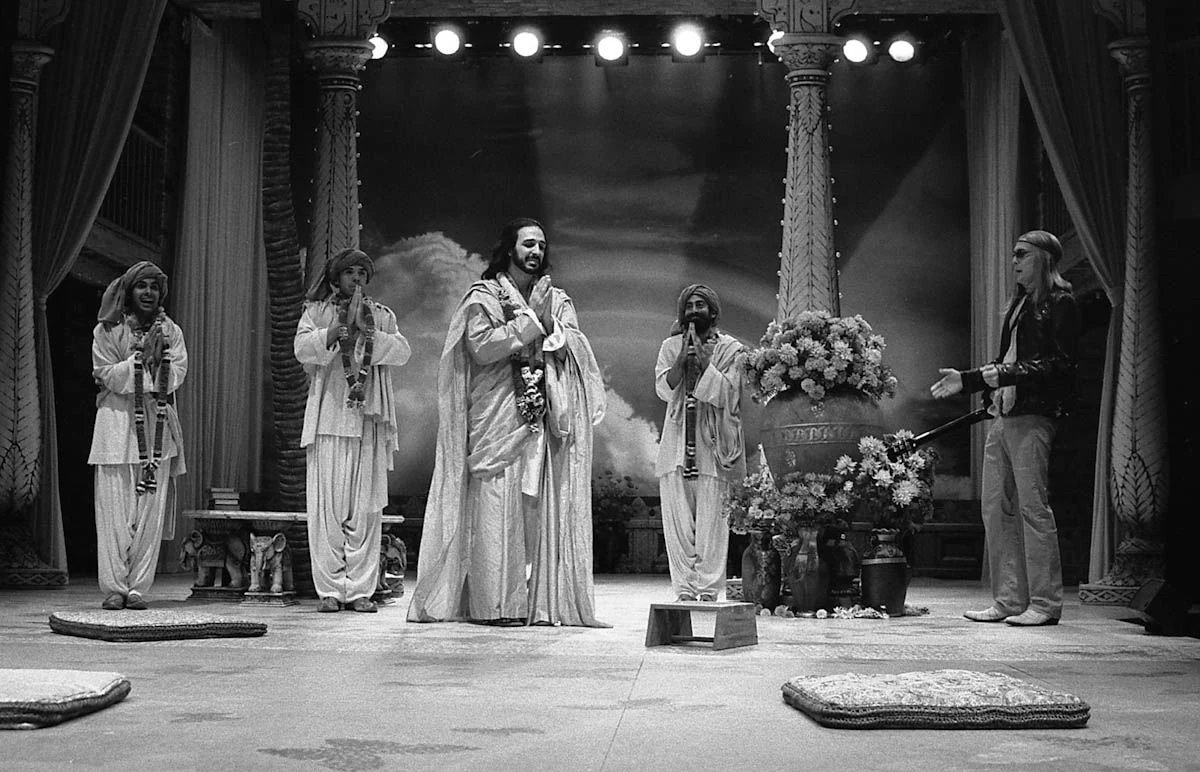
British theatre-makers returned to it in the twentieth century. A 1936 Old Vic production featured Michael Redgrave as Ferdinand and Alec Clunes as Berowne; Redgrave later played Berowne at the New Theatre in 1949. The Royal Shakespeare Company staged it in 1965 with Glenda Jackson, Janet Suzman and Timothy West among the cast, and produced it again in 1994. In 1968 Laurence Olivier directed it for the National Theatre, with Derek Jacobi as the Duke and Jeremy Brett as Berowne.
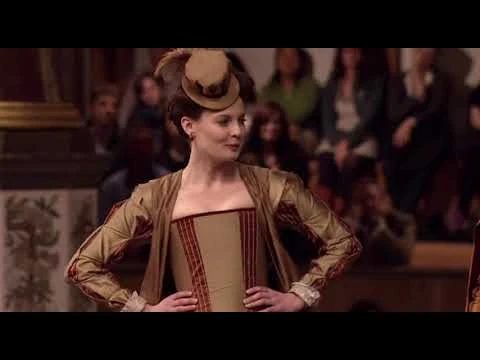
Later adaptations have carried the comedy into different settings and forms. In 2000 Kenneth Branagh made a musical film, relocating the action to the 1930s. A 2014 Royal Shakespeare Company double bill paired the play, set on the eve of the First World War, with Much Ado About Nothing, retitled Love’s Labour’s Won. The work has also been adapted for opera, radio and television. These reworkings have not made its verbal density disappear; they have given performers and directors fresh ways to meet it.
Why Love’s Labour’s Lost deserves a place in British Legacy
Love’s Labour’s Lost earns its place in British Legacy not through a generic claim to national greatness, but through its specific contribution to English-language drama. Its intricate verbal comedy turns language itself into the subject of performance: characters use words to boast, reason, flirt and evade, while the play lets audiences hear the difference between wit and wisdom. That attention to the powers and limits of speech remains a compelling theatrical resource. The comedy’s interweaving of courtly romance with pedantry and the Nine Worthies pageant also gives actors and directors contrasting registers to bring together on stage.
Its British performance history shows a work repeatedly reconsidered rather than simply preserved. From the Old Vic and National Theatre to the Royal Shakespeare Company, productions have placed the play before new audiences and tested how its difficult jokes and courtship rituals might speak in different periods. Its unusual ending is part of that continuing value: the lovers do not receive instant rewards, and the interruption of grief shifts the comedy towards patience and the consequences of time. The 2014 RSC pairing with Much Ado About Nothing made the play part of a deliberate theatrical conversation, while film, opera, radio and television have extended its reach beyond the stage. Its British legacy lies in that durable capacity to challenge performers, invite reinterpretation and make the pleasures of language inseparable from questions about love, learning and mortality.
Sources
Adapted in part from Love's Labour's Lost by Wikipedia contributors, under CC BY-SA 4.0. Text has been edited and combined with the existing article; this adapted text is shared under the same licence. Contributor history.