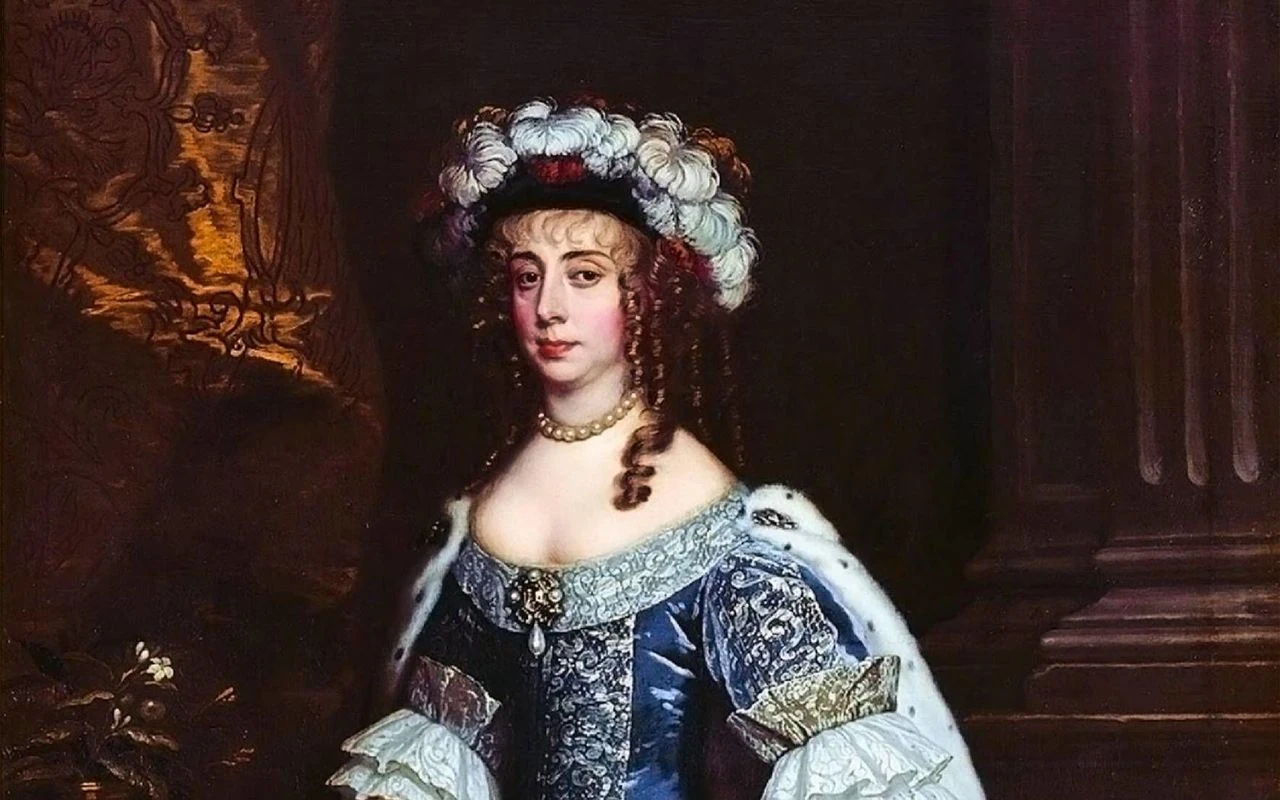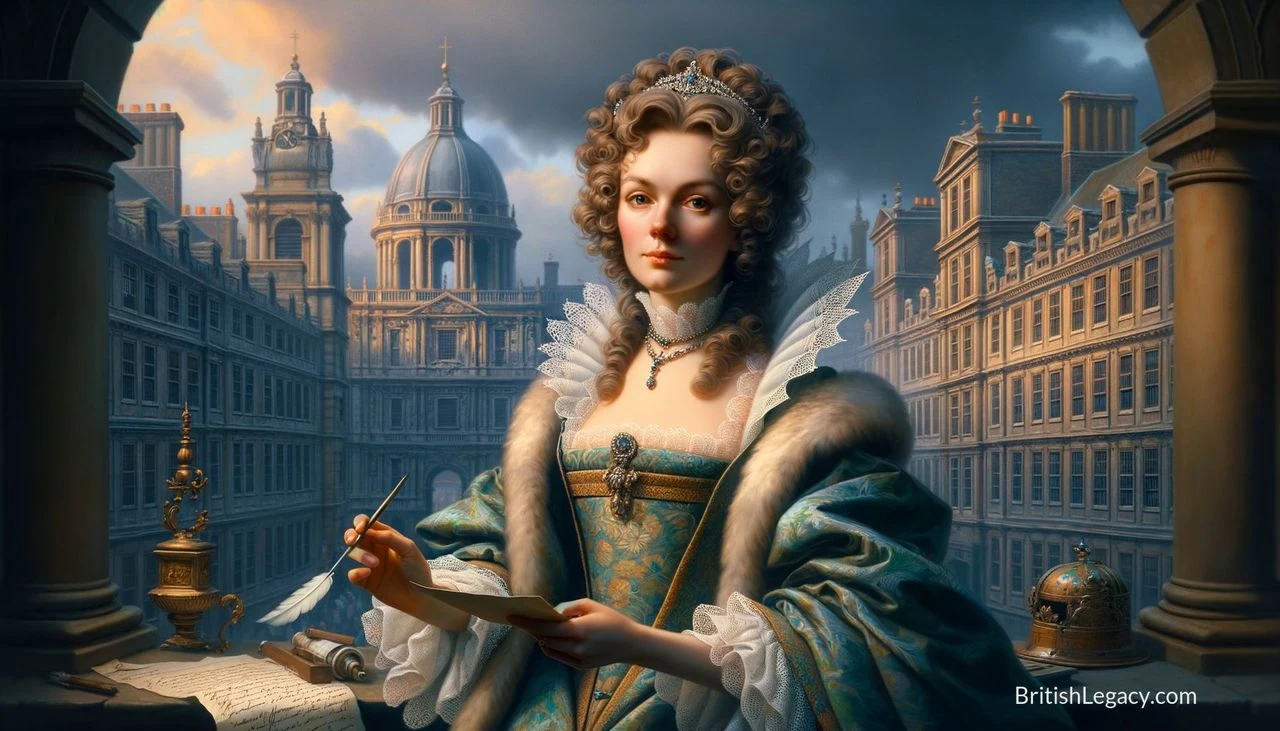
Margaret Cavendish, Duchess of Newcastle, wrote poetry, plays, fiction and works of philosophy at a time when women’s opportunities to publish were sharply limited. She put her name to her work and pursued questions about nature and knowledge in forms that ranged from verse to utopian fiction. Her writing includes Poems and Fancies, The Convent of Pleasure and The Blazing World.
Margaret Lucas and the Newcastle court
Born Margaret Lucas in 1623, she came from a well-off aristocratic family. During the English Civil War she was a member of Queen Henrietta Maria’s court. She met William Cavendish, later the 1st Duke of Newcastle, and married him. Her life as a writer unfolded in a society in which women faced barriers to education and publication; the account of her career describes her education as unusually extensive for a woman of her era.
Cavendish wrote under her own name, and her work ranged across poetry, philosophy, fiction and scientific subjects. That range mattered: she was not confined to one literary form, nor did she separate her interest in nature from her imaginative writing. Her poetry drew on themes of nature, philosophy and the universe, while her philosophical works addressed ideas about the natural world.
Poetry, plays and imagined worlds
Poems and Fancies, published in 1653, brought together verse and ideas about nature and science. Cavendish also wrote plays. In The Convent of Pleasure (1668), she imagined a community in which women could live independently of men. The play’s premise gave her a way to explore women’s lives and social arrangements through fiction.
Her best-known work of imaginative prose is The Description of a New World, Called the Blazing World (1666). It combines an imagined society with discussion of scientific and philosophical questions. It is often described as one of the first science-fiction novels, though the more enduring point is how Cavendish brought speculative storytelling into conversation with the debates of her own time.
Nature and philosophy
Cavendish called herself a philosopher and engaged with prominent thinkers and scientific ideas of the seventeenth century. In Philosophical Letters (1664) and Observations upon Experimental Philosophy (1666), she challenged aspects of the work of contemporaries including René Descartes and Robert Hooke.
Her account of nature resisted explanations that treated the world as merely mechanical. Instead, she described matter as self-moving. This view placed activity within nature itself and shaped her thinking about natural phenomena. Her writing joined argument to literary invention: she could test ideas in philosophical prose and also give them imaginative form in poetry and fiction.
Why Margaret Cavendish deserves a place in British Legacy
Margaret Cavendish deserves a place in British Legacy for the breadth of her work and the public authorship through which she pursued it. She published poetry, plays, fiction and philosophy under her own name, rather than limiting herself to a single genre. Poems and Fancies joined verse to questions about nature; The Convent of Pleasure imagined women living independently of men; and The Blazing World made an imagined world a setting for scientific and philosophical inquiry. These works show a writer using different forms to examine what could be thought and represented.
Her contribution also lies in the intellectual position she took. Cavendish engaged with the leading ideas of her time, disputed mechanical accounts of nature and proposed a world made of self-moving matter. Her work offers a record of a woman entering debates about philosophy and natural knowledge while also making literature on her own terms. Remembering her in a British context is not simply a matter of celebrating an early woman writer: it recognises a distinctive body of work that connects literary invention, social imagination and sustained argument about nature.