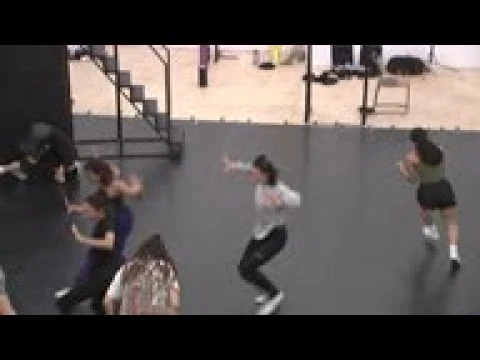
Matthew Bourne’s Swan Lake begins with a change that is immediately visible: its swans are danced by men. But the production’s force lies in more than reversing a familiar casting convention. Bourne recast the ballet’s setting and story, placing a prince in a contemporary family and making his attraction to a male swan part of the drama. The work became his international breakthrough, and a defining example of a career built on turning familiar stories into theatrical dance.
A late start, and a route into choreography
Bourne was born in Hackney, London, on 13 January 1960. He did not grow up with formal ballet training. As a teenager, he was drawn to show business and the West End; after seeing his first ballet, Swan Lake, at Sadler’s Wells, he began to study dance. He worked as a filing clerk at the BBC and as an usher at the National Theatre before entering London’s Laban Centre at 20 and starting dance classes at 22.
He completed a BA honours degree in contemporary dance in 1985 and an MA in dance performance in 1986. After touring with the Laban Centre’s dance company, he increasingly turned from performing towards choreography for television, theatre and other dance companies. In 1987, he co-founded Adventures in Motion Pictures (AMP) with fellow Laban graduates. His early work showed a taste for using dance to make a story legible, while changing the world in which a familiar narrative unfolded.
In The Nutcracker! (1992), the Christmas Eve scenes take place in a Victorian orphanage. Highland Fling (1994), his reworking of La Sylphide, moves the story to a modern Glasgow housing project. The productions helped establish a method that would recur throughout his career: take a known work as a starting point, then use setting, character and movement to make a distinct stage piece rather than simply reproduce its source.
The prince, the swans and a new Swan Lake
AMP premiered Bourne’s Swan Lake in 1995. The prince lives in a contemporary, dysfunctional family and falls in love with a male swan. The swans are not delicate figures in traditional white costumes: Bourne presents them as powerful and aggressive, danced by bare-chested men in feather-like shorts. The production’s physicality and changed relationships give the familiar score a different dramatic charge.
The work won the 1996 Laurence Olivier Award for Best New Dance Production. After opening on Broadway in 1998, it received Tony Awards for direction and choreography in 1999. Its success brought Bourne a much wider audience, but it also established the principle that his adaptations could honour a source while making audiences reconsider it. The gender change was not an isolated novelty; it was part of a larger reimagining of the prince’s world and the ballet’s emotional relationships.
His other adaptations show the range of that approach. Cinderella (1997) is set in wartime London. The Car Man (2000), inspired by Bizet’s Carmen, recasts its material as a story of desire and violence in a garage. For Play Without Words (2002), Bourne drew on 1960s British cinema, particularly Joseph Losey’s film The Servant. Rather than rely on spoken explanation, the production uses movement and staging to expose shifting relations of class and power.
Stories made for the stage
Bourne has repeatedly adapted material from film, literature and popular culture, treating those sources as the beginnings of theatrical ideas. His dance version of Tim Burton’s Edward Scissorhands arrived in 2005. Dorian Gray (2008) took Oscar Wilde’s novel into the contemporary world of celebrity. In 2011, Lord of the Flies brought William Golding’s story to the dance stage. These works differ in tone and setting, but each asks how character and narrative can be conveyed through physical performance.
His 2012 Sleeping Beauty brings together elements from different versions of the fairy tale. It moves through three periods: Aurora’s christening in 1890, her coming-of-age in 1911 and her awakening in a modern gothic world. The shifts in time give the production scope to change its movement and visual atmosphere as the story develops.
The Red Shoes, which premiered in Plymouth in November 2016, draws on the Powell and Pressburger film as well as the Hans Christian Andersen tale behind it. The production follows dancer Victoria Page and the demands of her art, placing the work and sacrifices of theatre-making within the drama. Bourne’s adaptation won the 2017 Olivier Award for Best Theatre Choreographer. Later works include Romeo and Juliet (2019) and The Midnight Bell (2021), adapted from Patrick Hamilton’s novel and set among interconnected lives in a 1930s London pub.
Companies, collaboration and recognition
Bourne’s work has depended on companies and creative partnerships as well as individual choreography. After the success of AMP, he and the company’s co-director Katherine Doré eventually separated from the organisation. In 2000, Bourne established New Adventures with managing director Robert Noble and associate artistic director Etta Murfitt. The company gave him a base for making work with dancers and other collaborators, across ballet, contemporary dance, dance theatre and musical theatre.
His working process has involved collaboration with performers. In the early development of Edward Scissorhands, for example, dancers Sam Archer and Richard Winsor described being given tasks to create movement that could become part of the choreography. That approach fits the demands of his stage language: movement must carry the action, establish character and make relationships clear to an audience.
Bourne’s achievements have been recognised in Britain and internationally. He was appointed OBE for services to dance in 2001 and was knighted in 2016 for the same service. His honours include Olivier Awards, Drama Desk Awards and Tony Awards associated with his work on Swan Lake, as well as awards for later productions. His career has also encompassed choreography for musical theatre, including My Fair Lady and Mary Poppins.
Why Matthew Bourne deserves a place in British Legacy
Matthew Bourne deserves a place in British Legacy because his work has expanded what audiences can expect from dance theatre. His 1995 Swan Lake did not simply replace female swans with male dancers: it changed the setting, the prince’s circumstances and the emotional relationships at the centre of the ballet. Its Olivier and Tony recognition reflects the reach of that production, while its continued place among his best-known works shows how a radical staging can become part of a wider cultural conversation.
His contribution is also visible in the breadth of stories he has brought to the stage. From a Victorian orphanage in The Nutcracker! to wartime London in Cinderella, from the world of Edward Scissorhands to the Soho pub of The Midnight Bell, Bourne has used movement, setting and character to make narrative dance accessible without reducing it to illustration. New Adventures has provided a continuing home for that work, spanning dance and musical theatre and enabling collaboration with performers and other artists.
The British connection is specific: Bourne trained and developed his career in London, formed companies there, created work for British stages and received national honours for services to dance. His achievement is not that he made every audience agree about ballet, but that he gave audiences new ways into it. That lasting combination of theatrical storytelling, inventive adaptation and company-making makes his career a substantial part of Britain’s performing-arts legacy.
Sources
Matthew Bourne — Wikipedia revision 1372231884
Adapted in part from Matthew Bourne by Wikipedia contributors, under CC BY-SA 4.0. Text has been edited and combined with the existing article; this adapted text is shared under the same licence. Contributor history.