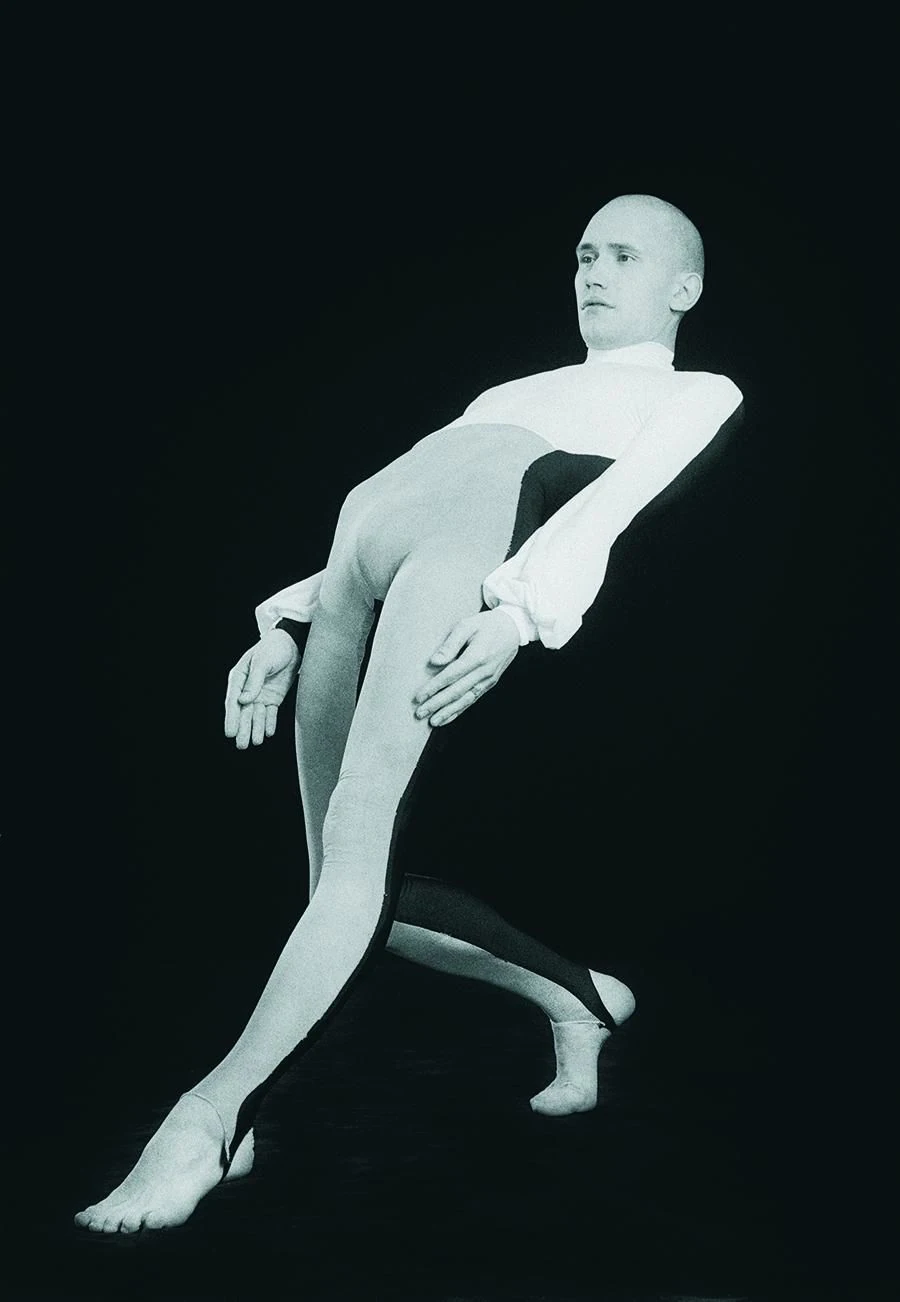
Michael Clark’s choreography refuses to keep ballet in its appointed place. Trained at the Royal Ballet School and first employed by Ballet Rambert, the Scottish dancer built a body of work that puts classical technique alongside music, fashion and visual art. From Because We Must to I Am Curious, Orange, his productions made the friction between those worlds part of the event.
From Scottish dancing to the ballet school
Michael Duncan Clark was born in Aberdeen on 29 May 1962. He began traditional Scottish dancing at four, then left home in 1975 to study at the Royal Ballet School in London. The school gave him a demanding classical education; on his final day there, he received the Ursula Moreton Choreographic Award, an early recognition of his work as a maker as well as a performer.
In 1979 Clark joined Ballet Rambert, working chiefly with choreographer Richard Alston. Alston created roles for him in Bell High (1979), Landscape (1980) and Rainbow Ripples (1981). Clark also performed in Alston’s solos Soda Lake (1981) and Dutiful Ducks (1982). These years placed him inside a major British contemporary-dance company while he developed an increasingly individual choreographic voice.
Further encounters widened that frame. A summer school with Merce Cunningham and John Cage preceded Clark’s work with Karole Armitage, through whom he met filmmaker and artist Charles Atlas. Atlas became a significant collaborator: together they made Hail the New Puritan (1984) and the film Because We Must (1989). Clark’s practice would continue to move between live performance and work made for the camera.
Classical movement in new company
Clark’s work is often associated with punk, but its force depends on the meeting of contrasting disciplines rather than on a simple rejection of ballet. He retained the physical demands of classical training while placing dance in company with musicians, designers and artists whose approaches unsettled the usual boundaries of a performance. His collaborators included the band The Fall, the designer and performance artist Leigh Bowery, and musicians Wire, Laibach, Jarvis Cocker and Scritti Politti.
Because We Must, listed among his 1987 productions, became one of his notable works; the later film made with Atlas followed in 1989. I Am Curious, Orange (1988) is another landmark in his catalogue. Its title and place in Clark’s career mark a period when his choreography drew attention for its bold conjunction of movement, music and visual presentation. The original account associates the work with The Fall, whose music also features among Clark’s collaborations.
Clark’s production list shows the range of his output. In the 1980s, works included Swamp (1986), Because We Must (1987) and I Am Curious, Orange (1988). The following years brought Wrong, Rights and Heterospective (all 1989), then Rite Now and Mmm... (1992), and O (1994). The titles suggest a career not organised around one signature format, but one that repeatedly tested what a dance production might contain.
Commissions, films and collaborations
Clark’s work reached beyond his own productions. Major companies commissioning him included the Groupe de Recherche Chorégraphique de l’Opéra de Paris, the Paris Opera, Scottish Ballet, London Festival Ballet, Ballet Rambert, Phoenix Dance Company and Deutsche Oper Berlin. He also choreographed and danced Caliban in Peter Greenaway’s film Prospero’s Books (1991), carrying his work into a feature-film setting.
In 1998 he presented current/SEE, a full-length work developed with Susan Stenger, Simon Pearson, Big Bottom and Hussein Chalayan. Its making became the subject of Sophie Fiennes’s BBC documentary The Late Michael Clark. In 2001, Clark began a major collaboration with visual artist Sarah Lucas, Before and After: The Fall; the partnership continued with Would, Should, Can, Did, presented at London’s Barbican in 2003.
That same year, Clark made Satie Stud for William Trevitt of George Piper Dances, choreographed a solo for Mikhail Baryshnikov and created OH MY GODDESS, which opened the 25th London Dance Umbrella season. In 2004, Rambert revived SWAMP, originally made in 1986. The revival received the Olivier Award for Best New Dance Production in 2005, recognition attached to the work rather than simply to Clark’s reputation.
Projects across music, place and image
In 2005 Clark embarked on the Stravinsky Project, a three-year undertaking built around a trilogy of works to music by Igor Stravinsky. He reworked Mmm... and O for the project, whose final part, I Do, premiered in 2007. The sequence brought existing pieces into a new structure and set them against the scores of a major twentieth-century composer.
In 2009 Clark premiered come, been and gone at the Venice Biennale. Later productions included New Work (2012), subsequently titled animal / vegetable / mineral, and to a simple, rock 'n' roll . . . song., which premiered at the Barbican in October 2016. His site-specific commissions took dance into places beyond the conventional theatre, including Tate Modern, the Whitney Biennial, Glasgow’s Barrowland Ballroom as part of the 2012 Cultural Olympiad, and the Institute of Contemporary Art in Miami.
His partnerships crossed creative fields. Alongside collaborations with musicians and visual artists, Clark worked with fashion designers including BodyMap and Alexander McQueen, for whose spring/summer 2004 Deliverance collection he collaborated. These projects place costume, image and sound within the same artistic conversation as movement, without reducing dance to an accessory for another medium.
Recognition and continuing work
Clark’s work attracted recognition in both dance and the wider arts. The revival of SWAMP won the 2005 Olivier Award for Best New Dance Production. In 2011 Robert Gordon University awarded him an honorary Doctor of Arts degree. In 2013 he received the Robert Robson Award for Dance at the Manchester Theatre Awards for New Work (2012), as well as the Peter and Irene Ludwig Foundation Award for Innovation in the Arts from the Ludwig Forum for International Art.
In 2014 he was appointed Commander of the Order of the British Empire for services to dance. The honour recognised a career whose reach is visible in the range of institutions that commissioned him, the artists who worked alongside him and the continuing evolution of his own productions. His later work, including the 2016 Barbican premiere, shows a choreographer still making new pieces rather than resting on the reputation of earlier ones.
Why Michael Clark deserves a place in British Legacy
Michael Clark merits a place in British Legacy because his career connects two important strands of dance in Britain: rigorous classical training and a contemporary practice open to experimentation. He began with Scottish dancing in Aberdeen, trained at the Royal Ballet School in London and worked with Ballet Rambert, then took choreography into new company with punk and alternative musicians, fashion designers, filmmakers and visual artists. That progression is not a story of abandoning one tradition for another. It shows how a dancer could use the discipline of ballet as material for work that challenged expectations about music, image and movement.
The record of his career also demonstrates the breadth of that achievement. Clark made productions for major companies, films with Charles Atlas, site-specific commissions for institutions including Tate Modern and the Whitney Biennial, and projects that placed dance in dialogue with Stravinsky, Sarah Lucas and Alexander McQueen. The Olivier Award for SWAMP and his CBE for services to dance provide formal recognition; the range of his collaborations and commissions gives that recognition substance. His British legacy lies in making dance a meeting place for different art forms while sustaining a distinctive choreographic practice across decades. His work expanded the settings and partnerships available to dance without losing sight of the trained body at its centre.
Sources
Michael Clark (dancer), revision 1357758404 · Michael Clark (dancer)
Adapted in part from Michael Clark (dancer) by Wikipedia contributors, under CC BY-SA 4.0. Text has been edited and combined with the existing article; this adapted text is shared under the same licence. Contributor history.