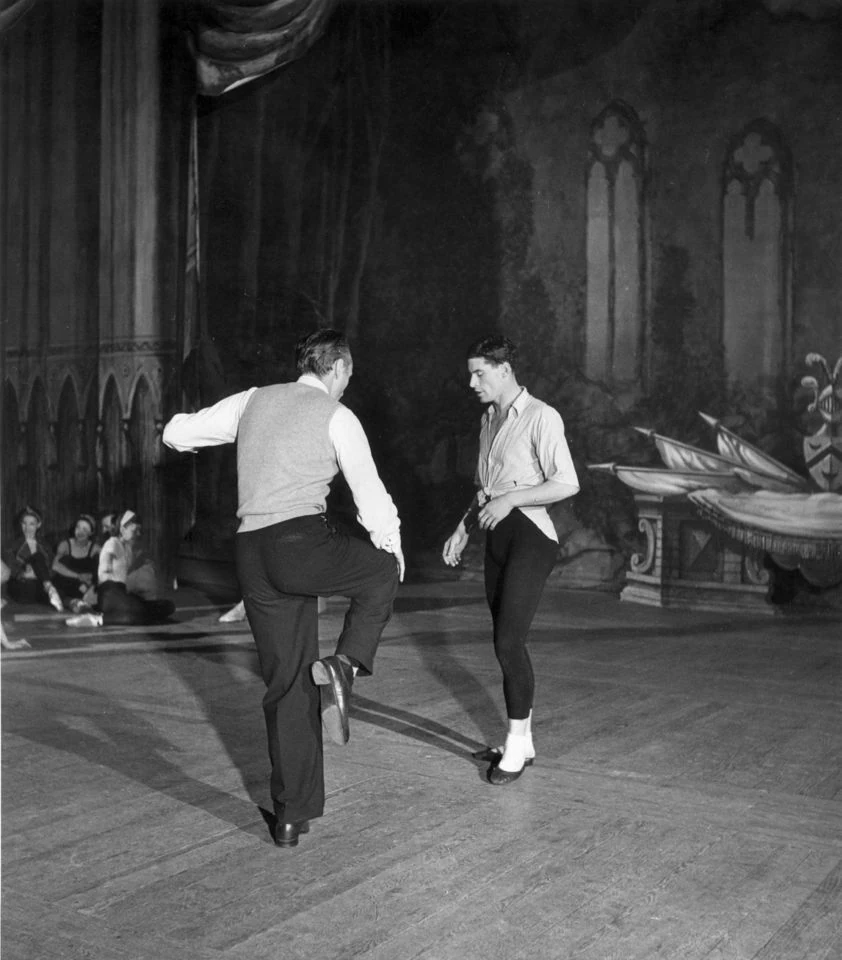
Michael Somes’s career connected several defining strands of British ballet: the Royal Ballet’s repertory, Frederick Ashton’s choreography and a long stage partnership with Margot Fonteyn. A principal dancer in London, he created roles in Ashton ballets, became the company’s lead male dancer for more than a decade and later served as assistant director. His work ranged from leading parts to character roles, and from performance to the company’s direction.
A scholarship and an early partnership
Michael George Somes was born in Horsley, Gloucestershire, on 28 September 1917. His father, Edwin Joseph Somes, was a professional musician; his mother, Ethel M. M. Pridham, was a schoolmistress. He had an elder brother, Laurence Joseph Somes. In 1934, Somes received the first scholarship awarded to a male dancer by the Royal Ballet, then known as the Vic-Wells Ballet. This was the start of a career spent closely connected to the company, although the distinction should not be confused with the unsupported claim that he joined an organisation already called the Sadler’s Wells Ballet.
Somes’s early work with Margot Fonteyn became an enduring part of that career. In 1938, they created the principal roles in Horoscope, choreographed by Ashton to music by Constant Lambert. Somes was described at the time as “potentially the finest British male dancer of the half century”. Their professional partnership continued across many years and ballets. Fonteyn and Somes also appeared together in television productions, bringing their work beyond the theatre to viewers at home.
Ashton’s ballets and the leading male role
Somes originated roles in 24 ballets Ashton choreographed for the company. The number gives a measure of his involvement in the creation of its repertory: he was not only an interpreter of established works but a dancer for whom Ashton made roles. This sustained collaboration links Somes’s stage career to a substantial body of choreography developed for the Royal Ballet.
Somes became a principal dancer, and from 1951 until Rudolf Nureyev arrived in 1962 he was the company’s lead male dancer. The distinction matters: principal status and the later period in which he served as lead male dancer are separate points in the chronology. His partnership with Fonteyn featured in televised versions of Swan Lake in 1954, The Sleeping Beauty in 1955 and The Nutcracker in 1958. These productions carried their performances into homes as well as theatres.
His screen appearances extended beyond those ballet broadcasts. Somes appeared on The Ed Sullivan Show in 1954 and in the 1966 film version of Prokofiev’s Romeo and Juliet, which also starred Fonteyn. The current account associates him with The Sleeping Beauty and Swan Lake, but the supplied career record does not confirm its specific claims that he danced Prince Florimund and Prince Siegfried. Those particular roles are therefore not stated here.
After Nureyev joined the company, Somes appeared in character roles. Among them, Lord Capulet in Romeo and Juliet is singled out in the career record. This change in repertory marked a different stage of his work: he was no longer the company’s lead male dancer, but continued to perform in roles that served the drama from a different position.
From performer to company leader
In 1959, Somes was appointed a Commander of the Order of the British Empire. His work within the Royal Ballet continued beyond the stage. From 1963 to 1970, he served as assistant director under Ashton. The sequence of roles in his career—from scholarship recipient to principal and leading dancer, creator of roles and assistant director—places him within the company’s work both as a performer and as a member of its leadership.
These responsibilities were distinct. His performances and roles in Ashton’s ballets made him part of the repertory seen by audiences; his assistant directorship placed him in a company position after years on stage. The record supports this account of his wider contribution, but not the separate claims that he worked as a repetiteur and coach or shaped the careers of particular younger dancers.
Family and final years
Somes married ballet dancer Deirdre Annette Dixon in 1954. Dixon was a junior soloist with the Royal Ballet and died in 1959. The account of her death is disputed: the Wikipedia article notes that a contemporary obituary attributed it to the effects of a car accident two years earlier, while its main text gives a different cause. The cause is not necessary to the account of Somes’s career and is not asserted here.
In 1964, Somes married fellow ballet dancer Antoinette Sibley; they divorced in 1973. He later married ballet dancer Wendy Ellis. Somes died in London on 18 November 1994, aged 77, from a brain tumour. His career had brought him from a scholarship at the Vic-Wells Ballet to principal dancer, leading performer and assistant director at the Royal Ballet.
Why Michael Somes deserves a place in British Legacy
Michael Somes deserves a place in British Legacy because his contribution to British ballet is visible in the work he performed and helped bring into being. In 1934, he received the first scholarship awarded to a male dancer by the Vic-Wells Ballet. He became a principal of the Royal Ballet and served as its lead male dancer from 1951 until Rudolf Nureyev’s arrival in 1962. Most strikingly, he originated roles in 24 ballets choreographed for the company by Frederick Ashton. Taken together, these details make Somes part of the history not just of a celebrated partnership, but of a company’s repertory and the development of new work.
His career also shows how a dancer’s contribution can change form over time. Somes moved from leading roles to character parts, including Lord Capulet, and later served as assistant director under Ashton from 1963 to 1970. His performances with Fonteyn reached audiences in the theatre and in television broadcasts; his work as assistant director connected his experience as a performer to the company’s leadership. Remembering Somes therefore recognises several kinds of artistic labour: creating roles, performing them, continuing in a different repertory and taking on responsibility within the company. That specific record gives his British legacy substance beyond general praise.
Sources
Adapted in part from Michael Somes by Wikipedia contributors, under CC BY-SA 4.0. Text has been edited and combined with the existing article; this adapted text is shared under the same licence. Contributor history.